



Past Events
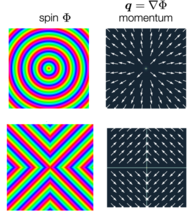
[Seminar] Low Energy Structure of Spiral Spin Liquid
TQM unit is pleased to invite you to the seminar.
Catch-All Mathematical Colloquium
In the mathematics part, we will hear an exciting overview talk for a general audience. January speaker is Ade Irma Suriajaya from Kyushu University. In the discussion session, we will hear about the speaker's experience as a mathematician. Y ou can take inspiration from them and exchange ideas with other participants in a small group. After the sessions are over, there will be a tea time where participants can chat freely.
Part I Expository math talk 3-4 pm
Speaker: Ade Irma Suriajaya Kyushu University
Talk Title : Goldbach’s Conjecture and the Riemann Hypothesis in Number Theory, and Their Relations to Zeta Functions
Abstract: Number Theory has a very long history that dates back to thousands of years ago. The main goal of this study is to understand properties of numbers which can essentially be reduced to understanding prime numbers. Number Theory has evolved over time and yet we are still left with several important old problems. Among, Goldbach’s conjecture which is celebrating its 280th anniversary this year (by the time of my talk in 2022) and the Riemann hypothesis which is now over 160 years old remain unsolved. In this talk, I would like to explain what these problems are about and briefly introduce a few recent works which are related to them, especially how the distribution of zeros of the Riemann zeta function comes into play. My talk will be given in the perspective of Analytic Number Theory.
Abstract: Part II Diversity Panel Discussion 4-5 pm
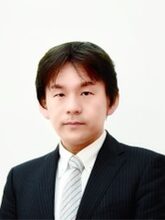
[Seminar] "Topological transition by vector spin chirality on a triangular lattice" by Prof. Yusuke Nambu
TQM unit is pleased to invite you to our seminar!
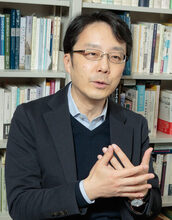
[Seminar] "A twisted loop between inside and outside: Searching for an appropriate image of consciousness based on phenomenology and enactivism"
Our speaker, Shigeru Taguchi will be talking on " A twisted loop between inside and outside: Searching for an appropriate image of consciousness based on phenomenology and enactivism ".
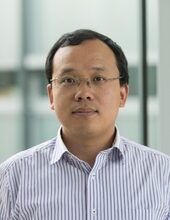
Virtual Seminar"Explosive boiling of drops near a solid surface and inside a turbulent flow"Chao Sun
Language: English
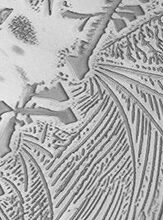
Silver workshop 2022 “Complex geometry and related topics”
Organizers: Noriko Yui (Queen’s University at Kingston), Kyoji Saito (RIMS), Shinobu Hikami (OIST)
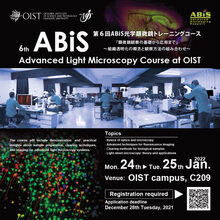
Registration: 6th ABiS Advanced Light Microscopy Course at OIST
Registration deadline: December 28th 2021
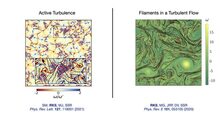
[Seminar] "Lagrangian Studies in Active and Inertial Turbulence" by Mr Rahul Kumar Singh
CFF unit is pleased to invite you to the seminar.
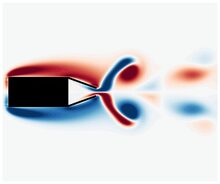
[Seminar] "An Immersed Boundary Method for high-fidelity simulations with moving objects: application to active flow control" by Dr. Athanasios E. Giannenas
CFF unit is pleased to invite you to the semianr!

Orchestrating inter-organ communication and treating metabolic disorders by mRNA decay of hepatokines
Monday, December 20, 14:00-15:00
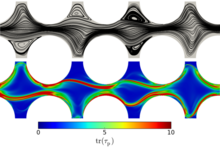
[Seminar] "Elastic instabilities in confined geometries" by Mr. Manish Kumar
CFF unit is please to invite you to the seminar!
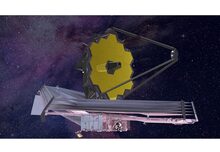
[Seminar] James Webb Space Telescope: The First Light Machine, by Philip Stahl
Seminar talk on the James Webb Space Telescope mission by Dr. H. Philip Stahl, Space Optics Manufacturing Technology Center, NASA Marshall Space Flight Center , AL 35812
Organized by the OIST Optics and Photonics Student Society
FALL 2021 Nonlinear Analysis Special Lecture Part 2 of 2
It has been an open question if maximal operators M satisfy the endpoint regularity bound \(mathop{\mathrm{var}}(Mf) \leq C \mathop{\mathrm{var}}(f)\). So far the majority of the known results has been in one dimension. I give an overview of the progress on this question with a focus on the techniques. Next I present the techniques used in the recent proofs of \(mathop{\mathrm{var}}(Mf) \leq C \mathop{\mathrm{var}}(f)\) for several maximal operators in higher dimensions. They are mostly geometric measure theoretic in the spirit of the relative isoperimetric inequality and involve a stopping time and various covering arguments.
Please click here to register *After registering, you will receive a confirmation email containing information about joining the meeting.
[Seminar] Clusters and orbitals in transition metal compound
TQM unit is pleased to invite you to the seminar.

FALL 2021 Nonlinear Analysis Seminar Series
Dr. David Beltran, University of Wisconsin – Madison Title: Endpoint Sobolev regularity of the fractional maximal function Abstract: Abstract: I will report some of the recent progress regarding the boundedness and continuity of the map \(f \mapsto |\nabla M_\beta f|\) from the endpoint space \(W^{1,1}(\mathbb{R}^d)\) to \(L^{d/(d-\beta)}(\mathbb{R}^d)\), where \($M_\beta\) denotes the fractional version of either the centered or uncentered Hardy--Littlewood maximal function. After contributions by several authors, the problem is now totally solved in an affirmative way. I will focus on my contributions, which correspond to the radial case (in joint work with J. Madrid), and also to the general case for the continuity of the map (in joint work with C. González-Riquelme, J. Madrid and J. Weigt). Please click here to register *After registering, you will receive a confirmation email containing information about joining the meeting.
Please click here to register *After registering, you will receive a confirmation email containing information about joining the meeting.
FALL 2021 Nonlinear Analysis Special Lecture Part 1 of 2
It has been an open question if maximal operators M satisfy the endpoint regularity bound \(mathop{\mathrm{var}}(Mf) \leq C \mathop{\mathrm{var}}(f)\). So far the majority of the known results has been in one dimension. I give an overview of the progress on this question with a focus on the techniques. Next I present the techniques used in the recent proofs of \(mathop{\mathrm{var}}(Mf) \leq C \mathop{\mathrm{var}}(f)\) for several maximal operators in higher dimensions. They are mostly geometric measure theoretic in the spirit of the relative isoperimetric inequality and involve a stopping time and various covering arguments.
Please click here to register *After registering, you will receive a confirmation email containing information about joining the meeting.

Analysis on Metric Spaces Seminar

[Seminar] Rise of the turfs: the simplification of marine ecosystems under ocean acidification by Dr. Ben Harvey, Tsukuba University
Speaker: Dr. Ben P. Harvey, Assistant Professor at the Shimoda Marine Research Center, University of Tsukuba
Hosted by: Professor Timothy Ravasi, OIST Marine Climate Change Unit
Abstract: Human activities are rapidly changing the structure of coastal marine ecosystems, but the ecological consequences of these changes remain uncertain. Natural analogues of futuristic conditions are increasingly being used to assess the likely effects of rising atmospheric CO 2 emissions on marine ecosystems. (...)
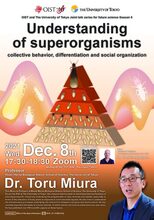
OIST-UT Joint talk series for future science-Season5
OIST-UT Joint talk series for future science-Season 5: Understanding of superorganisms: collective behavior, differentiation and social organization

[PhD Thesis Presentation_Zoom]-Masakazu Taira- Investigation of serotonergic regulation of reward-based behaviors
PhD public presemtation
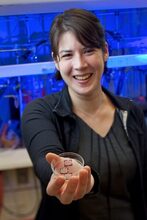
Faculty Lunchtime Seminar (Prof. Christine Luscombe)
Organic electronics is a rising field, with novel applications including but not limited to stretchable solar cells, flexible display screens, and biosensors. The high performance of these organic electronics is enabled by the outstanding optoelectronic and thermomechanical features of organic semiconducting materials. As the field has progressed, bioelectronics has attracted increasing interest. Bioelectronics, merging manufactured electronics and biology, has emerged as a promising platform for translating electronic signals into ionic ones and vice versa , converting ionic signals into electronic signals ( e. g., biosensors and ionic skins). As a result, in recent years, applications in tissue engineering, drug delivery, electrophoresis and physiology have been developed. As we look into the future of bioelectronics, “living” electronics that merge the synthetic and biological world, holds some interest.
Separate to the above, microplastics composed of various plastic and polymeric materials pose as a major global environmental issue that can cause detrimental consequences to marine organisms and across the food chain. We have been collaborating with researchers at UW to identify microplastics in marine organisms in the Puget Sound and have identified that not all organisms consume the same microplastics.
In both projects, we seek to initiate collaborations with those at OIST and look forward to initiating discussions with various units.
Living electronics and fate of plastics
Organic electronics is a rising field, with novel applications including but not limited to stretchable solar cells, flexible display screens, and biosensors. The high performance of these organic electronics is enabled by the outstanding optoelectronic and thermomechanical features of organic semiconducting materials. As the field has progressed, bioelectronics has attracted increasing interest. Bioelectronics, merging manufactured electronics and biology, has emerged as a promising platform for translating electronic signals into ionic ones and vice versa , converting ionic signals into electronic signals ( e. g., biosensors and ionic skins). As a result, in recent years, applications in tissue engineering, drug delivery, electrophoresis and physiology have been developed. As we look into the future of bioelectronics, “living” electronics that merge the synthetic and biological world, holds some interest.
Separate to the above, microplastics composed of various plastic and polymeric materials pose as a major global environmental issue that can cause detrimental consequences to marine organisms and across the food chain. We have been collaborating with researchers at UW to identify microplastics in marine organisms in the Puget Sound and have identified that not all organisms consume the same microplastics.
In both projects, we seek to initiate collaborations with those at OIST and look forward to initiating discussions with various units.

FALL 2021 Nonlinear Analysis Special Lecture Part 3 of 3
In this talk we will cover the two weight inequalities for the fractional integral operator and related fractional maximal operator. We will discuss the background of two-weight inequalities and Sawyer’s testing conditions and two weight characterization. We will also discuss bump conditions and some open questions.
Please click here to register *After registering, you will receive a confirmation email containing information about joining the meeting.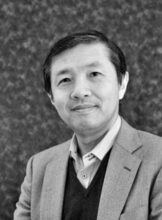
FALL 2021 Nonlinear Analysis Seminar Series
It is important to describe the motion of phase boundaries by macroscopic energy in the process of phase transitions. Typical energy describing the phenomena is the van der Waals energy, which is also called a Modica-Mortola functional with a double-well potential or the Allen-Cahn functional. It turns out that it is also important to consider the Modica-Mortola functional with a single-well potential since it is often used in various settings including the Kobayashi-Warren-Carter energy, which is popular in materials science. It is very fundamental to understand the singular limit of such a type of energies as the thickness parameter of a diffuse interface tends to zero. In the case of double-well potentials, such a problem is well-studied and it is formulated, for example, as the Gamma limit under L 1
convergence.
However, if one considers the Modica-Mortola functional, it turns out that L 1
convergence is too rough even in the one-dimensional problem.
We characterize the Gamma limit of a single-well Modica-Mortola functional under the topology which is finer than L 1
topology. In a one-dimensional case, we take the graph convergence. In higher-dimensional cases, it is more involved. As an application, we give an explicit representation of a singular limit of the Kobayashi-Warren-Carter energy. Since the higher-dimensional cases can be reduced to the one-dimensional case by a slicing argument, studying the one-dimensional case is very fundamental. A key idea to study the one-dimensional case is to introduce “an unfolding of a function” by changing an independent variable by the arc-length parameter of its graph. This is based on a joint work with Jun Okamoto (The University of Tokyo), Masaaki Uesaka (The University of Tokyo, Arithmer Inc.), and Koya Sakakibara (Okayama University of Science, RIKEN).
Please click here to register *After registering, you will receive a confirmation email containing information about joining the meeting.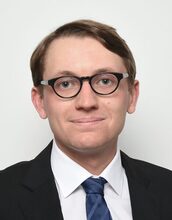
Seminar "On Diffusive and Stochastic Transport barriers" by Dr. Florian Kogelbauer
Speaker: Dr. Florian Kogelbauer, National Institute of Advanced Industrial Science and Technology, Sendai, Japan
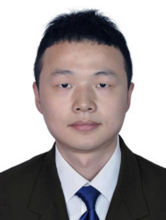
[Seminar] Hydrodynamic interaction and coalescence of rising bubbles in viscoelastic fluids: a numerical approach
CFF unit is pleased to invite you to the seminar.
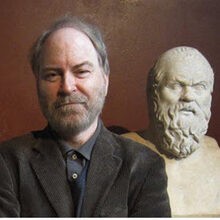
[Seminar] Enactive solutions to the integration problem in psychiatry.
Our speaker will be Shaun Gallagher (PhD, Hon D.Phil) on Enactive solutions to the integration problem in psychiatry. We will be meeting on Monday, December 6, 2021 at 9:30 am, Japan time (GMT +9).
Neural Computation Workshop 2021
Neural Computation Unit will hold a retreat/reunion at OIST conference center. If you are interested in joining, pleaese contact ncus@oist.jp

[PhD Thesis Presentation_Zoom] - Xunwu Hu - "Developing Integrin-targeted Peptide Assemblies to Direct Cancer Cell migration"
PhD Public Presentation

FALL 2021 Nonlinear Analysis Special Lecture Part 2 of 3
In this talk we will cover the one weight inequalities for the fractional integral operator and related fractional maximal operator. We will discuss the background of A_p weights and A_{p,q} weights and go over the dyadic decomposition of the fractional integral operator. We will also cover auxiliary results like sharp constants and.
Please click here to register *After registering, you will receive a confirmation email containing information about joining the meeting.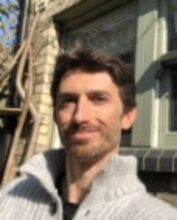
[Seminar] Localisation phenomena in frustrated magnets
TQM unit is pleased to invite you to the seminar!
FALL 2021 Nonlinear Analysis Seminar Series
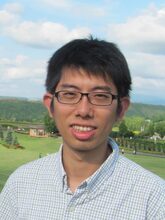
In this talk, we will describe some new ways of characterising Sobolev norms, using sizes of superlevel sets of suitable difference quotients. They provide remedy in certain cases where some critical Gagliardo-Nirenberg interpolation inequalities fail, and lead us to investigate real interpolations of certain fractional Besov spaces. Some connections will be drawn to earlier work by Bourgain, Brezis and Mironescu. Joint work with Haim Brezis, Jean Van Schaftingen, Qingsong Gu, Andreas Seeger and Brian Street.
Please click here to register *After registering, you will receive a confirmation email containing information about joining the meeting.OIST Representation Theory Seminar
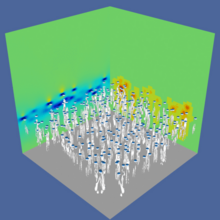
[Seminar] Direct numerical simulation of bubble-induced turbulence
CFF unit is pleased to invite you to the seminar!
Carrollian and Galilean conformal higher-spin algebras in any dimensions
Seminar hosted by QG Unit. Speaker: Dr. Andrea Campoleoni , Universite de Mons Title: Carrollian and Galilean conformal higher-spin algebras in any dimensions

Notes from Underground: vocal communication in a eusocial rodent
Notes from Underground: vocal communication in a eusocial rodent
Naked mole-rats are exceptionally long-lived (reported lifespans > 30 years), highly resistant to cancer and low oxygen conditions and live in colonies organized to support a single breeding female, queen. This type of social behavior is rare among mammals, although commonly found in the social insects: bees, wasps, and ants. Yet how naked mole-rats organize and maintain their elaborate social groups is largely unknown. Recent work from our group identified a critical role for vocal communication in naked mole-rats societies. Using machine learning techniques, we developed methods to automatically classify and analyze features of one vocalization type, the soft chirp, a greeting call used by naked mole-rats when they encounter one another in their subterranean habitat. We demonstrated that soft chirps encode information about individual and colony identity, suggesting the possibility of colony specific dialects. In a series of behavioral tests, we found that vocal responses were enhanced to home colony vs. foreign colony audio playbacks and to artificially generated colony-specific dialects. We further demonstrated that these dialects can be learned, as pups that were cross-fostered early in life acquired the dialect of their adoptive colonies. Colony specificity of vocal dialects is controlled in part by the presence of the queen: when the queen was lost the vocal cohesiveness of the colony dialect disintegrated. In this lecture I will highlight some of the remarkable lessons we can learn from the naked mole-rat including how vocal communication emerges as an evolutionary mechanism for enhanced cooperation.
Catch-All Mathematical Colloquium
In the mathematics part, we will hear an exciting overview talk for a general audience. November speaker is Masato Mimura from Tohoku University. In the discussion session, we will hear about the speaker's experience as a mathematician, especially in choosing fields of research. Y ou can take inspiration from them and exchange ideas with other participants in a small group. After the sessions are over, there will be a tea time where participants can chat freely.
You can join Part I only or both parts of the colloquium. Please register before November 19, 5 pm. Click here to register!
Part I Expository math talk 3-4 pm
Speaker: Masato Mimura 見村万佐人 (Tohoku University 東北大学)
Talk Title : The Green--Tao theorem for number fields
Abstract: The celebrated Green--Tao theorem states that an upper dense subset of the set of rational primes contains arbitrarily long arithmetic progressions. Later, Tao proved that an upper dense subset of the set of Gaussian primes, namely, prime elements in the integer ring $\mathbb{Z}[\sqrt{-1}]$ of the number field $\mathbb{Q}(\sqrt{-1})$ contains arbitrarily shaped constellations. (We will explain the precise statement in the talk.) In the paper, Tao asked whether the same conclusion holds in the setting of arbitrary number fields. In this joint work with Wataru Kai (Tohoku U.), Akihiro Munemasa (Tohoku U.), Shin-ichiro Seki (Aoyama Gakuin U.) and Kiyoto Yoshino (Tohoku U.), we answer Tao's question in the affirmative. We have an application to the setting of a binary quadratic form. More precisely, given a form $F$, we study combinatorics on the set of pair of integers $(x,y)$ for which $F(x,y)$ is a rational prime. No serious background of number theory is required for this talk.
Part II Diversity Panel Discussion 4-5 pm

FALL 2021 Nonlinear Analysis Special Lecture Part 1 of 3
I will introduce fractional integral operator and its related maximal operator. After developing some of the relevant background, we will discuss its boundedness on Lebesgue spaces and various related inequalities of Hedberg and Welland. We will also cover endpoint bounds and applications to Sobolev-Poincare inequalities.
Please click here to register *After registering, you will receive a confirmation email containing information about joining the meeting.
[PhD Thesis Presentation_External] – Sam Ross – “The stability of ecosystems under global environmental change.”
Ph.D Thesis Presentation for External by Sam Ross
Virtual Seminar"Marangoni effect and phase separation of mixtures within a Hele-Shaw cell"Ricardo López
Language: English
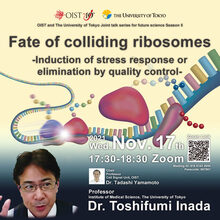
OIST-UT Joint talk series for future science-Season 5: Fate of colliding ribosomes -Induction of stress response or elimination by quality control-
OIST-UT Joint talk series for future science-Season 5: Fate of colliding ribosomes -Induction of stress response or elimination by quality control-
The Festina Lente Bound and some applications
Seminar hosted by QGU.
Speaker: Prof. Thomas Van Riet, KU Leuven
Title: The Festina Lente Bound and some applications

Faculty Lunchtime Seminar (Prof. Hoehn)
Title: How do quantum systems see each other?
Abstract: I will discuss what happens when you use quantum systems as frames of reference and how this might help us understand more about the structure of spacetime in a theory that encompasses both quantum and relativity theory.
https://groups.oist.jp/faculty-lunch
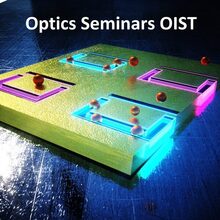
[Seminar] Sensing and NV (color centers in diamond)
Title: Sensing and NV (color centers in diamond)
Speaker: Dr. Dmitry Budker Section Leader, Helmholtz Institute Mainz, Johannes Gutenberg University, Germany Professor of Graduate School, University of California at Berkeley, USA
OIST Representation Theory Seminar

FALL 2021 Nonlinear Analysis Seminar Series
Joint work with Almut Burchard (Toronto) and Ryan Gibara (Cincinnati). Let \(f\) be a function of bounded mean oscillation (BMO) on cubes in \(\mathbb{R}^n\), \(n > 1\). If \(f\) is rearrangeable, we show that its symmetric decreasing rearrangement\(Sf\) belongs to \(\mathrm{BMO}(\mathbb{R}^n)\). We also improve the bounds for the decreasing rearrangement \(f^*\) by Bennett, DeVore and Sharpley, \(\|f^*\|_{ \mathrm{BMO}(\mathbb{R}_+)} \leq C_n\|f\| _{\mathrm{BMO}(\mathbb{R}^n)}\), by eliminating the exponential dependence of \(C_n\) on the dimension \(n\). The key is to switch from cubes to a comparable family of shapes. Using a family of rectangles that is preserved under bisections, one can prove a dimension-free Calder\'on-Zygmund decomposition, and the boundedness of the decreasing rearrangement with the same constant. Restricting to the subspace of functions of vanishing mean oscillation (VMO), we show that these rearrangements take VMO functions to VMO functions. Furthermore, while the map from \(f\) to \(f^*\) is not continuous in the BMO seminorm, we prove continuity when the limit is in VMO.
Please click here to register *After registering, you will receive a confirmation email containing information about joining the meeting.
[Seminar] Quantum spin entanglement and criticality in 2D triangular magnet KYbSe2
TQM unit is pleased to invite you to the seminar!
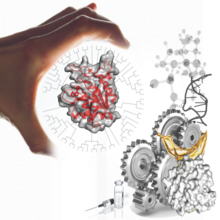
OIST Mini Symposium "New Proteins by Evolution and Engineering"
Originally scheduled for December 2020, this mini-symposium has been rescheduled to November 2021 due to the situation with COVID-19. The new dates are Nov 15 - 17, 2021. The mini-symposium will be held online.
OIST Mini Symposium | Organizing unit: Protein Engineering and Evolution | Open to OIST members | For non-OIST members: Please contact the organizers for information on how to participate.
We ask for your understanding that the dates are subject to change due to the current COVID-19 situation.
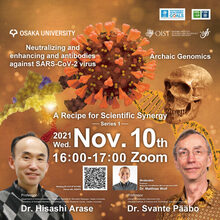
A Recipe for Scientific Synergy Series 1 by Dr. Svante Pääbo and Dr. Hisashi Arase
OIST - Osaka University: A Recipe for Scientific Synergy-Series 1 by Dr. Svante Pääbo and Dr. Hisashi Arase
FALL 2021 Nonlinear Analysis Seminar Series
Compensated Integrability is a recent tool of Functional Analysis, which extends both the Gagliardo Inequality and the Isoperimetric Inequality. It concerns the determinant of positive symmetric tensors whose row-wise Divergence is controlled in the space of bounded measures. It is somehow dual to Brenier's Theorem of Optimal Transport. Its applications cover several domains in Mathematical Physics and in Differential Geometry.