



Past Events
Seminar "Genomic evolution driven by environmental stress." by Prof. Eugene Kroll
Prof. Eugene Kroll, Research Associate Professor, University of Montana, Missoula
Seminar: Microsystems for Shaping and Sensing Cellular Interactions
Dr. Alexander Revzin, Professor, Department of Physiology and Biomedical Engineering Mayo Clinic, USA
Seminar: Light and nanotechnology tools for understanding the brain
Dr. Vincent Daria, Leader of the Neurophotonics Research Group, John Curtin School of Medical Research, ANU, Australia
Seminar: Progress in Bi-2223 high-Tc superconductor (HTS) development
Dr. Hitoshi Kitaguchi, Deputy Director, Research Center for Functional Materials/ National Institute for Materials Science.
[Seminar] "Standalone Simulator and Cloud Service for Multilevel Physiological Model Simulations" - Prof. Asai, Yamaguchi University
Professor Yoshiyuki Asai, Yamaguchi University
[Seminar] "Design and Implementation of High Performance Biochemical Simulator" - Prof. Funahashi, Keio University
Professror Akira Funahashi, Keio University
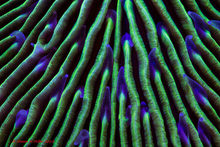
Okinawa Underwater Photographic Society Meeting in November
This event is open to all. Event in English (no interpretation). For details contact organizers.
Seminar: Evolutionary Design of biosynthetic pathways and regulatory networks
Dr. Daisuke Umeno, Associate Professor at Graduate School of Engineering, Chiba University, Japan , PRESTO, Japan Science and Technology Agency (JST), Japan E-mail address: umeno@faculty.chiba-u.jp
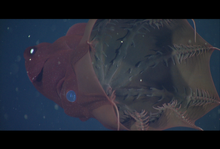
Seminar by Bret Grasse “A look into the deep: Collecting and keeping deep-sea cephalopods in public aquaria”
Speaker: Bret Grasse, Aquarist, Monterey Bay Aquarium
22nd International Congress of Zoology (ICZ) "Animal evolution: genomics, genes, development and physiology"
Seminar: DNA polymerases that defend genomes against double-strand breaks
Dr. Richard D. Wood, Professor The University of Texas MD Anderson Cancer Center Department of Epigenetics and Molecular Carcinogenesis The Virginia Harris Cockrell Cancer Research Center https://gsbs.uth.edu/faculty/faculty-directory/faculty-profiles.htm?id=1347028
Percolating Cluster Devices: Possible Neuromorphic Applications
Nanoparticles by Design Unit (Sowwan Unit) would like to announce a seminar by Prof. Simon Brown
Speaker : Prof. Simon Brown, The MacDiarmid Institute for Advanced Materials and Nanotechnology, Dept. of Physics and Astronomy, University of Canterbury, 8140, Christchurch, New Zealand
Title : Percolating Cluster Devices: Possible Neuromorphic Applications
Abstract :
When clusters (nanoparticles) are randomly deposited on a surface they produce percolating films which have remarkable electrical properties. [1] Here we will focus on devices that contain percolating films of Sn clusters, and especially those that are deliberately constructed so as to guarantee that the film is close to the percolation threshold (onset of conduction). In these devices quantum mechanical tunnelling...
“Symmetry-protected topological phases in SU(N) cold fermion systems” Keisuke Totsuka (YITP, Kyoto University)
Seminar by Prof. Keisuke Totsuka (YITP, Kyoto U), Tue 8th Nov 2-3PM at D015.

OIST-JST Presto Joint Symposium on Frontiers in Optics and Photonics
As OIST is encouraging researchers to obtain external funding, this is a unique occasion for JST, the second biggest funding agency in Japan, and OIST, to get to know each other. This meeting is open to ALL OIST RESEARCHERS and MEMBERS of the OIST community.
Seminar: "Comparable senescence induction in 3D human cartilage model by exposure to therapeutic doses of X-rays or C-ions" by Yannick Saintigny, CEA
Dr Yannick Saintigny. French Atomic Energy Commission (CEA). Research Laboratory and Open Facility for Radiation Biology with Accelerated Ions (LARIA). Large Heavy Ion National Accelerator (GANIL).

MCM2016: Moduli space, conformal field theory and matrix models
OIST Workshop - Application Deadline: Aug 21, 2016 - OIST members are welcome to attend all scientific sessions - website: https://groups.oist.jp/mtpu

Software Week2016: Intro to GPU Programming
Intro to GPU Programming by Jan Moren (OIST HPC Team)
"The Geometry of Fluid Membranes: Variational Principles, Symmetries and Conservation Laws"
"Professor Jemal Guven, Universidad Nacional Autonoma de Mexico, "Language: Engrish. No interpretation."
Software Week2016: LabVIEW
LabVIEW Seminar by Ryuji Kuwashima (National Instruments Japan Corporation)

Software Week2016: Allinea
Allinea Hands-on Session by Florent Lebeau (Allinea Software Ltd.)

Software Week2016: Allinea
Enhance research production using Allinea Performance Reports
Presenter: Florent Lebeau (Allinea Software Ltd.)
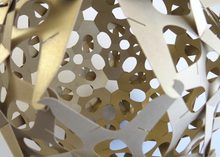
Talk & Event: Sculpture "Mathematics and Art"
Sculptor Rinus Roelofs. Language: English. No interpretation.

GEMS 2016: Geometry and Material Sciences (Pacific Graphics 2016 Satellite Workshop)
The workshop is open to the research community for participation.
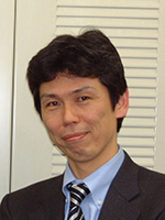
Seminar: "Chemical approaches for deciphering protein functions in live systems" by Prof. Itaru Hamachi
Professor Itaru HAMACHI Department of Synthetic Chemistry and Biological Chemistry Graduate School of Engineering Kyoto University, Kyoto and CREST/JST, JAPAN http://www.sbchem.kyoto-u.ac.jp/hamachi-lab/index.php?members%2Fhamachi

Pacific Graphics 2016
OIST members are welcome to attend all scientific sessions (show your OIST ID card at the entrance). For non-OIST members, please register at https://indico.oist.jp/PG16
Crystalline defects in highly efficient widegap Cu(In,Ga)Se2 based solar cells
Professor Takeaki Sakurai from Tsukuba University
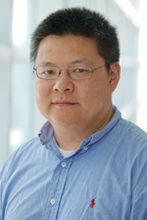
[Rescheduled Oct.4] Enzyme-instructed self-assembly (EISA) as a multistep molecular process for selectively killing cancer cells by Prof. Bing Xu, Brandeis University
After receiving his BS and MS in 1987 and 1990, Bing Xu obtained his PhD in 1996. Notably, Xu lab pioneered the integration of enzyme transformation and self-assembly for developing molecular biomaterials, synthesized the first dimeric nanoparticle consisting of quantum dot and nanomagnet for exploring nanoscience inside cells, reported the first case of using dopamine to anchor molecules on iron oxide surface, and demonstrated the first case of using enzymatic transformation and self-assembly to inhibit cancer cells selectively. Being identified on the Thomson Reuters "highly-cited researchers 2014&2015" list, Bing Xu currently is a professor in the Department of Chemistry, Brandeis University, and his research focuses on the applications of molecular engineering in materials, biology, and medicine.
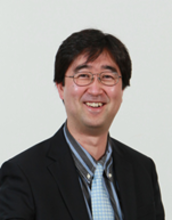
Seminar:"Microfluidics & Organs on a Chip" by Prof. Shuichi Takayama
Title: "Microfluidics & Organs on a Chip" by Prof. Shuichi Takayama
Organization: University of Michigan
Talk will bw open to all OIST students and researchers.
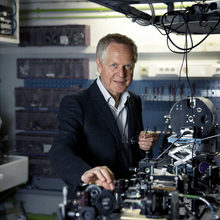
Open seminar by Prof Dalibard
Dr. Jean Dalibard, Professor, Collège de France and Laboratoire Kastler Brossel
This is a part of the summer school CQD2016
Okinawa School in Physics: Coherent Quantum Dynamics (CQD2016)
OIST Workshop - Application Deadline: May 2016 - OIST members are welcome to attend all scientific sessions - website: https://groups.oist.jp/group/okinawa-school-physics-coherent-quantum-dynamics
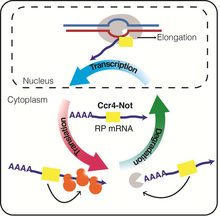
Seminar "Translational capacity of a cell is determined during transcription elongation via the Ccr4-Not complex" Prof. Martine Collart.
Speaker: Prof. Martine Collart
Professor, Department of Microbiology and Molecular Medicine, University of Geneva
Title: Translational capacity of a cell is determined during transcription elongation via the Ccr4-Not complex
OIST Mini Symposium "Nanoscopic Synaptic Function"
OIST Mini Symposium - Open to all OIST members - For non-OIST members: Please contact the organizers for information on how to participate.

"Mean Curvature Flows and Isotopy Problems"
"Professor Mao-Pei Tsui, National Taiwan University, "Language: Engrish. No interpretation."
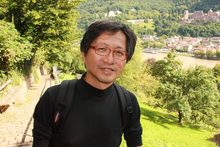
"On the Dirichlet-Euler problem"
"Professor Chun-Chi Lin, National Taiwan Normal University, "Language: Engrish. No interpretation."
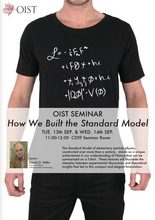
"How We Built the Standard Model, Part 2" Prof David G. Hitlin
Dr David G. Hitlin, Professor of Physics, California Institute of Technology. Part 2 of 2. The first seminar is the previous day, September 13, from 11:00 in C209.
Software Week 2016: EnginFrame
See demos, ask questions one-on-one, and get hands-on time with technology from EnginFrame.
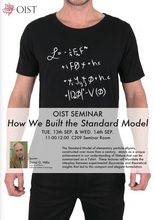
"How We Built the Standard Model, Part 1" Prof David G. Hitlin
Dr David G. Hitlin, Professor of Physics, California Institute of Technology. Part 1 of 2. The second seminar is the following day, September 14, from 11:00 in C209.

Software Week 2016: Intel
See demos, ask questions one-on-one, and get hands-on time with technology from Intel.

Spiking neurons can discover predictive features by aggregate-label learning
Date: Friday, September 9, 2016
Venue: C016, Lab1, Level-C
Time: 11am - noon [a talk of 45 minutes and Q&A session]
Speaker: Dr Robert Guetig
Affiliation: Max-Planck-Institute for Experimental Medicine. Theoretical Neuroscience

EndNote Seminar: Basic and Intermediate, September 9th
The library is hosting EndNote Seminar on September 9th. We will invite an expert of EndNote from its providing company. There are two sessions: Basic and Intermediate. Please register from the library webpage.
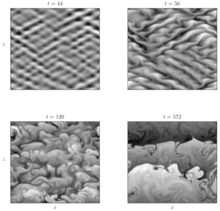
"A new, settling-driven instability in two-component, stably stratified fluids"
"Dr. Eckart Meiburg, Professor, University of California, Santa Barbara", "Language: Engrish. No interpretation."

Web of Science Seminar: Basic and Advanced on September 6th
The library is hosting Web of Science Seminar on September 6 with training provided by an expert from Thomson Reuters. There are two sessions: Basic and Advance. You may choose to attend one or both sessions.
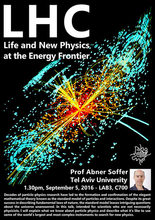
"LHC - Life and New Physics at the Energy Frontier" Prof Abner Soffer
Prof Abner Soffer of Tel Aviv University
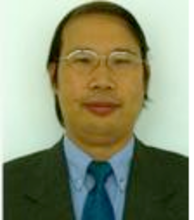
[Seminar] Titanates and Their Derivatives: New Electrode Materials for Energy Conversion and Storage-Fuzhou University -Prof. Mingdeng Wei
Professor Mingdeng Wei from Fuzhou University
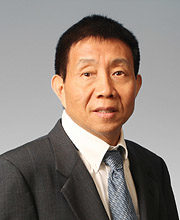
Solubility and Internal Stress in Nanograined Materials and Nanoparticles
Professor Tong-Yi Zhang from Shanghai University.
Metal-polymer nanocomposites produced by supersonic cluster beam implantation with tunable electrical, optical and mechanical properties
Prof. Paolo Milani
Dept. of Physics, University of Milano, Italy
Abstract
Stretchable functional materials are enabling ingredients for the fabrication of wearable electronics, smart prosthetics and soft robotics. These applications require the integration of electronic, optical and actuation capabilities on soft, conformable and biocompatible polymeric substrates [1].
Recently it has been demonstrated that neutral metallic nanoparticles produced in the gas phase and aerodynamically accelerated in a supersonic expansion can be implanted in a polymeric substrate to form a conductive nanocomposite with superior resilience and interesting structural and functional properties [2-4]. This approach is called supersonic cluster beam implantation (SCBI).
Here I present experimental and theoretical results about the production of devices based on...
[Seminar] Prof Sadgrove 'Tractor beams and composite traps: ideas for manipulating matterwaves with nano-optics'
Dr Mark Sadgrove, Associate Professor, Research Institute of Electrical Communication, Tohoku University, Japan
Language: English
New Aspects of Micro- and Macro-scopic Flows in Soft Matters
Jointly-organized symposium - OIST members are welcome to attend all scientific sessions - website: TBA
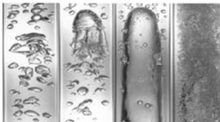
"Experimental Studies on Multiphase Flow for Improved Engineering Systems" Prof. Shuichiro Miwa
BIO: Dr. Shuichiro MIWA earned his M.S. and Ph.D. in Nuclear Engineering at Purdue University in 2008, 2012, respectively. He earned his B.S. in Civil/ Environmental Engineering at Purdue in 2005. Following his doctorate, he joined the Division of Energy and Environmental Systems at Hokkaido University as an assistant professor and conducting research at the laboratory of nuclear system safety. His research interests include nuclear thermal-hydraulics, gas-liquid two-phase flow experiments and modeling, and Fukushima Daiichi decommissioning support.
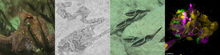
From Cephalopods to Microscopy and Back Again
Ruth A Byrne, PhD; Medical University of Vienna, Austria.
For the last ten years, Dr. Byrne has studied cephalopods at the Konrad Lorenz Institute for Evolution and Cognition Research, universities in the USA and Israel, and beneath the pristine waters of the Caribbean. She first investigated behavioral lateralization and arm use in the Common Octopus, and subsequently the complex body pattern communication system of the Caribbean Reef Squid. Most recently, she has been working on human cell biology.
Host: Michael Kuba ( michael.kuba@oist.jp) , Physics and Biology Unit.