



Past Events
Silver workshop VI
This 6th workshop is a continuation of the previous workshop in a series. This workshop discuss the modularity and duality, geometric group, cohomological theory, singularity theory, and knot theory. All talks on the black board are expected. The online participation of Zoom will be possible by the registration in advance.
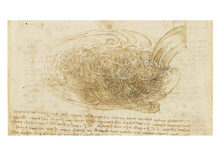
[Canceled] Seminar "Variable Energy Flux in Turbulence" by Prof. Mahendra K. Verma
[Speaker] Prof. Mahendra K. Verma, Department of Physics, Indian Institute of Technology Kanpur

OIST Workshop "New trends of conformal theory from probability to gravity"
OIST Workshop | Website | Main organizer: Shinobu Hikami (Mathematical and Theoretical Physics Unit) | OIST members are welcome to attend all scientific sessions (registration required).

OIST Representation Theory Seminar: Quantum wreath product
[Seminar] "Organic Ionic-Electronic Mixed Conductors-Based on 3D Bioelectronic Interfaces, Reconfigurable Neuromorphic Circuits, and 3D Neuronal Cell Cultures" by Prof. Myung-Han Yoon
Prof. Myung-Han Yoon, Gwangju Institute of Science and Technology (GIST)
Pontryagin Maximum Principle in optimal control of coherent spin dynamics of radical pairs in Quantum Biology II. Computational Analysis
Mr. Pablo Jimenez, Instituto Balseiro, Universidad Nacional de Cuyo, Phd Student
Dr. Jose Rodriques, OIST, Analysis and Partial Differential Equations Unit(Abdulla Unit),Staff Scientist
Mr. Chenming Zhen, OIST, Phd Student
Pontryagin Maximum Principle in optimal control of coherent spin dynamics of radical pairs in Quantum Biology I. Mathematical foundation and optimality conditions.
Professor Ugur G. Abdulla, Okinawa Institute of Science and Technology, Japan
The Quantum Biology of Reactive Oxygen Production in Electron Transfer Flavoprotein
Speater:Professor Carlos F. Martino, Johns Hopkins University Applied Physics Lab, USA
Microspectroscopic detection of magnetic field sensitive radical pair processes in biological systems
Lecturer: Professor Jonathan Woodward, University of Tokyo
Recent Advances in Quantum Biology
Plenary Speakers :
Jonathan R. Woodward, University of Tokyo, Japan
Carlos F. Martino, Johns Hopkins University Applied Physics Lab, USA
Ugur G. Abdulla, OIST, Japan
What is Quantum Biology and why does it matter?
Lecture 1. Jonathan Woodward University of Tokyo, Japan
Seminar "Flexible control of probabilistic goal-directed navigation" by Dr. Chuntao Dan
Dr. Chuntao Dan, Howard Hughes Medical Institute Janelia Research Campus
[Seminar] Entropy and active elasticity by Dr. Dhrubaditya Mitra
Target Audience: Interns, Students, PostDocs, and those who are interested in the same research field.
Language: English
[Seminar] Dimensional reduction in causal sets by Dr. David Meyer, UC San Diego, L4E01
"Dimensional reduction in causal sets" by Dr. David Meyer, UC San Diego
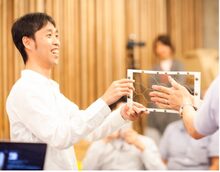
[Schedule Update, from 16PM][Seminar] "Subjective haptics: From product design to sensorimotor augmentation" by Prof. Yoshihiro Tanaka
Dr. Yoshihiro Tanaka, Professor in Nagoya Institute of Technology / Inamori research institute for Science. Hosted by Cybernetic Humanity Studio (OIST - Sony CSL collaboration)
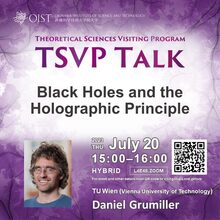
TSVP Talk: "Black Holes and the Holographic Principle" by Daniel Grumiller
TSVP Talk Language: English (no interpretation). Target audience: General audience / everyone at OIST and beyond. Freely accessible to all OIST members and guests without registration (also via Zoom).
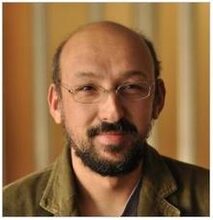
[Hybrid seminar] "Evolving bi-directional referential communication in minimal autonomous agents" by Prof. Seth Bullock, University of Bristol
[Hybrid seminar] "Evolving bi-directional referential communication in minimal autonomous agents" by Prof. Seth Bullock, University of Bristol
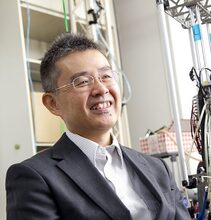
[Hybrid seminar] "Soft Robotics: Understanding Design Principles and the Implications of Soft Bodies" by Prof. Koh Hosoda, Kyoto University
[Hybrid seminar] "Soft Robotics: Understanding Design Principles and the Implications of Soft Bodies" by Prof. Koh Hosoda, Kyoto University
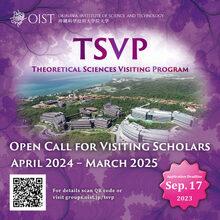
Open Call for TSVP Visiting Scholars in FY2024
Open Call for TSVP Visiting Scholars in FY2024
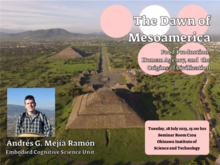
[Public Lecture - Okinawa] The Dawn of Mesoamerica: Food Production, Human Agency, and the Origins of Civilization
Dr. Andrés G. Mejía Ramón (OIST) will give a preview version of his presentation at the Embassy of Mexico in Tokyo to the OIST community. He is a Postdoctoral Researcher, archaeologist, ecologist, and complex systems scientist focusing on the interactions between humans and the environment across deep time.
[Seminar] Bubble clustering and the related phenomena by Prof. Shu Takagi
Target audience
Interns, Students, PostDocs and those who are interested in the same research field.
Language: English
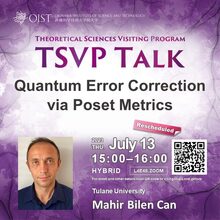
TSVP Talk: "Quantum Error Correction via Poset Metrics" by Mahir Bilen Can
TSVP Talk Language: English (no interpretation). Target audience: General audience / everyone at OIST and beyond. Freely accessible to all OIST members and guests without registration (also via Zoom).
[Seminar] MLDS Seminar 2023-5 by Dr. Makoto Yamada (Associate Professor, OIST), Ms. Terezie Sedlinska (PhD Student, OIST), Seminar Room L5D23
Speaker 1: Dr. Makoto Yamada, Associate Professor, OIST
Title: Approximating 1-Wasserstein Distance with Trees
Speaker 2: Ms. Terezie Sedlinska, PhD Student, OIST
Title: Reinforcement learning behavioral modeling: Two studies of Pavlovian and operant valuation in humans and rats
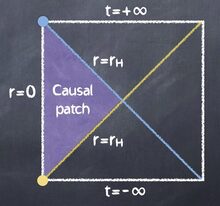
QG group meeting: self-dual GR in de Sitter space (Yasha Neiman)
QG group meeting. Speaker: Yasha Neiman. Title: "Self-dual GR in de Sitter space".
MiS Series Seminar : Minimal Energetic Dynamics of Living Systems
Andres Mejia Ramon
OIST, Postdoctoral Scholar, Froese Unit
[Seminar] "Asymptomatic: How Deciphering the Silent Spread of COVID-19 Can Help Prevent Pandemics to Come" by Prof. Joshua Weitz.
[Seminar] "Asymptomatic: How Deciphering the Silent Spread of COVID-19 Can Help Prevent Pandemics to Come" by Prof. Joshua Weitz.
OIST Developing Neural Circuits Course (DNC) 2023
OIST Workshop | Website | Main organizer: Yoko Yazaki-Sugiyama (Neuronal Mechanism for Critical Period Unit) | OIST members are welcome to attend all scientific sessions (registration required). Tutorial sessions are closed (only for selected participants)
Optimizing space and time overhead for fault-tolerant error correction
Target Audience: Intern, Students, PostDocs, and those who are interested in the same research field.

Gravity, the Improbability Engine
A physics lecture for non-physicists. Title: Gravity, the Improbability Engine. Speaker: Yasha Neiman.
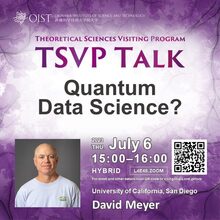
TSVP Talk: "Quantum Data Science?" by David Meyer
TSVP Talk Language: English (no interpretation). Target audience: General audience / everyone at OIST and beyond. Freely accessible to all OIST members and guests without registration (also via Zoom).
[Seminar]MLDS Seminar 2023-4 by Mr. Tobias Freidling (University of Cambridge), Dr. Mohammad Sabokrou (Staff Scientist, OIST), Seminar Room L5D23
Speaker 1: Mr. Tobias Freidling, Ph. D. Student, University of Cambridge
Title: Sensitivity Analysis with the R^2-calculus
Speaker 2: Dr. Mohammad Sabokrou, Staff Scientist, OIST
Title: Deep Learning Advancements in Anomaly Detection for Computer Vision
[Seminar] Energy transfer in two-dimensional turbulent flow affected by polymers and surfactants
Target audience: Interns, Students, PostDocs, and those who are interested in the same research field.
Language: English
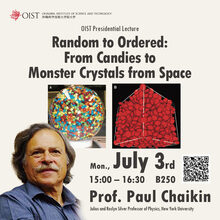
Presidential Lecture: Random to Ordered: From Candies to Monster Crystals from Space by Prof. Paul Chaikin
Presidential Lecture on the topic "Random to Ordered: From Candies to Monster Crystals from Space" by Prof. Paul Chaikin
Light-intensity coding in the human prefrontal cortex
Target audience: Interns, Students, PostDocs, and those who are interested in the same research field. Language: English
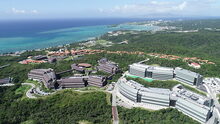
[Call for registrations] Symposium on "Frontiers in Nonlinear Differential Equations and Stokes Phenomena"
[Call for registrations] Symposium on "Frontiers in Nonlinear Differential Equations and Stokes Phenomena" Deadline: August 20th, 2023
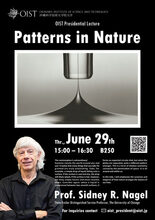
Presidential Lecture: Patterns in Nature by Prof. Sidney Nagel
Presidential lecture on the topic "Patterns in Nature" by Prof. Sidney Nagel

Joint Workshop IBISML,NC,BIO,MPS
IBISML, NC, BIO, MPS Joint Workshop, Onsite and Online
Information-Based Induction Sciences and Machine Learning (IBISML) Technical Committee on Neurocomputing (NC) Special Interest Group on Bioinformatics (SIGBIO) Mathematical Modeling and Problem Solving (MPS)
Seminar by Mr. En Watanabe (University of Otago)
Seminar by Mr. En Watanabe, University of Otago
Title : Using a donut-shaped beam for the super-resolution of proteins
Date: June 28 (Wed)
Time: 11:00 - 12:00
Venue: C015 (Lab1)
[Zoom Seminar] "Brain-Motivated Computation: A Journey from Neural Circuitry to Cognitive Control Systems" by Dr. Alexander G. Ororbia II, Rochester Institute of Technology
"Brain-Motivated Computation: A Journey from Neural Circuitry to Cognitive Control Systems" by Dr. Alexander G. Ororbia II, Rochester Institute of Technology
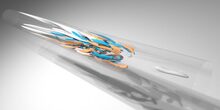
Seminar "Transition to turbulence in pipe flow" by Prof. Dr. Marc Avila
[Speaker] Prof. Dr. Marc Avila, Director ZARM - Center of Applied Space Technology and Microgravity, Professor of Fluid Mechanics, University of Bremen, Germany
Seminar "Correlations in SU(N) Fermi-Hubbard models" Dr. Mathias Mikkelsen, Kindai University, Osaka
Speaker: Dr. Mathias Mikkelsen, Kindai University, Osaka
[Seminar] A kinase and a phosphatase: molecular basis of inherited Parkinson’s disease by Prof. Suzanne Pfeffer
June 23, 2023 10:00 - 11: 00 at C700, Lab 3
Prof. Suzanne Pfeffer, Biochemistry at Stanford University School of Medicine
A kinase and a phosphatase: molecular basis of inherited Parkinson’s disease
Activating mutations in LRRK2 kinase cause Parkinson’s disease and activated LRRK2 phosphorylates a subset of Rab GTPases. We have discovered that Rab phosphorylation blocks primary cilia formation in specific neurons and astrocytes in the nigrostriatal circuit that are important for dopaminergic signaling in Parkinson's disease. This lecture will provide an update on our studies using purified LRRK2 and its counteracting PPM1H phosphatase to understand how the proteins become localized and activated on membrane surfaces. In addition, work will be presented related to the consequences of LRRK2 mutation for neurons and astrocytes in the dorsal striatum of mice and humans.
Levitodynamics of optically active nanocrystals
Did you know that for some very special materials, when you shine light on them they will cool down? Optical refridgeration is not a very well known phenomena but it can cool materials down to temperatures below 100K! In this talk we will discuss the optical trapping of nanoparticles AND the bulk cooling of them using optical means.
[Seminar]MLDS Seminar 2023-3 by Mr. Guillaume Houry (Universite Paris-Saclay), Mr. Yuxan Wan (Michigan State Univ. ), Seminar Room L5DE23
Speaker 1: Mr. Guillaume Houry, Ph. D. Student, Universite Paris-Saclay
Title: Average complexity of Persitence Homology computing in Topological Data Analysis
Speaker 2: Yuxuan Wan, Ph. D. Student, Michigan State University
Title: Defense Against Gradient Leakage Attacks via Learning to Obscure Data
[Mini-course]: Lectures on Capacities | Professor Daniel Spector, National Taiwan Normal University
Zoom registration: https://oist.zoom.us/meeting/register/tJErce-tpj0jGNN5TM3gwMnRnGHaY5lNZ5Qk#/registration
Lecture 1 Tuesday, June 20 10 am Title: Riemann and Lebesgue Integration Abstract: The Riemann integral is perfectly suited for consideration of volume, surface area, arc length, and integration of functions in classical analysis - when the sets in question are smooth and the functions in question continuous. In this talk, we introduce these ideas and explain the progression from Riemann integration to Lebesgue integration, emphasizing in particular the powerful tools one obtains from this construction. Lecture 2 Wednesday, June 21st 10 am Title: Capacitary Integration Abstract: The Lebesgue integral provides one with a satisfactory tool for many purposes in mathematical analysis. Yet in the modeling of natural phenomena, with the introduction of partial differential equations, integrals which are not Lebesgue integral makes a prominent appearance - capacitary integrals. In this talk we discuss this motivation for capacitary integration, with examples, explain the differences with Lebesgue integration, and show the usefulness of these non-standard objects. Lecture 3 Thursday, June 22nd 10 am Title: Capacitary Sobolev Inequalities and Applications Abstract: The study of capacities and Capacitary Sobolev Inequalities is now more than half a century old, and yet there are still a number of open research questions to investigate concerning them. In this talk we discuss in more detail Capacitary Sobolev inequalities with an emphasis on a subject with the most recent activity - Capacitary Sobolev Inequalities around L1. Open problems will be mentioned.Zoom link: TBA
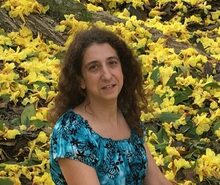
[Seminar] Prof. Rebecca Ostertag - Using plant functional traits to design forest restoration
Dr. Rebecca Ostertag, Professor of Biology, University of Hawai'i at Hilo. Language: English, no interpretation. Target audience: everyone at OIST and beyond. Seminar will be held in-person only.
OIST Computational Neuroscience Course (OCNC) 2023
OIST Workshop | Website | Main organizer: Erik De Schutter (Computational Neuroscience) | OIST members are welcome to attend all scientific sessions | Tutorial sessions are closed (only for selected participants)
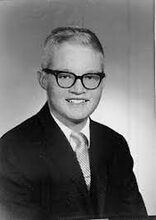
【Mathathon5】On the d and M Conjecture
Speaker: John Lewis
University of Kentucky, USA
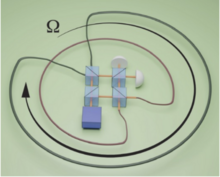
Generation of entanglement from mechanical rotations
Generation of entanglement from mechanical rotations. Is it possible to use the movement of massive objects to generate quantum entanglement? If this proves to be possible - what consequences would it have for our understanding regarding quantum mechanics and how it relates to space and time? Come to this talk by thoeretician Dr Toros, from Scotland - to hear how he proposes to do it and what might be the consequences!
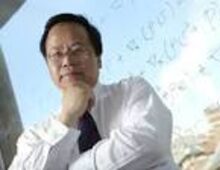
【Mathathon4】Nonlinear Partial Differential Equations of Mixed Type:Analysis and Connections
Prof. Gui-Qiang Chen
Statutory Professor in the Analysis of PDEs, Director of the Oxford Centre for Nonlinear PDEs ( OxPDE ), University of Oxford, United Kingdom