



Past Events
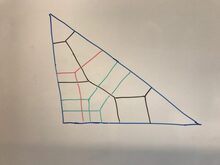
QG group meeting
Speaker: Vyacheslav Lysov (Quantum Gravity). Title: "Introduction to tropical Gromov-Witten thoery"
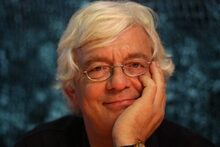
Keynote Lecture by Dr. Marin van Heel (Cryo-Electron Microscopy Course)
Kyenote Lecture for CryoEM Course
OIST Representation Theory Seminar
Speaker: Robert Spencer, University of Cambridge
Title:(Some) Gram Determinants for \(A_n\) nets
[Seminar] Prof. Bumjoon Kim "Intertwinned Néel and spin nematic orders in a square-lattice antiferromagnet"
Target audience: Interns, Students, PostDocs, and those who are interested in the same research field.
Language: English

(Somewhat) Functional Journal Club
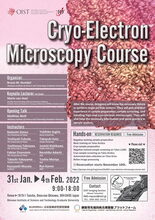
FY2021 Cryo-Electron Microscopy Course at OIST
Internal and External workshop

Theoretical Physics Seminar: Yasha Neiman
Theoretical Physics Seminar. Speaker: Yasha Neiman (Quantum Gravity). Title: "A new kind of Feynman rules: what is Higher Spin Gravity?"
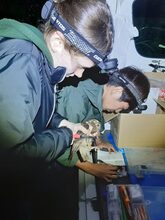
Determining Habitat Occupancy of Okinawa's Owl Species Using Passive Acoustic Monitoring
Cassie George is an RSD intern working with the Environmental Informatics Section in collaboration with the Takagi lab at Hokkaido University
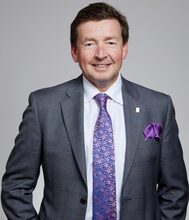
Virtual Seminar"Gaborheometry: Applications of the Gabor Transform to Time-Resolved Oscillatory Rheometry"Gareth H. McKinley
Language: English

QG group meeting: a little bit from everyone
Quantum Gravity group meeting. Short stories by everyone.
第5回おきなわオープンTECHゼミ The 5th Seminar of Okinawa Open Facilities Network (OoPNet)
Title : Development of helium recycling network in Okinawa Date and time : Tuesday, February 22, 2022 15:00-16:00 Speakers : Kazuma Takada (OIST) , Hisaya Munemoto (University of the Ryukyus) Language : Japanese Registration required
[Catch-All Math Colloquium] Monge-Ampère equations related to optimal transport and geometric optics, Jun Kitagawa, Michigan State University
In the mathematics part, we will hear an exciting overview talk for a general audience. In the discussion session, we will hear about the speaker's experience as a mathematician. Y ou can take inspiration from them and exchange ideas with other participants in a small group. After the sessions are over, there will be a tea time where participants can chat freely.
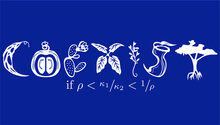
Faculty Lunchtime Seminar (Prof. Armitage)
Title : Context-dependence and generality in community ecology - two sides of the same coin?
Abstract : Community ecology is often derided for its lack of general theory. Factors limiting one population's growth can be insignificant elsewhere. While this flavor of context-dependence clearly impedes a predictive theory of ecology, it also paradoxically functions as a very general mechanism that maintains biodiversity. I will review how a context-dependent competition theory can clarify the general mechanisms underlying species coexistence and geographic range limits. I'll then riff on the theme of ecological context-dependence as it pertains to our unit members' work on carnivorous plants, pestiferous bats, and noxious roadside weeds.
https://groups.oist.jp/faculty-lunch

Zoom seminar for OIST "Bridging the genotype-phenotype-fitness divide: from protein interfaces to organismal fitness"
Protein Engineering and Evolution Unit would like to invite you to a seminar!

Theoretical Ecology Discussion: Dynamics of within-population structure stabilise complex ecological communities
Casual discussion group based on pre-recorded theoretical ecology talks; all welcome! This week: André M. de Roos (University of Amsterdam). Dynamics of within-population structure stabilise complex ecological communities
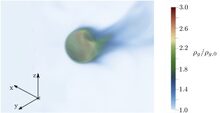
[Seminar] Mr. Nicolo Scapin "Weakly compressible simulation of evaporating droplets"
Target audience: Interns, Students, PostDocs, and those who are interested in the same research field.
Language: English
OIST Representation Theory Seminar
Speaker: Stephen Doty, Loyola University Chicago
Title: Schur-Weyl duality for braid and twin groups via the Burau representation

Annual Inspection_Ultracentrifuge [Hitachi Koki]
Annual Inspection_Ultracentrifuges

[PhD Thesis Public Presentation_Zoom] ‐ Swathy Babu– “Banp regulates DNA damage response and chromosome segregation to promote cell-cycle progression and cell survival in zebrafish retina.”
PhD Thesis Public Presentation
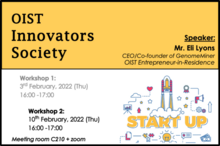
OIST Innovators Society - Workshop 2 - ‘How to Make a Capitalization Table’
OIST Innovators Society - Workshop 2: 'How to make a Capitalization Table'
This session is meant to provide an explanation of how stock holdings are recorded in a capitalization or “cap” table – what a cap table is used for – and how to make one. It will also cover stock options as compensation, which is important if you are starting a company or joining a company as a new employee.

Theoretical Ecology Discussion: Species heterogeneity can reduce the potential for alternative stable states in food webs
Casual discussion group based on pre-recorded theoretical ecology talks; all welcome! This week: Vadim Karatayev (University of Guleph). Species heterogeneity can reduce the potential for alternative stable states in food webs.
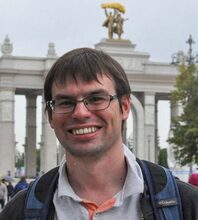
Virtual Seminar"Printing Porosity in Thin Film Polymers"Andrew H. Gibbons
Language: English
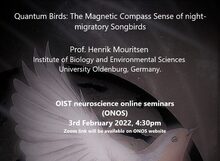
Quantum Birds: The Magnetic Compass Sense of night-migratory Songbirds
Quantum Birds: The Magnetic Compass Sense of night-migratory Songbirds
Prof. Henrik Mouritsen
Institute of Biology and Environmental Sciences, University Oldenburg,
Prof. Mouritsen will present how night-migratory songbirds seem to use a quantum mechanical mechanism to sense magnetic compass information which they use to navigate with exquisite precision over thousands of kilometres (Mouritsen 2018). In the past years, evidence has mounted that migratory birds use a light-dependent, radical pair-based mechanism to sense the axis of the geomagnetic field lines (Hore & Mouritsen 2016). The magnetic compass of night-migratory birds is sensitive to anthropogenic electromagnetic field disturbances being ca. 1000 times weaker than the current WHO guideline limits (Engels et al. 2014; Schwarze et al. 2016). This result could be significant in relation to migratory bird conservation measures and strongly indicates that the basic sensory mechanism underlying the magnetic compass of night-migratory songbirds should be based on quantum mechanical principles rather than classical physics. Neuroanatomical data have shown that magnetic compass information is detected in the eye and then processed in a small part of the thalamofugal visual pathway terminating in the visual processing centre “Cluster N” (Mouritsen et al. 2005; Liedvogel et al. 2007; Feenders et al. 2008; Zapka et al. 2009). When Cluster N is deactivated, migratory European Robins can no longer use their magnetic compass, whereas their star compass and sun compass abilities are unaffected (Zapka et al. 2009). The lagena and associated pathways remained intact. Bilateral section of the trigeminal nerve had no effect on the birds’ ability to use their magnetic compass (Zapka et al. 2009). Very recently, we could also show that the light-sensitive protein Cryptochrome 4 from a night-migratory songbird is magnetically sensitive in vitro based on a radical-pair mechanism (Xu et al. 2021).
Zoom link
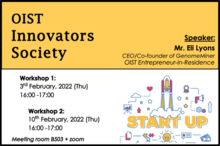
OIST Innovators Society - Workshop 1 - ‘When and Why to Incorporate a Company’
OIST Innovators Society - Workshop 1: 'When and Why to Incorporate a Company'
In this session, we will learn and discuss about some of the considerations to be made, and the processes involved when starting a company.
OIST Representation Theory Seminar
[Seminar] Instability and turbulence in electroconvective flows
CFF unit is pleased to invite you to the seminar.

Theoretical Ecology Seminar/Discussion Series
Theoretical Ecology Seminar/Discussion Series
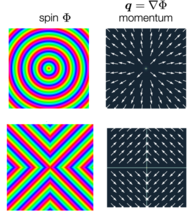
[Seminar] Low Energy Structure of Spiral Spin Liquid
TQM unit is pleased to invite you to the seminar.
Virtual Seminar"Topologically Active Polymers"Davide Michieletto
Language: English
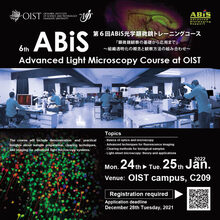
6th ABiS Advanced Light Microscopy Course at OIST
6th ABiS Advanced Light Microscopy Course at OIS
Catch-All Mathematical Colloquium
In the mathematics part, we will hear an exciting overview talk for a general audience. January speaker is Ade Irma Suriajaya from Kyushu University. In the discussion session, we will hear about the speaker's experience as a mathematician. Y ou can take inspiration from them and exchange ideas with other participants in a small group. After the sessions are over, there will be a tea time where participants can chat freely.
Part I Expository math talk 3-4 pm
Speaker: Ade Irma Suriajaya Kyushu University
Talk Title : Goldbach’s Conjecture and the Riemann Hypothesis in Number Theory, and Their Relations to Zeta Functions
Abstract: Number Theory has a very long history that dates back to thousands of years ago. The main goal of this study is to understand properties of numbers which can essentially be reduced to understanding prime numbers. Number Theory has evolved over time and yet we are still left with several important old problems. Among, Goldbach’s conjecture which is celebrating its 280th anniversary this year (by the time of my talk in 2022) and the Riemann hypothesis which is now over 160 years old remain unsolved. In this talk, I would like to explain what these problems are about and briefly introduce a few recent works which are related to them, especially how the distribution of zeros of the Riemann zeta function comes into play. My talk will be given in the perspective of Analytic Number Theory.
Abstract: Part II Diversity Panel Discussion 4-5 pm
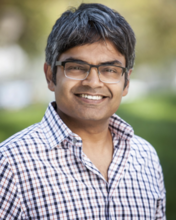
[Seminar] Quantum-inspired manifold learning and feedback-based quantum optimization
Quantum-inspired manifold learning and feedback-based quantum optimization - Dr Mohan Sarovar (Sandia National Labs in California, USA)
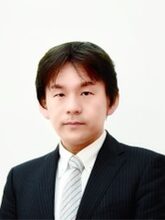
[Seminar] "Topological transition by vector spin chirality on a triangular lattice" by Prof. Yusuke Nambu
TQM unit is pleased to invite you to our seminar!
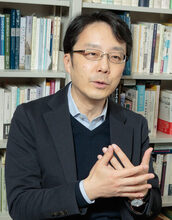
[Seminar] "A twisted loop between inside and outside: Searching for an appropriate image of consciousness based on phenomenology and enactivism"
Our speaker, Shigeru Taguchi will be talking on " A twisted loop between inside and outside: Searching for an appropriate image of consciousness based on phenomenology and enactivism ".
Virtual Seminar"Explosive boiling of drops near a solid surface and inside a turbulent flow"Chao Sun
Language: English
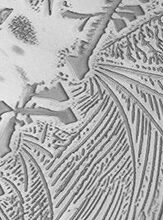
Silver workshop 2022 “Complex geometry and related topics”
Organizers: Noriko Yui (Queen’s University at Kingston), Kyoji Saito (RIMS), Shinobu Hikami (OIST)
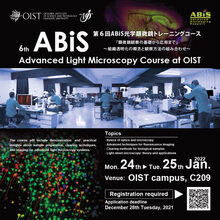
Registration: 6th ABiS Advanced Light Microscopy Course at OIST
Registration deadline: December 28th 2021
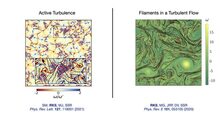
[Seminar] "Lagrangian Studies in Active and Inertial Turbulence" by Mr Rahul Kumar Singh
CFF unit is pleased to invite you to the seminar.
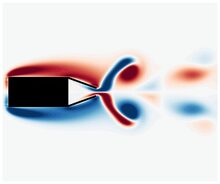
[Seminar] "An Immersed Boundary Method for high-fidelity simulations with moving objects: application to active flow control" by Dr. Athanasios E. Giannenas
CFF unit is pleased to invite you to the semianr!

Orchestrating inter-organ communication and treating metabolic disorders by mRNA decay of hepatokines
Monday, December 20, 14:00-15:00
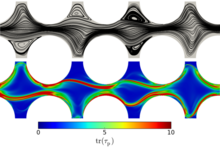
[Seminar] "Elastic instabilities in confined geometries" by Mr. Manish Kumar
CFF unit is please to invite you to the seminar!

[PhD Thesis Presentation_Zoom] ‐ Evropi Toulkeridou – “Automated segmentation of micro-CT images by deep learning and its application to comparative morphology”
PhD Public Presentation

TItle: [PhD Thesis Public Presentation_Zoom] - Yuka Suzuki - The effects of dispersal network structure on biodiversity pattern and stability in metacommunities.
PhD Thesis Public Presentation
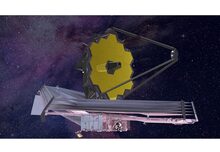
[Seminar] James Webb Space Telescope: The First Light Machine, by Philip Stahl
Seminar talk on the James Webb Space Telescope mission by Dr. H. Philip Stahl, Space Optics Manufacturing Technology Center, NASA Marshall Space Flight Center , AL 35812
Organized by the OIST Optics and Photonics Student Society
FALL 2021 Nonlinear Analysis Special Lecture Part 2 of 2
It has been an open question if maximal operators M satisfy the endpoint regularity bound \(mathop{\mathrm{var}}(Mf) \leq C \mathop{\mathrm{var}}(f)\). So far the majority of the known results has been in one dimension. I give an overview of the progress on this question with a focus on the techniques. Next I present the techniques used in the recent proofs of \(mathop{\mathrm{var}}(Mf) \leq C \mathop{\mathrm{var}}(f)\) for several maximal operators in higher dimensions. They are mostly geometric measure theoretic in the spirit of the relative isoperimetric inequality and involve a stopping time and various covering arguments.
Please click here to register *After registering, you will receive a confirmation email containing information about joining the meeting.
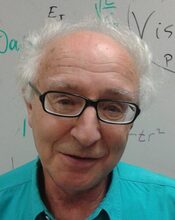
[Seminar] Clusters and orbitals in transition metal compound
TQM unit is pleased to invite you to the seminar.

FALL 2021 Nonlinear Analysis Seminar Series
Dr. David Beltran, University of Wisconsin – Madison Title: Endpoint Sobolev regularity of the fractional maximal function Abstract: Abstract: I will report some of the recent progress regarding the boundedness and continuity of the map \(f \mapsto |\nabla M_\beta f|\) from the endpoint space \(W^{1,1}(\mathbb{R}^d)\) to \(L^{d/(d-\beta)}(\mathbb{R}^d)\), where \($M_\beta\) denotes the fractional version of either the centered or uncentered Hardy--Littlewood maximal function. After contributions by several authors, the problem is now totally solved in an affirmative way. I will focus on my contributions, which correspond to the radial case (in joint work with J. Madrid), and also to the general case for the continuity of the map (in joint work with C. González-Riquelme, J. Madrid and J. Weigt). Please click here to register *After registering, you will receive a confirmation email containing information about joining the meeting.
Please click here to register *After registering, you will receive a confirmation email containing information about joining the meeting.
Japan Eco-Evo English Seminar #4
The seminar aims to initiate interactions between international and Japanese researchers and students in the field of Ecology and Evolution. The 4th event is specially presented by three great speakers.
Elio Borghezan (Kyoto University) from 3pm - Iki Murase (University of the Ryukyus) from 4pm Marta Quitián (Tokyo Metropolitan University) from 5pm
on Dec. 13th(Fri).
Please join us if you have time. https://sites.google.com/view/jee-english-seminar
We’ll meet at L4-E1 or via zoom.
You can get the zoom link after registering from the following link. https://docs.google.com/forms/d/e/1FAIpQLSf67u80HNik6YePCyHYNENst5IVEc2Jq4xpkXbWwrU-y1W5HQ/viewform
*JEEES is created by Jamie M Kass (Economo Unit) and me to cultivate interactions between international and domestic researchers/students in ecology/evolution in Japan.
FALL 2021 Nonlinear Analysis Special Lecture Part 1 of 2
It has been an open question if maximal operators M satisfy the endpoint regularity bound \(mathop{\mathrm{var}}(Mf) \leq C \mathop{\mathrm{var}}(f)\). So far the majority of the known results has been in one dimension. I give an overview of the progress on this question with a focus on the techniques. Next I present the techniques used in the recent proofs of \(mathop{\mathrm{var}}(Mf) \leq C \mathop{\mathrm{var}}(f)\) for several maximal operators in higher dimensions. They are mostly geometric measure theoretic in the spirit of the relative isoperimetric inequality and involve a stopping time and various covering arguments.
Please click here to register *After registering, you will receive a confirmation email containing information about joining the meeting.
