



Past Events
[Online Seminar] Frugal Algorithm Selection for Combinatorial Search by Erdem Kus
Speaker: Erdem Kus (University of St Andrews)
Title: Frugal Algorithm Selection for Combinatorial Search
Zoom URL: https://oist.zoom.us/j/92712490586?pwd=g4Vn0gCPzL4Z9NUiDRMwGL5nX7txWa.1 ID: 927 1249 0586 Passcode: 702129
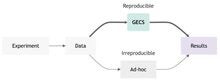
Mini Course: Good Enough Computing in Science (GECS)
Session 3:
Automated workflow , version-controlled scripts, and Structured project
Presenters: Igors Dubanevics Y4 @KondrashovU, Vitoria Yumi Uetuki Nicoleti Y1 @FukunagaU, Yui Tateyama Y1 @PaoU
Please contact gs-cp@oist.jp if you have any questions.
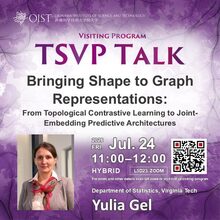
TSVP Talk: Bringing Shape to Graph Representations: From Topological Contrastive Learning to Joint-Embedding Predictive Architectures by Yulia Gel
TSVP Talk Language: English (no interpretation). Target audience: General audience / everyone at OIST and beyond. Freely accessible to all OIST members and guests without registration (also via Zoom).
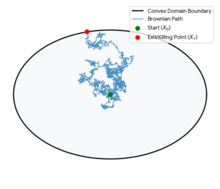
Mini Course: Brownian motion from a PDE point of view
Speaker: Prof. Nicolas Dirr from Cardiff University
Establishing the existence of solutions to stochastic ordinary differential equations and the relation with Dirichlet and Neumann problems for linear differential operators.
2 x 2-hour sessions. July 22 and July 24.
Seminar"Effect of surface structures on droplet dynamics"Junichiro Shiomi
Language: English
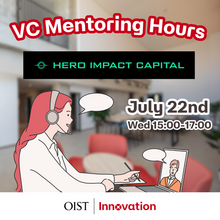
VC Mentoring Hours: HERO IMPACT CAPITAL
In collaboration with leading venture capital firms, OIST Innovation offers startups and entrepreneurial researchers or students the opportunity to connect directly with venture capitalists for one-on-one mentoring and discussion. Each round begins with an open seminar-style introduction, where participants can learn about the VC firm's investment focus and characteristics. This is followed by private, closed-door mentoring sessions between startups/researchers/students and the VC representatives.
The featured VC for this round is HERO IMPACT CAPITAL .
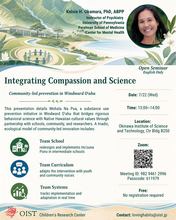
Integrating Compassion and Science: Community-led prevention in Windward O'ahu
Open Seminar (English only) 13:00-14:00
Community-based research/substance use prevention/Hawaiian context
Speaker: Kelsie H. Okamura, PhD, ABPP, Instructor of Psychiatry, University of Pennsylvania
In-Person & Zoom
[Seminar]MLDS Unit Seminar 2026-2 by Dr. Eshant English
Speaker: Dr. Eshant English, Postodoctoral Researcher, Deep Learning Theory Team, University of Tokyo
Title: Inference from Generative Processes
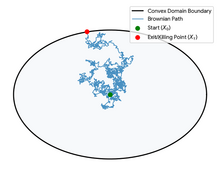
Mini Course: Brownian motion from a PDE point of view
Brownian motion from a PDE point of view. Session 2
Presented by Prof. Nicolas Dirr from Cardiff University.
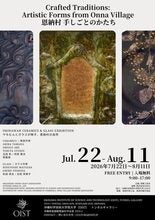
Crafted Traditions: Artistic Forms from Onna Village (2026)
Building on the success and positive reception of last year's Crafted Traditions exhibition, this renewed showcase continues a growing collaboration between the Onshu Craft Association and OIST. Featuring works by Tokuzan Seragaki, Akira Tamada, Hideyoshi Matsuda, Emiko Yoshida, Shigeo Abe, and the Teruya Studio, the exhibition celebrates the creativity, craftsmanship, and cultural heritage that make Onna Village unique.
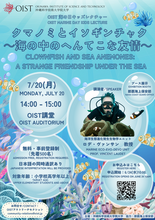
Marine Day Kids Lecture "Clownfish and Sea Anemones: a Strange Friendship Under the Sea
kids lecture

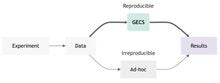
Mini Course: Good Enough Computing in Science (GECS)
Session 2:
Automated workflow , version-controlled scripts, and Structured project
Presenters: Igors Dubanevics Y4 @KondrashovU, Vitoria Yumi Uetuki Nicoleti Y1 @FukunagaU, Yui Tateyama Y1 @PaoU
Please contact gs-cp@oist.jp if you have any questions.
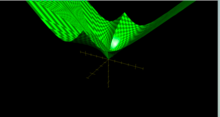
Mini Course: Convexity and semiconvexity in the Heisenberg group and Carnot groups with applications
Convexity and semiconvexity in the Heisenberg group and Carnot groups with applications
4 hours over the week July 13 to July 17 (Monday and Friday) NOTE: Dates have changed .
Room: Lab 4 F01.
Professor Federica Dragoni, Cardiff University, TSVP visitor
Strucshare meeting: Presentation by Alberto Perez and Professor Mihnea Bostina
Strucshare Meeting & Presentation
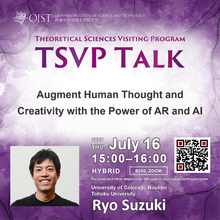
TSVP Talk: Augment Human Thought and Creativity with the Power of AR and AI by Ryo Suzuki
TSVP Talk Language: English (no interpretation). Target audience: General audience/everyone at OIST and beyond. Freely accessible to all OIST members and guests, no registration required (also via Zoom).
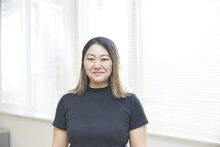
[Seminar] Mechanistic Insights into Peptide Recognition by Abl Kinase for Therapeutic Peptide Design by Dr. Ai Shinobu, WPI-PRIMe, Osaka University
Dr. Ai Shinobu, Specially Appointed Associate Professor, WPI-PRIMe, Osaka University
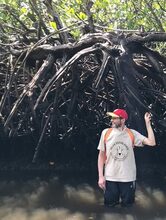
Seminar "Mangroves… from text mentions in ancient times to biomes in modern open-world games"
Title: Mangroves… from text mentions in ancient times to biomes in modern open-world games
Speaker: Prof. Farid DAHDOUH-GUEBAS,Vrije Universiteit Brussel

[Seminar] "Ion polarons in Bose gases: from perturbative regime to many-body bound states" Prof. Gregory Astrakharchik, Polytechnic University of Catalonia (UPC), Barcelona, Spain
Seminar by Prof. G. E. Astrakharchik, Polytechnic University of Catalonia (UPC), Barcelona, Spain

Developing Neurocircuit Course (DNC) 2026
OIST Workshop | Website | Main organizer: Yoko Yazaki-Sugiyama (Neuronal Mechanism for Critical Period Unit) |OIST members are welcome to attend all scientific sessions. Meals are closed sessions for registered participants only.
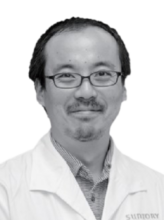
[Seminar] "Transposon-Colonized Intron Gain follows Parasitism-Mediated Horizontal Transfer of a Cytochrome P450 Gene" by Dr. Eiichiro Ono
Dr. Eiichiro Ono, Senior General Manager/Research Specialist at Research Institute, Suntory Global Innovation Center Ltd., Kyoto, Japan
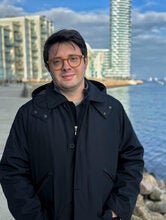
[Seminar] Uniform Mean Estimation for Heavy-Tailed Distributions via Median-of-Means.
Prof. Andrea Paudice, Aarhus University, Aarhus, Denmark

【Seminar】"Extending the Reach of CryoEM" by Dr. Christopher J. Russo, MRC Laboratory of Molecular Biology
【Seminar】"Extending the Reach of CryoEM" by Dr. Christopher J. Russo
MRC Laboratory of Molecular Biology, Francis Crick Avenue, Cambridge, United Kingdom
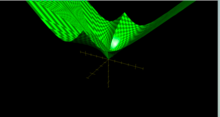
Mini Course: Convexity and semiconvexity in the Heisenberg group and Carnot groups with applications
Convexity and semiconvexity in the Heisenberg group and Carnot groups with applications
4 hours over the week July 13 to July 17 (Monday and Friday) NOTE: Dates have changed .
Room: Lab 4 F01.
Professor Federica Dragoni, Cardiff University, TSVP visitor
[Seminar] "Particle-hole origin of thermal beating in dipole-compression modes of a 1D Bose gas" Prof. Giulia De Rosi, Universitat Politècnica de Catalunya
Seminar by Prof. Giulia De Rosi, Polytechnic University of Catalonia (UPC), Barcelona, Spain
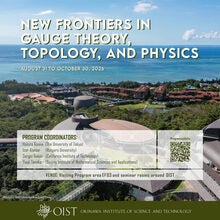
Call for registrations: Autumn school and workshops on Gauge Theory, Topology, and Physics (TSVP-TP26GT)
Please check the event websites for further details and registration:
Autumn School (31 August - 3 September 2026) One-day Workshop for Women (4 September 2026) Workshop (7 - 11 September 2026)OIST Innovation Accelerator Showcase
「7/10(金)午後、KOZA BASECAMPにて、OIST発アクセラの4スタートアップが技術をお披露目。ピッチ+ブース展示+ネットワーキング。登録不要・出入り自由。」
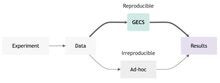
Mini Course: Good Enough Computing in Science (GECS)
Session 1:
Automated workflow , version-controlled scripts, and Structured project
Presenters: Igors Dubanevics Y4 @KondrashovU, Vitoria Yumi Uetuki Nicoleti Y1 @FukunagaU, Yui Tateyama Y1 @PaoU
Please contact gs-cp@oist.jp if you have any questions.
[Seminar] Magnetic Omniconversion and the Art of Source-Independent Field Shaping
Dr J AUME C UNILL -S UBIRANAS , Physics Department, Autonomous University of Barcelona, Barcelona, Spain
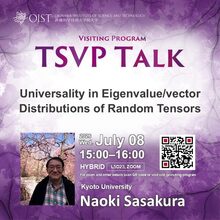
TSVP Talk: "Universality in Eigenvalue/vector Distributions of Random Tensors" by Naoki Sasakura
Eigenvalues/vectors of tensors are a modern concept extending those of matrices. They appear in various non-linear contexts, such as spin glasses, general relativity, artificial intelligence, quantum information theory, string theory, and so on, while the matrix counterpart in linear-contexts. Understanding universal properties across various tensor eigen problems is important, since this assures their wide applicability. I talk about our recent finding of a universality of tensor eigenvalue/vector distributions, which has been achieved by systematically computing them using quantum field theoretical techniques.
[Seminar 2] Anti-Alzheimer Strategies Utilizing Pathogenic Aβ Dimers By Prof. Young-Soo Kim
Prof. Young-Soo Kim, Professor, Yonsei University, South Korea. Language: English
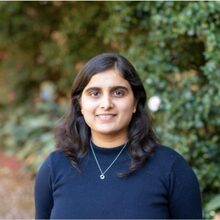
[Seminar] Hybrid two-mode entanglement of optical and microwave modes with inbuilt quantum memory by Dr. Gargi Tyagi

[Seminar 1] Chemical-Driven Clearance of Misfolding Protein Aggregates for Alzheimer Drug Discovery By Prof. Young-Soo Kim
Prof. Young-Soo Kim, Professor, Yonsei University, South Korea. Language: English
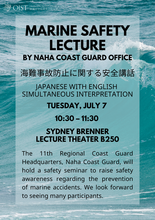
Marine Safety Lecture by Naha Coast Guard Office
Just before the summer marine leisure season, there will be a safety lecture on safety for marine leisure by the 11th Regional Coast Guard Headquarters Naha Coast Guard Office.
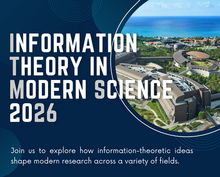
Information Theory in Modern Science 2026
Join us to explore how information-theoretic ideas shape modern research across a variety of fields.
Information Theory in Modern Science
OIST Workshop | Website | Main organizer: Amedeo Roberto Esposito (Information Theory, Probability, and Statistics Unit) |OIST members are welcome to attend all scientific sessions. Meals are closed sessions for registered participants only.
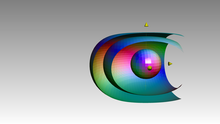
[Seminar] "Some Almost Hermitian flows" by Prof. Casey Kelleher
Title: Some Almost Hermitian flows
Speaker: Prof. Casey Kelleher (Princeton University)
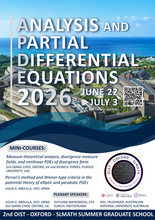
Perron’s method and Wiener-type criteria in the potential theory of elliptic and parabolic PDEs - Lectures 15-16, Ugur Abdulla
Lecture by Ugur Abdulla (2nd OIST-Oxford-SLMath Summer Graduate School on Analysis and Partial Differential Equations)
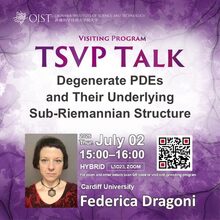
TSVP Talk: "Degenerate PDEs and Their Underlying Sub-Riemannian Structure" by Federica Dragoni
In the talk, I will show how PDEs, which may appear highly degenerate at first glance, become far more regular when interpreted within a different underlying geometry. In particular, I will focus on PDEs related to the so-called Hörmander regularity theory, which is connected to sub-Riemannian geometries such as the Heisenberg group and Carnot groups. The aim is to provide an overview of this theory that is accessible to a broad scientific audience; therefore, I will mostly concentrate on simple yet significant examples.
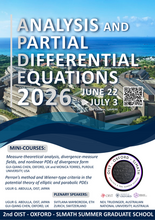
Measure-theoretical analysis, divergence-measure fields, and nonlinear PDEs of divergence form – Lecture 16, Monica Torres
Lecture by Monica Torres (2nd OIST-Oxford-SLMath Summer Graduate School on Analysis and Partial Differential Equations)
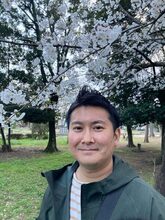
Seminar "Chromatin remodeling-mediated silencing of transposable elements"
Prof. Akihisa Osakabe Graduate School of Science, Chiba University Institute for Advanced Academic Research, Chiba University
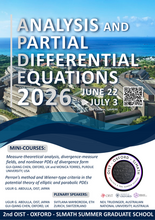
Perron’s method and Wiener-type criteria in the potential theory of elliptic and parabolic PDEs – Lecture 14, Ugur Abdulla
Lecture by Ugur Abdulla (2nd OIST-Oxford-SLMath Summer Graduate School on Analysis and Partial Differential Equations)
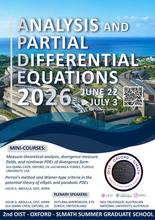
Measure-theoretical analysis, divergence-measure fields, and nonlinear PDEs of divergence form - Lectures 14-15, Monica Torres
Lecture by Monica Torres (2nd OIST-Oxford-SLMath Summer Graduate School on Analysis and Partial Differential Equations)
[Plenary Lecture] Kolmogorov Problem and Wiener-type Criteria in Potential Theory
Lecture by Ugur Abdulla (2nd OIST-Oxford-SLMath Summer Graduate School on Analysis and Partial Differential Equations)
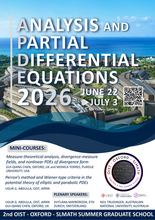
Measure-theoretical analysis, divergence-measure fields, and nonlinear PDEs of divergence form - Lecture 13, Monica Torres
Lecture by Monica Torres (2nd OIST-Oxford-SLMath Summer Graduate School on Analysis and Partial Differential Equations)
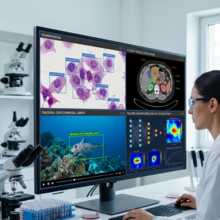
Mini Course: Computer Vision and Machine Learning for Scientific Visual Data Analytics
Computer Vision and Machine Learning for Scientific Visual Data Analytics
8 sessions over 4 weeks June 29 to July 27
UPDATE: Course is now full, any further registrations are on a wait-list basis
Professor Shu Kong, University of Macau, TSVP visitor
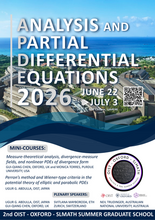
Perron’s method and Wiener-type criteria in the potential theory of elliptic and parabolic PDEs – Lecture 13, Ugur Abdulla
Lecture by Ugur Abdulla (2nd OIST-Oxford-SLMath Summer Graduate School on Analysis and Partial Differential Equations)

[Joint Workshop] IBISML, NC, BIO, MPS
IBISML, NC, BIO, MPS Joint Workshop
Information-Based Induction Sciences and Machine Learning (IBISML) Technical Committee on Neurocomputing (NC) Special Interest Group on Bioinformatics (SIGBIO) Mathematical Modeling and Problem Solving (MPS)
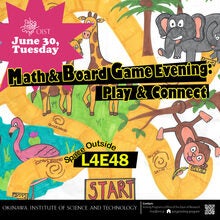
Outreach event by Prof. Federica Dragoni: Math&Board Game Evening
Subject: Upcoming Social Event: Math Outreach & Board Game Night!
Hi everyone,
Are you interested in math education, school outreach, or just looking for a fun break between lectures?
You are warmly invited to an informal social gathering centered on Math Outreach and Board Games , hosted by visiting scientist Professor Federica Dragoni (Cardiff University).
This is a casual space for PhD students, young researchers, and senior staff to hang out, talk about innovative teaching approaches, and—most importantly—play some games! ※Since the venue isn't very large, if there are a large number of participants, admission will be on a first-come, first-served basis.※
What to expect:
The Games: We will have a curated mix of popular commercial board games alongside custom mathematical games designed by students. The Goal: Play, test things out, and get inspired by how games can be used as serious tools to share mathematics with schools and the public. The Vibe: Completely informal. Grab a drink/snack, join a table, and chat freely with peers and faculty.Whether you want to brainstorm your next outreach project or just want to roll some dice and talk math, we hope to see you there!
Date: [Admin to insert] Time: [Admin to insert] Location: [Admin to insert]

[Seminar]"Authentic Purpose: developmental neurology for autonomous neurorobots" Dr. Jeffrey White
Tuesday, June 30, 2026, 16:00-17:00 at L5D23, Lab 5
Authentic Purpose: developmental neurology for autonomous neurorobots
Dr. Jeffrey White