



Past Events
Seminar"Exploring the potential applications of cell membrane in biohybrid devices"Emilio Satoshi Hara
Language: English
【SeminarDAY2】Khovanov Homology and Its Application to Low-Dimensional Topology
Speaker: Dr. Taketo Sano (RIKEN)

Pride Month 2024: Exploring the Rainbow, an introduction to the LGBTQIA+ spectrum
A brief introduction to the wide LGBTQIA+ spectrum and the colourful flags that represent different groups.
The format will comprise a short talk and discussion.
Open to all.
QGU Guest Seminar: Exploring Complex Saddles and Geometries through Holography
QGU Guest Seminar. Speaker: Heng-Yu Chen (National Taiwan University) Title: "Exploring Complex Saddles and Geometries through Holography"
【SeminarDAY1】Khovanov Homology and Its Application to Low-Dimensional Topology
Speaker: Dr. Taketo Sano (RIKEN)
OIST Computational Neuroscience Course (OCNC 2024)
OIST Workshop | Website | Main organizer: Erik De Schutter (Computational Neuroscience Unit) | OIST members are welcome to attend all scientific sessions. Tutorial sessions and meals are closed sessions (for registered participants only).
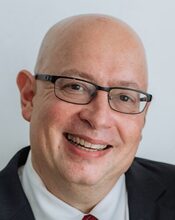
[Seminar]Ito cells: A novel cerebellar interneuron implicated in motor learning, by Prof.George J. Augustine (Temasek Life Sciences Laboratory)
This seminar is hosted by De Schutter Unit. "Ito cells : A novel cerebellar interneuron implicated in motor learning" by Prof. Professor George J. Augustine, Temasek Life Sciences Laboratory. Ctr Bldg -B503, at 14:00-15:00
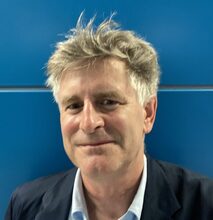
[Seminar]Illuminating links between neural circuit activity and behaviour by Michael Häusser, University College London
This seminar is hosted by De Schutter Unit. "Illuminating links between neural circuit activity and behaviour" by Prof. Michael Häusser, University College London, UK, Ctr Bldg -C209, at 16:00-17:00
QG group meeting: Keith Glennon
QG group meeting. Speaker: Keith Glennon. Title: "From Simple Division Algebras to Simple Lie Algebras, with Glimpses of Non-Simple Kac-Moody Algebras".
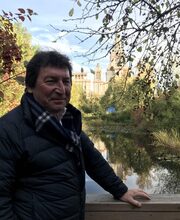
[Seminar] "Copepods – an introduction to the most abundant metazoan clade of the Tree of Life" by Prof. Rony Huys
Dr. Rony Huys, Professor, Department of Life Sciences, The Natural History Museum, London, U.K.
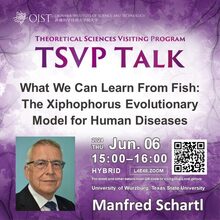
TSVP Talk: "What We Can Learn From Fish: The Xiphophorus Evolutionary Model for Human Diseases" by Manfred Schartl
TSVP Talk "What We Can Learn From Fish: The Xiphophorus Evolutionary Model for Human Diseases" Speaker : Manfred Schartl (University of Würzburg, Texas State University) Language: English (no interpretation). Target audience: General audience / everyone at OIST and beyond. Freely accessible to all OIST members and guests without registration (also via Zoom).
MLDS Unit seminar-2, Makoto Yamada, OIST (PhiNets: Brain-inspired Non-contrastive Learning Based on Temporal Prediction Hypothesis)
MLDS unit seminar, Makoto Yamada (OIST), PhiNets: Brain-inspired Non-contrastive Learning Based on Temporal Prediction Hypothesis
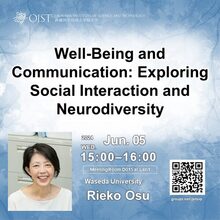
[Seminar] Well-Being and Communication: Exploring Social Interaction and Neurodiversity by Rieko Osu
Title: Well-Being and Communication: Exploring Social Interaction and Neurodiversity
Speaker : Rieko Osu ( Waseda University ) Target audience: General audience / everyone at OIST and beyond. Freely accessible to all OIST members and guests without registration.
R,C,H,O number systems, spinors, triality and spacetime
QG group meeting. Speaker: Yasha Neiman. Title: "R,C,H,O number systems, spinors, triality and spacetime".
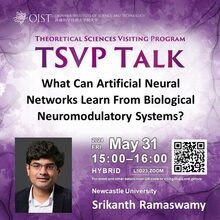
TSVP Talk: "What Can Artificial Neural Networks Learn From Biological Neuromodulatory Systems?" by Srikanth Ramaswamy
TSVP Talk Language: English (no interpretation). Target audience: General audience / everyone at OIST and beyond. Freely accessible to all OIST members and guests without registration (also via Zoom).
[Seminar] "Regularity for doubly nonlinear parabolic type equations" by Prof. Masashi Misawa
Speaker: Prof. Masashi Misawa (Kumamoto University)
Title: Regularity for doubly nonlinear parabolic type equations

【Seminar】 The Brascamp-Lieb inequality | Professor Neal Bez, Saitama University
★Please click here to register

Quantum Technologies with Floating Charged Particles
OIST Workshop | Main organizer: Denis Konstantinov (Quantum Dynamics Unit) | Website | OIST members are welcome to attend all scientific sessions. Meals are closed sessions for registered participants.

Presidential Lecture by Prof. Reiko Kuroda
Presidential Lecture by Prof. Reiko Kuroda on the topic, "Left and right in nature. Does it matter?"
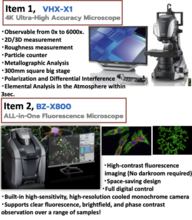
Keyence Microscopy Demonstration @ B380 Imaging Core Facility
Keyence Demo
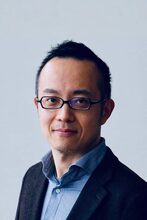
[Seminar] "Environmental responses of symbiotic algae underlying molecular interactions and circulations in coral reefs and other photosymbiotic ecosystems" by Prof. Shinichiro Maruyama
*Seminar Time Changed to 14:30-15:30* Dr. Shinichiro Maruyama, Associate Professor, The University of Tokyo
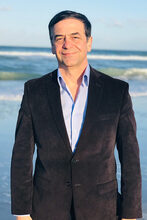
【Seminar】Kolmogorov Problem and Wiener-type Criteria for the Removability of the Fundamental Singularity for the Parabolic PDEs
Speaker: Prof. Ugur Abdulla (OIST)
QG group meeting: Mirian Tsulaia
Weekly QG group meeting. Speaker: Mirian Tsulaia. Title: "Cubic Action for Spinning Black Holes".
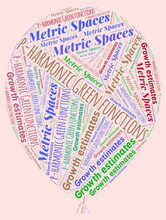
[Seminar] Growth estimates for \(p-\)harmonic Green functions on weighted \(R^n\) and metric spaces | Professor Jana Björn, Linköping University and OIST TSVP Visiting Scholar
Speaker: Professor Jana Björn , Linköping University and OIST TSVP Visiting Scholar Title: The Dirichlet Problem and Boundary Regularity for Nonlinear Parabolic Equations
Abstract: As shown by Serrin in 1964, the growth at an isolated singularity of solutions to the elliptic equation div A(x, ∇u) = 0 in Rn (including p-harmonic functions with p > 1) is exactly determined by the dimension n and the parameter p associated with the equation. In this talk, I will discuss growth and integrability properties for p-harmonic Green functions and their gradients on weighted Rn, with a p-admissible weight, as well as on complete metric spaces equipped with a doubling measure supporting a p-Poincar´e inequality. In these situations, the dimension n is replaced by the local growth of the underlying measure near the isolated singularity, and the obtained growth and integrability exponents are sharp.[QUAST Seminar] Mykhaylo Usatyuk: Closed universes in two dimensional gravity
Dr Mykhaylo Usatyuk
Kavli Institute for Theoretical Physics, Santa Barbara
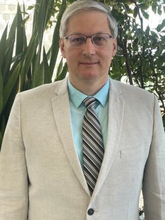
[Seminar] "Ge(0) compound with ambiphilic reactivity" by Prof. Georgii I. Nikonov, Brock University
Dr. Georgii I. Nikonov, Professor, Brock University. Language: English
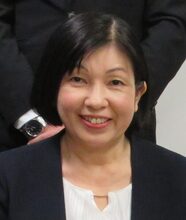
[Seminar] Visualizing flow force transmission by live-cell single-molecule imaging by Assoc. Prof. Sawako Yamashiro
Dr. Sawako Yamashiro
Associate Professor
Laboratory of Single-Molecule Cell Biology, Graduate School of Biostudies,
Kyoto University
QG group meeting: Yasha Neiman
QG group meeting. Speaker: Yasha Neiman. Title: "Unfolded formulation of self-dual higher-spin gravity".
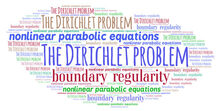
【Seminar】The Dirichlet problem and boundary regularity for nonlinear parabolic equations | Prof. Professor Anders Björn, Linköping University and OIST TSVP Visiting Scholar
Speaker: Professor Anders Björn, Linkoping University and OIST TSVP Visiting Scholar Title: The Dirichlet problem and boundary regularity for nonlinear parabolic equations
Abstract: The p-parabolic equation \[ \partial_t u = \Delta_p u := \dvg(|\nabla u|^{p-2}\nabla u) \] is a nonlinear cousin of the classical heat equation. As such, it offers both difficulties and advantages compared with the heat equation. In the talk, we consider the Perron method for solving the Dirichlet problem for the p-parabolic equation in general bounded domains in $R^{n+1}$. Compared to space-time cylinders, such domains allow the space domain to change in time. Of particular interest will be boundary regularity for such domains, i.e. whether solutions attain their boundary data in a continuous way. Relations between regular boundary points and barriers will be discussed, as well as some peculiar examples and surprising phenomena related to boundary regularity. Towards the end I will discuss the same type of questions for two other nonlinear cousins of the heat equation, the porous medium equation \[ \partial_t u = \dvg(u^m) \] and the so-called normalized p-parabolic equation \[ \partial_t u = |\nabla u|^{2-p}\Delta_p u. \] The talk is based on collaborations with Jana Bj\"orn (Link\"oping), Ugo Gianazza (Pavia), Mikko Parviainen (Jyv\"askyl\"a) and Juhana Siljander (Jyv\"askyl\"a).
3D printed complex microoptics: Fundamentals and first benchmark applications - come learn how to "print" optical elements!
[QUAST Seminar] Ronak Soni: Extremality as a Consistency Condition on Subregion Duality
Ronak Soni
University of Cambridge, DAMTP
QG group meeting: David O'Connell
QG group meeting. Speaker: David O'Connell. Title: "Quantum Fields on non-Hausdorff Backgrounds".

Seminar"Drying colloidal films, from a liquid dispersion to a rigid coating"Lucas Goehring
Language: English
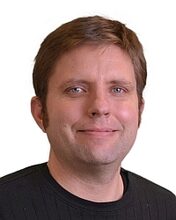
[Seminar] MLDS Unit Seminar 2024-1 by Dr. Gordon Wichern
Dr. Gordon Wichern, Senior Principal Research Scientist, MERL (Mitsubishi Electric Research Laboratories)
Title: Towards explaining audio generative models
[QUAST Seminar] Ana-Maria Raclariu: Entanglement, soft modes and celestial holography
Ana-Maria Raclariu
King's College London
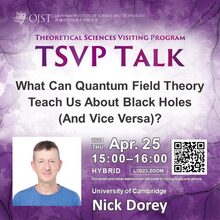
TSVP Talk: "What Can Quantum Field Theory Teach Us About Black Holes (And Vice Versa)?" by Nick Dorey
TSVP Talk Language: English (no interpretation). Target audience: General audience / everyone at OIST and beyond. Freely accessible to all OIST members and guests without registration (also via Zoom).
QG group meeting: Yasha Neiman
QG group meeting. Speaker: Yasha Neiman. Title: "Lightcone and unfolding - opposites yet the same".
Spring Workshop on Representation Theory of Algebras
Spring Workshop on the Representation Theory of Algebras and related areas mini-courses & research talks
Mini-courses by : Thomas Brustle (Canada), Aaron Chan (Japan), Nathan Reading (USA)
n) , Nath
AIVIA Day: 3D image analysis
AIVIA Day
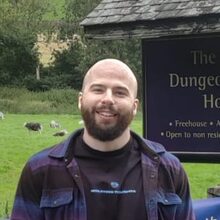
Cavity Quantum Optomechanical Nonlinearities: from Position Measurement Beyond the Linearized Regime to Deterministic Mechanical Nonclassicality
Dr. Jack Clarke - The Quantum Measurement Lab, Imperial College London
OIST Representation Theory Seminar
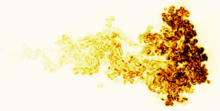
Current Advances in Turbulence and multiphase flowS - 24CATS
OIST Workshop | Website | Main organizer: Marco Edoardo Rosti (Complex Fluids and Flows Unit) | OIST members are welcome to attend all scientific sessions. Meals are closed sessions for registered participants.
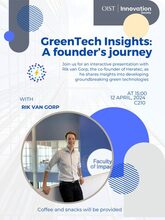
GreenTech Insights: A Founder’s Journey
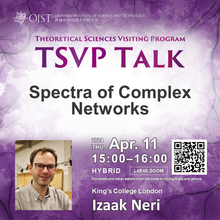
TSVP Talk: "Spectra of Complex Networks" by Izaak Neri
TSVP Talk Language: English (no interpretation). Target audience: General audience / everyone at OIST and beyond. Freely accessible to all OIST members and guests without registration (also via Zoom).
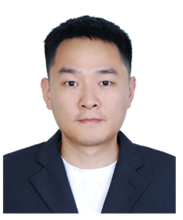
【Seminar】 Intersections of Dual SL3-Webs
Speaker: Prof. Zhe Sun, University of Science and Technology of China
QG seminar: 't Hooft model as a String Theory
QG visitor seminar. Speaker: Adi Armoni (Swansea University). Title: 't Hooft model as a String Theory.
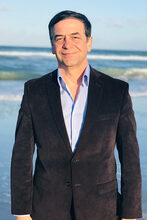
【Mathematics in the Sciences (MiS) Seminar Series】Cancer Detection via Electrical Impedance Tomography and Optimal Control Theory: invitation to interdisciplinary research
Speaker: Professor Ugur G. Abdulla, Analysis and Partial Differential Equations Unit, OIST
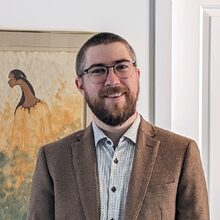
[Seminar] Dr. Victor Drouin-Touchette "Simulating Spin Systems Using Programmable Quantum Simulators"
Target audience: Interns, Students, PostDocs, and those who are interested in the same research field. Language: English

Ultracold Atoms Japan 2024
OIST Workshop | Website | Main organizer: Thomas Busch (Quantum Systems Unit) | OIST members are welcome to attend all scientific sessions. Meals are closed sessions for registered participants only.
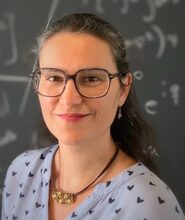
[Seminar] Flows and Topological Changes During Tissue Morphogenesis
Speaker: Professor Luiza Angheluta-Bauer, Condensed Matter Physics, University of Oslo
Hosted by Professor Mahesh Bandi Nonlinear and Non-equilibrium Physics Unit
Abstract:
Collective structural arrangements and cell migration are important physical processes underlying tissue development and regeneration. Understanding the complexity of cell-cell interactions and the emergence of collective behaviors at the tissue scale presents formidable challenges both experimentally and theoretically.
In this talk, I will discuss recent theoretical work on the dynamical patterns that emerge at the tissue scale from localized rearrangements and topological defects. Using a multi-phase field model, we demonstrate that tissue fluidity stems from cell neighbor exchanges, serving as transient sources of vortical flow. This flow emerges from the relative dispersion of cells at a rate proportional to the frequency of rearrangements. Balancing collective migration with relative cell motion appears to be essential for maintaining tissue shape and fluidity. Using a cell-based model, we study the tissue's response to the presence of a vortex. While solid-like behavior tends toward conical shapes, localized fluidization triggers the transition to a tube, which is fundamental in biological tissues.