



Past Events
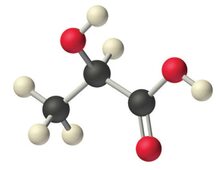
Mini Course: Practical Machine Learning for Polymer Chemistry
2026年10月16日 (金) 13:00 〜 15:00A mini course on the application of machine learning in polymer chemistry
Professor Rong Tong is Associate Professor in Chemical Engineering at Virginia Tech
5 lectures over 5 weeks. October 16 to November 13 (Friday afternoons)
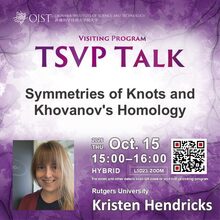
TSVP Talk: "Symmetries of Knots and Khovanov's Homology" by Kristen Hendricks
2026年10月15日 (木) 15:00 〜 16:00TSVP Talk
Language: English (no interpretation).
Target audience: General audience / everyone at OIST and beyond.
Freely accessible to all OIST members and guests without registration (also via Zoom).
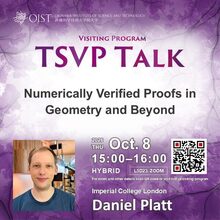
TSVP Talk: "Numerically Verified Proofs in Geometry and Beyond" by Daniel Platt
2026年10月8日 (木) 15:00 〜 16:00TSVP Talk
Language: English (no interpretation).
Target audience: General audience / everyone at OIST and beyond.
Freely accessible to all OIST members and guests without registration (also via Zoom).
Mini-Workshop on Gauge Theory and Low-Dimensional Topology
2026年10月7日 (水) (All day) 〜 2026年10月9日 (金) (All day)The OIST Mini-Workshop on Gauge Theory and Low-Dimensional Topology is a three-day research meeting bringing together researchers working in gauge theory and low-dimensional topology.
The workshop is held as part of the OIST program New Frontiers in Gauge Theory, Topology, and Physics.

Coffee Hour at the Visiting Program
2026年10月5日 (月) 15:00 〜 16:00"Visiting Program Coffee Hour": informal discussions and getting to know each other, in the Visiting Program (TSVP) area in Lab 5 EF03
Workshop on "Gauge Theory and Mathematical Physics"
2026年10月5日 (月) (All day) 〜 2026年10月6日 (火) (All day)This workshop is part of TSVP Thematic Program “New Frontiers in Gauge Theory, Topology, and Physics” (TP26GT) at Okinawa Institute of Science and Technology.
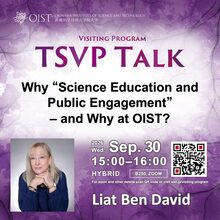
TSVP Talk: Why “Science education and public engagement” – and why at OIST? - by Liat Ben David
2026年9月30日 (水) 15:00 〜 16:00TSVP Talk
Language: English (no interpretation).
Target audience: General audience / everyone at OIST and beyond.
Freely accessible to all OIST members and guests without registration (also via Zoom).

Coffee Hour at the Visiting Program
2026年9月28日 (月) 15:00 〜 16:00"Visiting Program Coffee Hour": informal discussions and getting to know each other, in the Visiting Program (TSVP) area in Lab 5 EF03
[Seminar] "The Obstruction of Orientability of Real Monopole Floer Homology" by Jin Miyazawa
2026年9月24日 (木) 15:00 〜 16:00Title: The Obstruction of Orientability of Real Monopole Floer Homology
Abstract: The Real Seiberg-Witten theory is one of a stong tool in knot theory and surface knot theory. For example, that can detect exotic P^2-knot and Kang-Park-Taniguchi proved that any non trivial cable of figure eight knot is not slice using Real Seiberg-Witten theory. This theory is also provide interesting phenomena in index theory, since Real Seiberg-Witten theory can be seen as a "non-linear version" of Atiya's Real K-theory. For example, there is an obstruction to orient moduli space of Real Seiberg-Witten eqations on closed 4-manifolds. Recently, Bonciocat obtained a obstruction to lift the real Heegaard Floer homology from mod 2 coefficient to Z-coefficient. In this talk, we give a canonical way to obtain Z- coefficient real monopole Floer homology of double branced cover of a link in homology S^3 in the case when the obstruction vanishes. We also proved that the Bonciocat's obstruction is also obstract Z-coefficient in real monopole, however the proof is different. This is joint work with Jiakai Li.
[Seminar] "Signs in real monopole Floer homology" by Jiakai Li
2026年9月16日 (水) 14:30 〜 15:30Title: Signs in real monopole Floer homology
Abstract:
The computation of the 3-dimensional framed real Seiberg–Witten invariant of the branched double cover of a knot K is instrumental in Miyazawa's construction of exotic P^2-knots. This invariant, known as Miyazawa's degree invariant deg(K), is the Euler characteristic χ(HMR) of framed real monopole Floer homology (HMR). A priori deg(K) is defined only up to an overall sign, since the real Dirac operator has no complex orientation. Worse, signs associated to distinct real spin^c structures are not comparable. Resolving the latter issue is essential for developing computational techniques for real Seiberg--WItten invariants.
I will explain how to fix the sign of the 3-dimensional count, in other words, define an absolute mod-two grading, via a mod-two index-theoretic correction term. This yields a total Euler characteristic \tilde{χ} that sums over all real spin^c structures, the analogue of \hat{χ} in real Heegaard Floer homology (HFR). Recent work of Srivastava provides the motivating results: an absolute mod-two grading in \hat{HFR} and the evaluation of \hat{χ} in terms of the Alexander polynomial at \sqrt{-1}. This is joint work with Ciprian Manolescu.