



Past Events
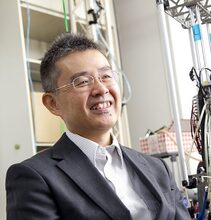
[Hybrid seminar] "Soft Robotics: Understanding Design Principles and the Implications of Soft Bodies" by Prof. Koh Hosoda, Kyoto University
[Hybrid seminar] "Soft Robotics: Understanding Design Principles and the Implications of Soft Bodies" by Prof. Koh Hosoda, Kyoto University
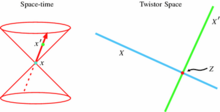
QG group meeting: Emergent Supersymmetry from a Twistor Space description of the U(N) vector model
QG group meeting. Speaker: Julian Lang. Title: "Emergent Supersymmetry from a Twistor Space description of the U(N) vector model".
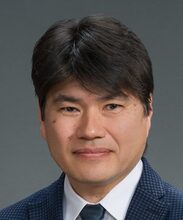
[Seminar] Bubble clustering and the related phenomena by Prof. Shu Takagi
Target audience
Interns, Students, PostDocs and those who are interested in the same research field.
Language: English
[Seminar] MLDS Seminar 2023-5 by Dr. Makoto Yamada (Associate Professor, OIST), Ms. Terezie Sedlinska (PhD Student, OIST), Seminar Room L5D23
Speaker 1: Dr. Makoto Yamada, Associate Professor, OIST
Title: Approximating 1-Wasserstein Distance with Trees
Speaker 2: Ms. Terezie Sedlinska, PhD Student, OIST
Title: Reinforcement learning behavioral modeling: Two studies of Pavlovian and operant valuation in humans and rats
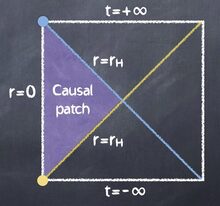
QG group meeting: self-dual GR in de Sitter space (Yasha Neiman)
QG group meeting. Speaker: Yasha Neiman. Title: "Self-dual GR in de Sitter space".
MiS Series Seminar : Minimal Energetic Dynamics of Living Systems
Andres Mejia Ramon
OIST, Postdoctoral Scholar, Froese Unit
[Seminar] "Asymptomatic: How Deciphering the Silent Spread of COVID-19 Can Help Prevent Pandemics to Come" by Prof. Joshua Weitz.
[Seminar] "Asymptomatic: How Deciphering the Silent Spread of COVID-19 Can Help Prevent Pandemics to Come" by Prof. Joshua Weitz.
Optimizing space and time overhead for fault-tolerant error correction
Target Audience: Intern, Students, PostDocs, and those who are interested in the same research field.
[Seminar]MLDS Seminar 2023-4 by Mr. Tobias Freidling (University of Cambridge), Dr. Mohammad Sabokrou (Staff Scientist, OIST), Seminar Room L5D23
Speaker 1: Mr. Tobias Freidling, Ph. D. Student, University of Cambridge
Title: Sensitivity Analysis with the R^2-calculus
Speaker 2: Dr. Mohammad Sabokrou, Staff Scientist, OIST
Title: Deep Learning Advancements in Anomaly Detection for Computer Vision
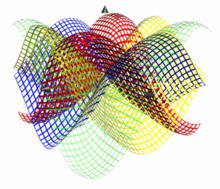
QG group meeting: Symmetries, Lattices, Groups
QG group meeting. Speaker: Misaki Ohta. Title: Symmetries, Lattices, Groups.

[Seminar] Energy transfer in two-dimensional turbulent flow affected by polymers and surfactants
Target audience: Interns, Students, PostDocs, and those who are interested in the same research field.
Language: English
Light-intensity coding in the human prefrontal cortex
Target audience: Interns, Students, PostDocs, and those who are interested in the same research field. Language: English
QUAST Seminar: Patricia Ribes Metidieri
Patricia Ribes Metidieri, Radboud University: How ubiquitous is entanglement in quantum field theory?
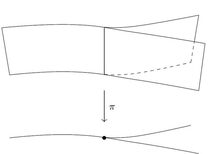
QG group meeting: Non-Hausdorff Vector Bundles (Part 2)
QG group meeting. Speaker: David O'Connell. Title: Non-Hausdorff Vector Bundles (Part 2).
Seminar by Mr. En Watanabe (University of Otago)
Seminar by Mr. En Watanabe, University of Otago
Title : Using a donut-shaped beam for the super-resolution of proteins
Date: June 28 (Wed)
Time: 11:00 - 12:00
Venue: C015 (Lab1)
[Zoom Seminar] "Brain-Motivated Computation: A Journey from Neural Circuitry to Cognitive Control Systems" by Dr. Alexander G. Ororbia II, Rochester Institute of Technology
"Brain-Motivated Computation: A Journey from Neural Circuitry to Cognitive Control Systems" by Dr. Alexander G. Ororbia II, Rochester Institute of Technology
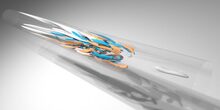
Seminar "Transition to turbulence in pipe flow" by Prof. Dr. Marc Avila
[Speaker] Prof. Dr. Marc Avila, Director ZARM - Center of Applied Space Technology and Microgravity, Professor of Fluid Mechanics, University of Bremen, Germany
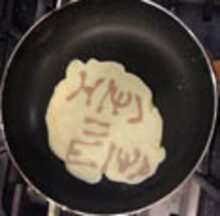
Seminar "Correlations in SU(N) Fermi-Hubbard models" Dr. Mathias Mikkelsen, Kindai University, Osaka
Speaker: Dr. Mathias Mikkelsen, Kindai University, Osaka
[Seminar] A kinase and a phosphatase: molecular basis of inherited Parkinson’s disease by Prof. Suzanne Pfeffer
June 23, 2023 10:00 - 11: 00 at C700, Lab 3
Prof. Suzanne Pfeffer, Biochemistry at Stanford University School of Medicine
A kinase and a phosphatase: molecular basis of inherited Parkinson’s disease
Activating mutations in LRRK2 kinase cause Parkinson’s disease and activated LRRK2 phosphorylates a subset of Rab GTPases. We have discovered that Rab phosphorylation blocks primary cilia formation in specific neurons and astrocytes in the nigrostriatal circuit that are important for dopaminergic signaling in Parkinson's disease. This lecture will provide an update on our studies using purified LRRK2 and its counteracting PPM1H phosphatase to understand how the proteins become localized and activated on membrane surfaces. In addition, work will be presented related to the consequences of LRRK2 mutation for neurons and astrocytes in the dorsal striatum of mice and humans.
Some Thoughts on the Future of Physics, Dr. Robert Ecke, Los Alamos National Lab
Dr. Robert Ecke, Los Alamos National Lab. Language: English.
[Seminar]MLDS Seminar 2023-3 by Mr. Guillaume Houry (Universite Paris-Saclay), Mr. Yuxan Wan (Michigan State Univ. ), Seminar Room L5DE23
Speaker 1: Mr. Guillaume Houry, Ph. D. Student, Universite Paris-Saclay
Title: Average complexity of Persitence Homology computing in Topological Data Analysis
Speaker 2: Yuxuan Wan, Ph. D. Student, Michigan State University
Title: Defense Against Gradient Leakage Attacks via Learning to Obscure Data
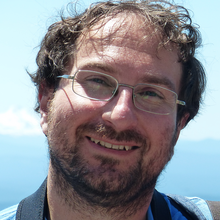
From SARS-CoV-2 transmission patterns to digital contact tracing: there and back again - Dr. Luca Ferretti
Seminar for general audience. Join us in L1C015 or via zoom.
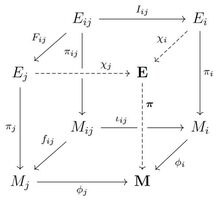
QG group meeting: Non-Hausdorff Vector Bundles (Part 1)
QG group meeting. Speaker: David O'Connell. Title: Non-Hausdorff Vector Bundles (Part 1).
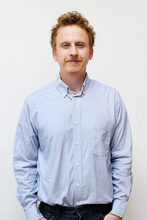
[Mini-course]: Lectures on Capacities | Professor Daniel Spector, National Taiwan Normal University
Zoom registration: https://oist.zoom.us/meeting/register/tJErce-tpj0jGNN5TM3gwMnRnGHaY5lNZ5Qk#/registration
Lecture 1 Tuesday, June 20 10 am Title: Riemann and Lebesgue Integration Abstract: The Riemann integral is perfectly suited for consideration of volume, surface area, arc length, and integration of functions in classical analysis - when the sets in question are smooth and the functions in question continuous. In this talk, we introduce these ideas and explain the progression from Riemann integration to Lebesgue integration, emphasizing in particular the powerful tools one obtains from this construction. Lecture 2 Wednesday, June 21st 10 am Title: Capacitary Integration Abstract: The Lebesgue integral provides one with a satisfactory tool for many purposes in mathematical analysis. Yet in the modeling of natural phenomena, with the introduction of partial differential equations, integrals which are not Lebesgue integral makes a prominent appearance - capacitary integrals. In this talk we discuss this motivation for capacitary integration, with examples, explain the differences with Lebesgue integration, and show the usefulness of these non-standard objects. Lecture 3 Thursday, June 22nd 10 am Title: Capacitary Sobolev Inequalities and Applications Abstract: The study of capacities and Capacitary Sobolev Inequalities is now more than half a century old, and yet there are still a number of open research questions to investigate concerning them. In this talk we discuss in more detail Capacitary Sobolev inequalities with an emphasis on a subject with the most recent activity - Capacitary Sobolev Inequalities around L1. Open problems will be mentioned.Zoom link: TBA
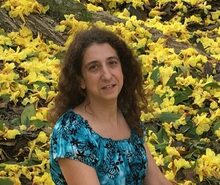
[Seminar] Prof. Rebecca Ostertag - Using plant functional traits to design forest restoration
Dr. Rebecca Ostertag, Professor of Biology, University of Hawai'i at Hilo. Language: English, no interpretation. Target audience: everyone at OIST and beyond. Seminar will be held in-person only.
[Seminar] Critical Sobolev Spaces and Subspaces of BMO, Professor Daniel Spector, National Taiwan Normal University
Abstract: It is well-known that functions in critical Sobolev spaces embed into the space of functions of bounded mean oscillation (BMO) originating in the work of John and Nirenberg. Less well-known is the fact that they actually embed into BMO on subspaces of every smaller dimension. In this talk we introduce a class of spaces which are finer targets of these critical Sobolev embeddings than BMO that capture this phenomena, which we term beta-dimensional BMO. Interestingly, these spaces also gives an answer to the question of which BMO functions admit restrictions in BMO of subspaces. The key tool is a capacitary analogue of the John-Nirenberg inequality for the Hausdorff content, obtained recently in a joint work with You-Wei Chen.
[Seminar]MLDS Seminar 2023-2 by Mr. Haoyu Han (Michigan State Univ.), Mr. Weijie Liu (Zhejiang Univ.), Seminar Room L5DE23
Speaker 1: Mr. Haoyu Han, Ph. D. Student, Michigan State University
Title: Alternately Optimized Graph Neural Networks
Speaker 2: Mr. Weijie Liu, Ph. D. Student, Zhejiang University
Title: Robust Graph Dictionary Learning
[ONOS Seminar Series] Professor. Michael A. Long: Neural mechanisms of interactive communication
[ONOS Seminar Series] Professor. Michael A. Long
Title: Neural mechanisms of interactive communication
Join the ZOOM from the link here!
https://oist.zoom.us/j/91531249984?pwd=eFNldWNHRlN0by91WlZJVTI3djFNZz09
"From SARS-CoV-2 transmission patterns to digital contact tracing: there and back again" Dr. Luca Ferretti
Zoom talk by Dr. Ferretti working at Big Data Institute, University of Oxford.
Talk targeted to a general audience, zoom link available or come to C15, Lab1.
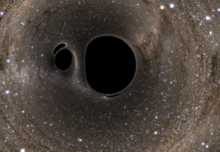
QG group meeting: Interacting Black Holes and Massive Higher Spin Fields, part 2
QG group meeting. Speaker: Mirian Tsulaia. Title: Interacting Black Holes and Massive Higher Spin Fields (part2).
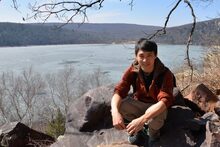
Seminar: From alpine beetle populations to Cretaceous moth radiation: can we connect the dots between microevolution and macroevolution?
Abstract Population genetics and phylogenetics are two main subfields of evolutionary genetics. The former investigates the genetic variations among populations within a species while the latter focuses on reconstructing phylogeny of many species using genetic data. In this presentation, I will present my previous work on the population genetics of an alpine ground beetle, Nebria ingens complex, in the Sierra Nevada in California and my current work on the deep evolutionary history of species radiation of Lepidoptera. In the alpine ground beetle study, I used genome-wide variants to characterize the population structure and demographic history. I found that the glacial refugia was in the low-elevation drainage basins of Sierra Nevada during the last glacial maximum, followed by the postglacial recolonization to the current high-altitude alpine zone. I also used genome-wide association approaches to identify the genes putatively associated with the postglacial elevational range shift, local adaptation to the heterogeneous environments, and the morphological variations. For the study of Lepidoptera species radiation, I use published high-quality lepidopteran genomes to explore the genomic evidence related to rapid diversification of modern lepidopteran lineages. The preliminary results suggest that the gene evolution involving host plant detection, phytocompound detoxification, and protein digestion play crucial roles in species diversification along with the Angiosperm radiation. Finally, I will provide my personal perspective on connecting population genetics (microevolution) and phylogenetics (macroevolution) for a more thorough understanding of evolutionary processes.
About Dr. Yi-Ming Weng: Yi-Ming was born and brought up in Taiwan. He graduated from National Chung-Hsing University for bachelor’s and master’s degrees in Entomology department. He is interested in insect biodiversity and evolution in general. For his master thesis, he studied phylogeography of alpine ground beetles in Taiwan, looking for sharing evolutionary history between the alpine ground beetle species with similar ecological niche and geographical distribution. Yi-Ming started his PhD carrier in the University of Wisconsin-Madison in 2017. He worked with Professor Sean Schoville to further study the evolutionary history of alpine ground beetle from the Sierra Nevada in California using genomic data. By the time he started to develop his skillsets in bioinformatics and genomics. Now Yi-Ming is working with Professor Akito Kawahara in the University of Florida as a postdoctoral researcher studying evolutionary genomics of Lepidoptera.
Despite Yi-Ming has been working mostly with computers for his bioinformatics analyses, he is most interested in outdoor activities and direct observation of insects. He believes that good biological questions usually come from the field, and stepping out to touch the insects gets the best inspiration.
[Seminar] Metric Recovery from Unweighted k-NN Graphs by Ryoma Sato (Kyoto University), Seminar Room L5D23
Metric Recovery from Unweighted k-NN Graphs by Ryoma Sato (Kyoto University)
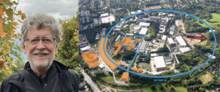
Lecture: “Large Collaborations in Science: Can OIST learn from their experience?” by Dr. Albrecht Wagner
Speaker: Dr. Albrecht Wagner
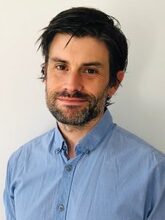
[Seminar] "Rugged sequence-activity landscapes in protein evolution" by Prof. Colin Jackson
Prof. Colin Jackson, Research School of Chemistry, Australian National University
[Seminar] MLDS Seminar 2023-1by Mr. Pengfei He(Michigan State Univ.) and Mr. Yuki Takezawa(Kyoto Univ.), Seminar Room L5DE23
Speaker 1:Mr. Pengfei HE, Ph. D. Student, Michigan State University
Title: Probabilistic Categorical Adversarial Attack
Speaker 2:Mr. Yuki TAKEZAWA, Ph.D. Student, Kyoto University
Title: Beyond Exponential Graph: Communication-Efficient Topologies for Decentralized Learning via Finite-time Convergence
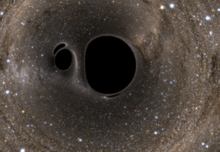
QG group meeting: Interacting Black Holes and Massive Higher Spin Fields
QG group meeting. Speaker: Mirian Tsulaia. Title: Interacting Black Holes and Massive Higher Spin Fields.
GPSS Introduction seminar @OIST (In person session)
An animal should not do that – symbiotic annelids synthesize a plant sterol de novo
Seminar by Dr. Dolma Michellod (Max Planck Institute for Marine Microbiology, Germany)
[Seminar] Expected Expressivity and Gradients of Maxout Networks by Ms. Hanna Tseran, MPI
Ms. Hanna Tseran, MPI, "Expected Expressivity and Gradients of Maxout Networks"
[Seminar] "Integrating interactive devices with the user’s body" by Dr. Pedro Lopes
Dr. Pedro Lopes, Assistant Professor in Computer Science at the University of Chicago. Hosted by Cybernetic Humanity Studio (OIST - Sony CSL collaboration)
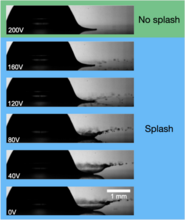
Seminar "Impacting droplets on solid surfaces and mediation of entrapped air film using dielectrophoretic effect" by Prof. Tuan Tran
[Speaker] Prof. Tuan Tran, School of Mechanical & Aerospace Engineering, Nanyang Technological University, Singapore
Date changed! [Seminar] "The man behind the curtain: AI, Complexity and Social Systems" by Marcin Korecki, ETH Zürich
Date/Time: June 5 (Mon), 2023 / 12:00 - 13:00 (Postponed from June 1)
Location : L3 C700 and zoom
Speaker: Marcin Korecki, ETH Zürich
Title: The man behind the curtain: AI, Complexity and Social Systems
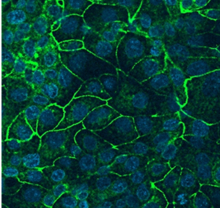
[Canceled] Seminar "Cell-substrate Impedance Sensing: in vitro Evaluation of Stress-induced Damages on H441 Lung Epithelial Cell Layer using Modeled Pulmonary Atelectrauma" by Dr. Eiichiro Yamaguchi
[Speaker] Dr. Eiichiro Yamaguchi, Assistant Research Professor, Department of Biomedical Engineering, Tulane University, USA.
【Seminar】Surface accretion of a pre-stretched half-space: Biot’s problem revisited by Prof. Giuseppe Tomassetti
Speaker: Professor Giuseppe Tomassetti, Università degli Studi Roma Tre
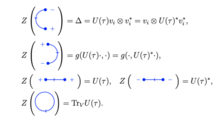
QG group meeting: Higher Topological Quantum Mechanics on Graphs
QG group meeting. Speaker: Slava Lysov. Title: Higher Topological Quantum Mechanics on Graphs.
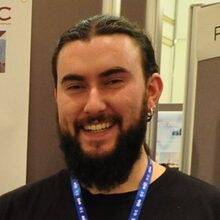
[Seminar] "The enigmatic evolutionary relationships among decapodiform cephalopod lineages" by Dr. Fernando Ángel Fernández-Álvarez
[Speaker] Dr. Fernando Ángel Fernández-Álvarez, Institute of Marine Sciences (ICM), CSIC, Spain
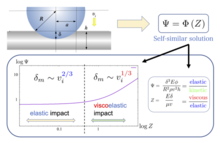
Self-similarity approach on the dynamical impact of solid sphere onto the viscoelastic surface, Dr. Hirokazu Maruoka.
Dr. Hirokazu Maruoka, Yukawa Institute for Theoretical Physics, Kyoto University.
Language: English.
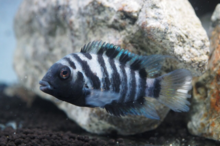
Seminar: Cichlid fishes as a model for evolution of altruism in vertebrates
We are inviting Dr. Shun Satoh from Kyoto University who calls himself as a "Fish Maniac" in his blog.For his details please check the link below. https://symphysodondiscus.wixsite.com/website-1/blank-3 Date: May 29th(Mon) Time: 15:00* - Room: C209 (Center Bldg) *The start time has been updated as of May 19th. sorry for the inconvenience.
Zoom Link: https://oist.zoom.us/j/94360778822?pwd=ZDlPZFY2d3luQWovcUdLZ1lvbGdpQT09 Meeting ID: 943 6077 8822 Passcode: 705537 If you have any questions, please contact egu@oist.jp.
Seminar by Dr.YongKeun Park "Holotomography and artificial intelligence: label-free 3D imaging, classification, and inference of live cells and organoids"
* Dr.Yong Keun Park, Physics Department of KAIST, South Korea
* Language: English (No interpretation)
[Seminar] Cavity Magnonics
Prof. Yaroslav M. Blanter, Kavli Institute of Nanoscience, Delft University of Technology.