



Past Events
QG group meeting: Keith Glennon
QG group meeting. Speaker: Keith Glennon. Title: "From Simple Division Algebras to Simple Lie Algebras, with Glimpses of Non-Simple Kac-Moody Algebras".
[Seminar] "Copepods – an introduction to the most abundant metazoan clade of the Tree of Life" by Prof. Rony Huys
Dr. Rony Huys, Professor, Department of Life Sciences, The Natural History Museum, London, U.K.
MLDS Unit seminar-2, Makoto Yamada, OIST (PhiNets: Brain-inspired Non-contrastive Learning Based on Temporal Prediction Hypothesis)
MLDS unit seminar, Makoto Yamada (OIST), PhiNets: Brain-inspired Non-contrastive Learning Based on Temporal Prediction Hypothesis
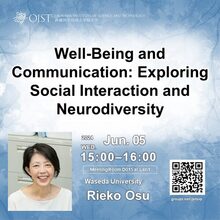
[Seminar] Well-Being and Communication: Exploring Social Interaction and Neurodiversity by Rieko Osu
Title: Well-Being and Communication: Exploring Social Interaction and Neurodiversity
Speaker : Rieko Osu ( Waseda University ) Target audience: General audience / everyone at OIST and beyond. Freely accessible to all OIST members and guests without registration.
R,C,H,O number systems, spinors, triality and spacetime
QG group meeting. Speaker: Yasha Neiman. Title: "R,C,H,O number systems, spinors, triality and spacetime".
[Quast Seminar] Dario Cafasso
Title: Quantum Time-Dilation in Qubit Hypersurfaces
Abstract: The use of quantum spin systems to study the phenomenon of quantum time dilation leads to new insights into the quantum description of gravity. The basis of this description is the Page and Wootters mechanism, where entanglement between two quantum systems allows one to act as a clock for the other, influencing its time evolution. Intriguingly, when the clock system experiences a "gravitational-like interaction", the resulting time evolution can be described by a Time-Dilated Schrödinger equation. This equation includes a "redshift operator," a purely quantum effect that mimics gravitational time dilation. Here we discuss a novel, finite-dimensional framework in which a network of qubit systems can be used as a "global" clock for another non-interacting component of the universe. The result is the Time-Dilation induced Interaction Transfer (TiDIT) mechanism. TiDIT describes how time dilation due to the interaction of a qubit effectively changes the interaction between previously non-interacting parts of the universe. We will explore this concept with a practical example using two coupled qubits as a model for the quantum clock.
[Seminar] "Regularity for doubly nonlinear parabolic type equations" by Prof. Masashi Misawa
Speaker: Prof. Masashi Misawa (Kumamoto University)
Title: Regularity for doubly nonlinear parabolic type equations
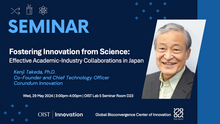
Seminar: Fostering Academic-Industry Collaborations in Japan | Kenji Takeda
Seminar : Fostering Innovation from Science: Effective Academic-Industry Collaborations in Japan | Kenji Takeda, PhD | Chief Technology Officer, Corundum Innovation | 29 May 2024 | 3:00pm-4:00pm | Lab 5 D23

【Seminar】 The Brascamp-Lieb inequality | Professor Neal Bez, Saitama University
★Please click here to register
[Seminar] "Environmental responses of symbiotic algae underlying molecular interactions and circulations in coral reefs and other photosymbiotic ecosystems" by Prof. Shinichiro Maruyama
*Seminar Time Changed to 14:30-15:30* Dr. Shinichiro Maruyama, Associate Professor, The University of Tokyo
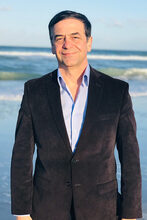
【Seminar】Kolmogorov Problem and Wiener-type Criteria for the Removability of the Fundamental Singularity for the Parabolic PDEs
Speaker: Prof. Ugur Abdulla (OIST)
QG group meeting: Mirian Tsulaia
Weekly QG group meeting. Speaker: Mirian Tsulaia. Title: "Cubic Action for Spinning Black Holes".
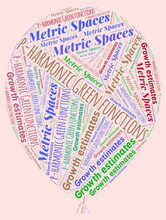
[Seminar] Growth estimates for \(p-\)harmonic Green functions on weighted \(R^n\) and metric spaces | Professor Jana Björn, Linköping University and OIST TSVP Visiting Scholar
Speaker: Professor Jana Björn , Linköping University and OIST TSVP Visiting Scholar Title: The Dirichlet Problem and Boundary Regularity for Nonlinear Parabolic Equations
Abstract: As shown by Serrin in 1964, the growth at an isolated singularity of solutions to the elliptic equation div A(x, ∇u) = 0 in Rn (including p-harmonic functions with p > 1) is exactly determined by the dimension n and the parameter p associated with the equation. In this talk, I will discuss growth and integrability properties for p-harmonic Green functions and their gradients on weighted Rn, with a p-admissible weight, as well as on complete metric spaces equipped with a doubling measure supporting a p-Poincar´e inequality. In these situations, the dimension n is replaced by the local growth of the underlying measure near the isolated singularity, and the obtained growth and integrability exponents are sharp.
Seminar: Innovations along microscaled liquid-liquid interfaces
SEMINAR : Innovations along microscaled liquid-liquid interfaces - research, translation and commercialization in Hong Kong | Professor Anderson Shum | University of Hong Kong | 3:00pm May 14, 2024 | C209
[QUAST Seminar] Mykhaylo Usatyuk: Closed universes in two dimensional gravity
Dr Mykhaylo Usatyuk
Kavli Institute for Theoretical Physics, Santa Barbara
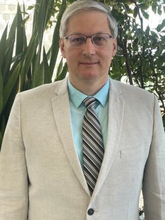
[Seminar] "Ge(0) compound with ambiphilic reactivity" by Prof. Georgii I. Nikonov, Brock University
Dr. Georgii I. Nikonov, Professor, Brock University. Language: English
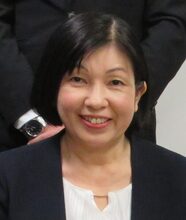
[Seminar] Visualizing flow force transmission by live-cell single-molecule imaging by Assoc. Prof. Sawako Yamashiro
Dr. Sawako Yamashiro
Associate Professor
Laboratory of Single-Molecule Cell Biology, Graduate School of Biostudies,
Kyoto University
QG group meeting: Yasha Neiman
QG group meeting. Speaker: Yasha Neiman. Title: "Unfolded formulation of self-dual higher-spin gravity".
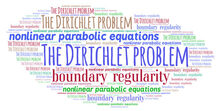
【Seminar】The Dirichlet problem and boundary regularity for nonlinear parabolic equations | Prof. Professor Anders Björn, Linköping University and OIST TSVP Visiting Scholar
Speaker: Professor Anders Björn, Linkoping University and OIST TSVP Visiting Scholar Title: The Dirichlet problem and boundary regularity for nonlinear parabolic equations
Abstract: The p-parabolic equation \[ \partial_t u = \Delta_p u := \dvg(|\nabla u|^{p-2}\nabla u) \] is a nonlinear cousin of the classical heat equation. As such, it offers both difficulties and advantages compared with the heat equation. In the talk, we consider the Perron method for solving the Dirichlet problem for the p-parabolic equation in general bounded domains in $R^{n+1}$. Compared to space-time cylinders, such domains allow the space domain to change in time. Of particular interest will be boundary regularity for such domains, i.e. whether solutions attain their boundary data in a continuous way. Relations between regular boundary points and barriers will be discussed, as well as some peculiar examples and surprising phenomena related to boundary regularity. Towards the end I will discuss the same type of questions for two other nonlinear cousins of the heat equation, the porous medium equation \[ \partial_t u = \dvg(u^m) \] and the so-called normalized p-parabolic equation \[ \partial_t u = |\nabla u|^{2-p}\Delta_p u. \] The talk is based on collaborations with Jana Bj\"orn (Link\"oping), Ugo Gianazza (Pavia), Mikko Parviainen (Jyv\"askyl\"a) and Juhana Siljander (Jyv\"askyl\"a).
[QUAST Seminar] Ronak Soni: Extremality as a Consistency Condition on Subregion Duality
Ronak Soni
University of Cambridge, DAMTP
QG group meeting: David O'Connell
QG group meeting. Speaker: David O'Connell. Title: "Quantum Fields on non-Hausdorff Backgrounds".

Seminar"Drying colloidal films, from a liquid dispersion to a rigid coating"Lucas Goehring
Language: English
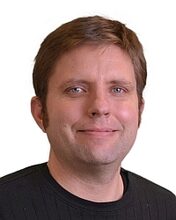
[Seminar] MLDS Unit Seminar 2024-1 by Dr. Gordon Wichern
Dr. Gordon Wichern, Senior Principal Research Scientist, MERL (Mitsubishi Electric Research Laboratories)
Title: Towards explaining audio generative models
[QUAST Seminar] Ana-Maria Raclariu: Entanglement, soft modes and celestial holography
Ana-Maria Raclariu
King's College London
[Seminar] Quantum error mitigation and its application to error-corrected quantum computers
OIST organizer: OIST Center for Quantum Technologies (OCQT) , Nemoto Unit (Quantum Information Science and Technology Unit) and Bill Unit (Quantum Engineering & Design Unit) | OIST members are welcome to attend all scientific sessions.
QG group meeting: Yasha Neiman
QG group meeting. Speaker: Yasha Neiman. Title: "Lightcone and unfolding - opposites yet the same".
Spring Workshop on Representation Theory of Algebras
Spring Workshop on the Representation Theory of Algebras and related areas mini-courses & research talks
Mini-courses by : Thomas Brustle (Canada), Aaron Chan (Japan), Nathan Reading (USA)
n) , Nath
Light propagation through layered atomic arrays
OIST organizer: OIST Center for Quantum Technologies (OCQT) and Bill Munro (Quantum Engineering & Design Unit) | OIST members are welcome to attend all scientific sessions.
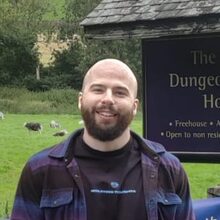
Cavity Quantum Optomechanical Nonlinearities: from Position Measurement Beyond the Linearized Regime to Deterministic Mechanical Nonclassicality
Dr. Jack Clarke - The Quantum Measurement Lab, Imperial College London
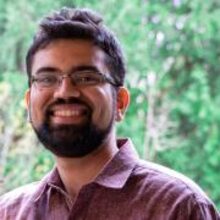
[ONOS Seminar Series] Professor. Vijay Mohan K Namboodiri : Dopamine and causal learning
Dopamine and causal learning

【Seminar】A smooth isometric immersion is determined by a framed curve
Speaker: Dr. Brian Seguin, Associate Professor, Loyola University Chicago
OIST Representation Theory Seminar
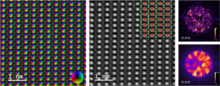
Seminar: by Dr. Daniel Stroppa from Dectris on Fast 4D STEM with ARINA Hybrid-Pixel Detector
Seminar: by Dr. Daniel Stroppa from Dectris on Fast 4D STEM with ARINA Hybrid-Pixel Detector
Dr. Daniel Stroppa from Dectris will be giving a talk on their ARINA Hybrid-Pixel Detector for 4D-STEM at 11 am April the 15th in Meeting Room C016 in Lab 1.
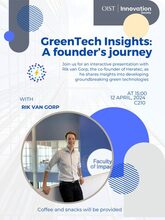
GreenTech Insights: A Founder’s Journey
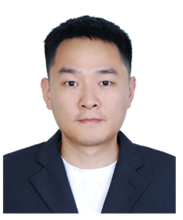
【Seminar】 Intersections of Dual SL3-Webs
Speaker: Prof. Zhe Sun, University of Science and Technology of China
QG seminar: 't Hooft model as a String Theory
QG visitor seminar. Speaker: Adi Armoni (Swansea University). Title: 't Hooft model as a String Theory.
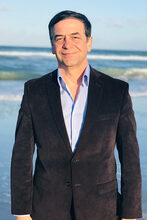
【Mathematics in the Sciences (MiS) Seminar Series】Cancer Detection via Electrical Impedance Tomography and Optimal Control Theory: invitation to interdisciplinary research
Speaker: Professor Ugur G. Abdulla, Analysis and Partial Differential Equations Unit, OIST
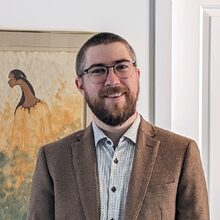
[Seminar] Dr. Victor Drouin-Touchette "Simulating Spin Systems Using Programmable Quantum Simulators"
Target audience: Interns, Students, PostDocs, and those who are interested in the same research field. Language: English
[Seminar] Towards Global Quantum Communications Networks
Talk by Professor Mohsen Razavi (University of Leeds) Seminar Summary: Data security in the quantum era can be one of the key challenges that telecom operators will face in the coming years. With the recent trend in advanced quantum computing machines, the need for implementing alternative solutions for secure communications—those that do not rely on computational complexity assumptions—has become more urgent. Language: English / OPEN to OIST Community.
Understanding logical channels graphically: a case study with the XYZ ruby code

Room B250! OMW2024 Keynote seminars: by Dr. Teng-Leong Chew
Okinawa Microscope Workshop 2024 @ OIST
Keynote Seminar by Dr. Teng-Leong Chew
HHMI Janelia Research Campus
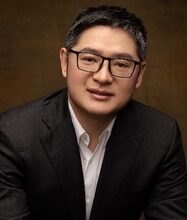
Seminar"Directional Bonding of Inorganic Nanoparticles Like Atoms"Zhihong Nie
Language: English
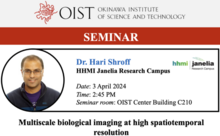
OMW2024 Keynote seminars: by Dr. Hari Shroff, Expert on 4D Cellular Physiology
Okinawa Microscope Workshop 2024 @ OIST
Keynote Seminar by Dr. Hari Shroff
HHMI Janelia Research Campus
QG seminar: Amplitudes and superamplitudes of 10D SYM and 11D supergravity
QG visitor seminar. Speaker: Igor Bandos (University of the Basque Country UPV/EHU). Title: "On amplitudes and superamplitudes of 10D SYM and 11D supergravity".
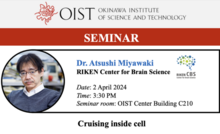
OMW2024 Keynote seminars: by Dr. Atsushi Miyawaki, Pioneer in fluorescence biomedical imaging
Okinawa Microscope Workshop 2024 @ OIST
Keynote Seminar by Dr. Atsushi Miyawaki
RIKEN Center for Brain Science
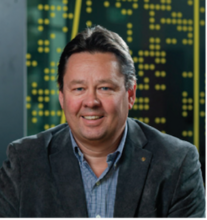
[Seminar] "Unconventionally low donor content in efficient polymer solar cells and photocatalytic nanoparticles" by Prof. Mats Andersson
Prof. Mats Andersson , Flinders University, Adelaide, SA, Australia
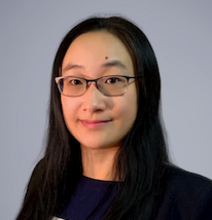
[Seminar] Emergent properties: From squid visual systems to human language representation by Jing Cai
Seminar by Dr. Jing Cai, Instructor at Harvard Medical School, Massachusetts General Hospital
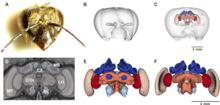
Seminar: “Biomedisa AI: Automated Segmentation of Micro-CT Image Data using the Biomedisa Online Platform” by Dr. Philipp David Lösel
Speaker: Dr. Philipp David Lösel, The Australian National University (ANU), Canberra, Australia
"Unraveling global change impacts to biodiversity and ecosystem services with interdisciplinary approaches" by Laura Dee (TSVP Seminar)
Seminar, as part of Thematic Program on Response Diversity Language: English (no interpretation). Target audience: Students and Researchers from related fields. Freely accessible to all OIST members and guests without registration (also via Zoom).

[Seminar] JIZAI Body: beyond human limits by Masahiko Inami, Yasuaki Monnai and Azumi Maekawa
“JIZAI Body: beyond human limits” by Dr. Inami, Monnai and Maekawa, RCAST, The University of Tokyo. Hosted by Cybernetic Humanity Studio (OIST - Sony CSL collaboration)