



Past Events
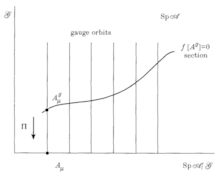
Seminar: "The current status of the Gribov problem in gauge theories" by Prof. Rodrigo F. Sobreiro
2020年3月3日 (火) 14:00 〜 15:10Dr. Sobreiro is a professor at Universidade Federal Fluminense, Brazil, and is currently visiting OIST for 2 weeks.
Visit: Prof. Rodrigo Ferreira Sobreiro (Instituto de Física, Universidade Federal Fluminense)
2020年3月2日 (月) (All day) 〜 2020年3月13日 (金) (All day)Visit: Prof. Rodrigo Ferreira Sobreiro (Instituto de Física, Universidade Federal Fluminense)
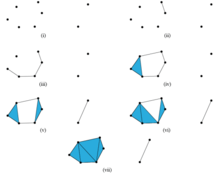
Colloquium: "Simplicial homology, part III" by Dr. Guilherme Sadovski
2020年2月27日 (木) 13:30 〜 15:30Speaker: Dr. Sadovski is a member of this unit (visit his page)
Seminar: "Boundary Conditions and the q-state Potts Model on Random Planar Maps" by Mr. Aravinth Kulanthaivelu
2020年2月25日 (火) 14:00 〜 15:00Speaker: Mr. Aravinth Kulanthaivelu is in his last year as a Ph.D. student at University of Oxford.
Visit: Mr. Aravinth Kulanthaivelu (Univ. of Oxford)
2020年2月25日 (火) (All day) 〜 2020年2月26日 (水) (All day)Visit: Mr. Aravinth Kulanthaivelu (Univ. of Oxford)
Colloquium: "Fiber bundle and gauge theory" by Mr. Ryusei Maeda
2020年2月21日 (金) 10:00 〜 12:00Speaker: Mr. Ryusei Maeda is a 3rd year undergratuate student at University of Tokyo and is currently visiting OIST as a research intern.
Colloquium: "Maxwell's equations, Yang-Mills equations and differential forms" by Mr. Ryusei Maeda
2020年2月14日 (金) 10:00 〜 12:00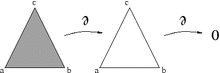
Colloquium: "Simplicial homology, part II" by Dr. Guilherme Sadovski
2020年2月13日 (木) 14:00 〜 16:00Speaker: Dr. Sadovski is a member of this unit (visit his page)
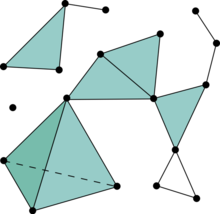
Colloquium: "Simplicial homology, part I" by Dr. Guilherme Sadovski
2020年2月10日 (月) 10:00 〜 12:00Speaker: Dr. Sadovski is a member of this unit (visit his page)
Minicurse: Morse Theory
2020年2月7日 (金) 13:00Speaker: Prof. Andrew Lobb
Morse theory is a branch of mathematics with which we can infer topological information of manifolds. In this series of lectures we will explore its formulation and how it encodes topology.