



"Life history polymorphism associated with the foraging ecology of the green sea turtle (Chelonia mydas)" by Dr. Megumi Kawai
Date
Location
Description
Marine Climate Change (Ravasi) Unit would like to invite you to the seminar by Dr. Megumi Kawai on May 29 (Friday).
----------------------------------------------------------------------
Date: Friday, May 29th, 2026
Time: 14:00-15:00
Venue: L4E01 (Level E, Lab 4)
Zoom link:
|
Meeting URL: |
https://oist.zoom.us/j/99636277463?pwd=m1Prdby9LpxHzzJMOfSKLNb07swjqa.1 |
|
Meeting ID: |
996 3627 7463 |
|
Passcode: |
474709 |
Speaker:
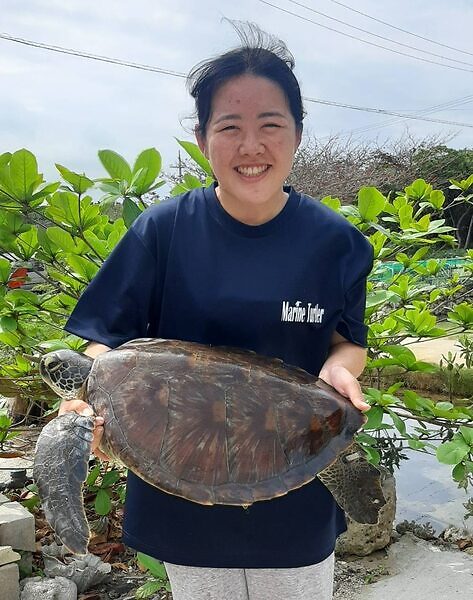
Dr. Megumi Kawai
Project Researcher
the Atmosphere and Ocean Research Institute
The University of Tokyo
Title:
Life history polymorphism associated with the foraging ecology of the green sea turtle (Chelonia mydas)
Abstract:
Understanding life history polymorphism, in which turtles within the same species exhibit different life-history strategies, is essential for elucidating how organisms adapt to their environments and grow. Such polymorphism has been reported in a wide range of taxa such as fishes, amphibians, and birds, and its maintenance mechanisms and ecological impacts have been extensively studied. In the green turtle (Chelonia mydas), polymorphism in diet and foraging behavior has also been documented. Green turtles generally recruit to coastal habitats several years after hatching, after which they establish relatively small home ranges and primarily feed on seagrasses and marine algae. However, in some regions, green turtles consume not only seagrass and marine algae but also gelatinous prey, such as jellyfish and salps, while migrating over long distances. In this study, we compared the foraging behaviors of herbivorous and omnivorous green turtles under different environmental conditions to better understand the significance of these differences. We investigated the underwater foraging behavior of green turtles using biologging by attaching animal-borne data loggers such as video cameras and GPS devices to their carapaces. Our results suggest that herbivorous turtles exhibit strong foraging site fidelity and exploit stable food resources efficiently. In contrast, omnivorous turtles exhibit more extensive movements and higher activity levels but lower feeding frequency. From a behavioral perspective alone, their foraging appeared less efficient than that of herbivorous turtles. However, because omnivorous turtles exhibited better nutritional status than herbivorous turtles, the consumption of gelatinous prey may provide nutritional benefits that outweigh the costs of migration. These findings indicate that green turtles possess flexible foraging strategies that allow them to adapt to varying environmental conditions.
Biogeography:
Dr. Kawai is a Project Researcher at the Atmosphere and Ocean Research Institute, The University of Tokyo. Her interest in marine animals began with childhood diving experiences, which inspired her to pursue marine biology at university. During graduate school, she studied the foraging behavior of green sea turtles using biologging techniques.
Host:
Prof. Timothy Ravasi
Subscribe to the OIST Calendar: Right-click to download, then open in your calendar application.