



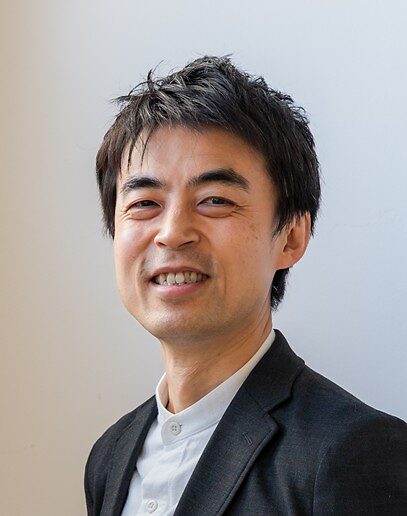
[Seminar] Remodeling of the Intracellular Physical Environment During Embryogenesis: From the Nucleus to the Cytoplasm by Prof. Akatsuki Kimura, National Institute of Genetics & SOKENDAI, Japan
Date
Location
Description
The intracellular physical environment, including viscosity, molecular crowding, and mechanical constraints, plays an important role in intracellular dynamics. However, how these physical properties change during embryogenesis and what biological significance such changes may have remain poorly understood. Using Caenorhabditis elegans embryos as a model, we have been investigating developmental changes in the physical environment of both the nucleus and the cytoplasm. We previously showed that chromosome mobility progressively decreases during embryogenesis (Arai et al., Sci Rep 2017). This developmental change can be quantitatively explained by a polymer-physics model in which increasing chromatin concentration reduces the mesh size of the chromatin network as nuclear size decreases (Yesbolatova et al., Phys Rev Lett 2022). These findings suggest that developmental changes in nuclear architecture inevitably alter the physical environment experienced by macromolecules. Recent analyses using tracer particles further indicate that this remodeling extends beyond chromosome dynamics and reflects global changes in the nucleoplasmic environment. In parallel, we found that particle mobility in the cytoplasm also progressively decreases during embryogenesis (Koizumi et al., bioRxiv 2026). This change cannot be explained simply by the reduction in cell size during cleavage, suggesting that it reflects developmental-stage-dependent remodeling of the cytoplasmic environment. We have also shown that cytoplasmic physical properties are regulated by the actomyosin cytoskeleton (Torisawa et al., iScience 2025), providing a potential mechanism underlying these developmental changes. Together, these observations suggest that embryogenesis is accompanied by systematic remodeling of the intracellular physical environment. While some of these changes may arise as inevitable physical consequences of developmental processes, cells may also exploit the changing physical environment to achieve robust developmental functions. I look forward to discussing these possibilities, including whether some aspects of the intracellular environment might be actively regulated to support cellular function.
Profile:
Prof. Akatsuki Kimura, National Institute of Genetics & The Graduate University for Advanced Studies (SOKENDAI), Japan
Subscribe to the OIST Calendar: Right-click to download, then open in your calendar application.