



Seminar by Prof. Matteo Convertino "Climate Design: Emergent Eco-Engineering via Critical Ecohydrological Interactions"
Date
Location
Description
Marine Climate Change (Ravasi) Unit would like to invite you to the seminar by Prof. Matteo Convertino on November 18th (Tuesday).
----------------------------------------------------------------------
Date: Tuesday, November 18th, 2025
Time: 14:00-15:00
Venue: C700 (Level C, Lab 3)
Zoom link:
Meeting URL: https://oist.zoom.us/j/94860353755?pwd=VZ4wyA8buigOB7SQSZrK1UPnUs4Fhq.1
Meeting ID: 948 6035 3755
Passcode: 048084
----------------------------------------------------------------------
Speaker:
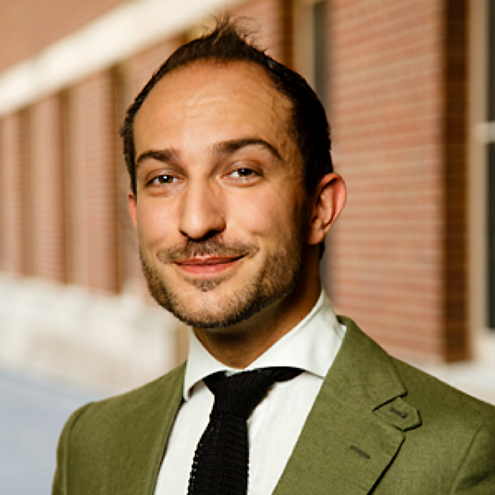
Prof. Matteo Convertino
Tsinghua University
Shenzhen International Graduate School
Institute of Environment and Ecology
SmARTREES Lab, PI
Abstract:
Ecosystems are information-processing systems in which species, habitats, and climate engage in a constant dialogue through ecological teleconnections, balancing between evolutionary adaptation and collapse. Global climate change and local human pressures are profoundly altering the ecohydrological fabric of ecosystems across scales from bacteria to vegetated communities, with severe consequences for their functions and services. This talk will present models that track and aim to design critical eco-environmental feedbacks as networks and flows, leading either to emergent functionality or systemic risk. Ecological teleconnections are shown as the essential information pathways for forecasting risks and eco-potential, guiding the assessment and design of ecosystems for precision conservation, enhanced restoration, and de-novo climate design.
Blue Carbon Ecotones (BCEs)—key transitional ecosystems in coastal/marine and riverine spaces—will be highlighted for their pivotal role in maintaining ecosystemic fitness through a Water–Biodiversity–Carbon equilibrium (“water neutrality” underpinning optimal carbon dynamics) embedded in Pareto-optimal structures and flows. A novel Ecosystem Fitness and Resilience Index, bounded by compounding ecohydrological extremes, will be introduced by coupling ecological conditions, projected climatic stress, ecological connectivity, and socio-economic vulnerability.
The talk will also discuss the emergent engineering of habitats through critical eco-structures—such as oyster reefs, salt marshes, and mangroves—that self-assemble from optimal ecological proportions, flows, and area eco-potential. Computational and empirical evidence will show how transplanting eco-stressed species can significantly enhance restoration success, strengthening community resilience in terms of biodiversity and ecosystem services. Key species such as fish are shown as powerful eco-indicators of ecosystem health and are valuable for identifying areas in need of interconnected restoration.
Finally, from a structural perspective, the encoding of future environmental stress into species organization and flow dynamics—mapped as functional eco-information in an eco-portfolio model—will be proposed as a foundation for the resilient design of adaptive ecohydrological systems where time is sculpted through space. These include climate strategies, basin-scale enhanced restoration (involving the coastal/marine space), and de-novo eco-inspired technology (sensors and actuators) to track eco-environmental dynamics, for ecosystems where the built and natural environments coexist in ecosymbiosis (“nature-positive design”).
Biography:
Matteo Convertino is an Associate Professor at the Institute of Environment and Ecology, Tsinghua University, Shenzhen International Graduate School, China. He is the Director of the Ecosystem Intelligence and Design Lab (TREES). Dr. Convertino is also adjunct professor in the MSc program in Urban Systems at the Institute of Future Human Habitats. He is currently leading the Nature-positive Design Hub for emergent engineering and climate design. The current work is largely focused on mapping and engineering Global Critical Networks for transformational risk that enhance, trigger, or encode positive ecohydrological feedback in ecological structures with collective Nature’s value (along the Water-Biodiversity-Carbon trinity).
Before joining Tsinghua University, Dr. Convertino was an Associate Professor at Hokkaido University, JP, where he cofounded the Big-Data Bio-Environmental Division at the Information Science and Technology Graduate School, and an Assistant Professor at the University of Minnesota Twin-Cities where he cofounded the Ecosystem Health Division. Dr. Convertino was the chair-elect of the Ecological Risk Assessment group within the Society for Risk Analysis.
Dr. Convertino earned his PhD (2010) through a collaborative program between the University of Padova, Italy, and Princeton University, USA, in Civil and Environmental Engineering Sciences, (Biocomplexity track). He received his MSc (2006) in Hydrodynamics and Ecohydrology and his BSc (2004) in Structural and Environmental Engineering, both from the University of Padova, Italy. After completing his PhD, Dr. Convertino served as a Postdoctoral Researcher and Research Scientist with the Biocomplexity Engineering Group at the University of Florida, Gainesville, USA, and with the Risk and Decision Science Team at the US Army Corps of Engineers in Boston, MA (2010–2013).
Host:
Prof. Timothy Ravasi
Subscribe to the OIST Calendar: Right-click to download, then open in your calendar application.