



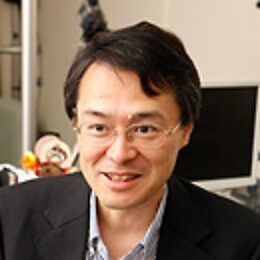
[Seminar] On human emergence, Prof. Gentaro Taga, Graduate School of Education, The University of Tokyo
Date
Location
Description
Prof. Gentaro Taga, Graduate School of Education, The University of Tokyo
Title: On human emergence
Abstract: There are three main approaches to the formation of human intelligence: the learning theory, which holds that intelligence can be generated from large amounts of environmental and linguistic data; the nativist theory, which argues that intelligence emerges from highly pre-specified biological structures; and the developmental theory, which proposes that intelligence is acquired through active interaction with the environment. In this context, I would like to examine the validity of the developmental theory by describing what actually occurs from the fetal stage through infancy up to around one year of age, when fundamental human characteristics are established, as a case of human emergence.
First, the mechanisms of brain development during the fetal and early infant stages are presented, in which spontaneous neural activity, self-organizing formation of structures and networks, and their subsequent reorganization collectively shape the developing brain.
Next, behavior is examined as emerging from spontaneous movements, whereby such movements lead to interactions with the environment, and memory is formed through these processes. The possibility that an autobiographical self emerges from the individual dynamics of these developmental processes is further considered.
The early stages of language acquisition are then addressed, with emphasis on the embodied characteristics of speech in language production and the musicality in language perception.
Furthermore, mechanisms of symbiosis across social, and biological environments are examined, with particular attention to language and gut microbiota, approached through the relational dynamics between the “internal” and the “external.”
Finally, it is considered how development is not only shaped by evolutionary traces but may also act as a driver of evolution through its own variability. In particular, neotenic characteristics, which delay developmental maturation, may have facilitated the evolution of bipedalism and language.
Taken together, these points suggest that humans are systems that are actively generated internally while simultaneously existing as part of their intersubjective and ecological environment. This requires a relatively slow developmental timescale. Based on this characterization of human emergence, I will reconsider the initial question regarding the formation of intelligence in light of the three theories outlined above.
Gentaro Taga, Ph.D.
Employment history
2009–present Professor, Graduate School of Education, The University of Tokyo
2004–2009 Associate professor, Graduate School of Education, University of Tokyo
2000–2004 Full-time lecturer, Graduate School of Education, University of Tokyo
1995–2000 Assistant professor, Department of Pure and Applied Sciences, University of Tokyo
1994–1995 JSPS postdoctoral fellow, Yukawa Institute for Theoretical Physics, Kyoto University
Education
1991–1994 Ph.D, Pharmaceutical Sciences, University of Tokyo
1989–1991 Master, Pharmaceutical Sciences, University of Tokyo
1985–1989 bachelor, Pharmaceutical Sciences, University of Tokyo
Research stays and visits
2018 visiting fellow, Konrad Lorenz Institute, Austria
2017 visiting scholar, Biomedical Optics Research Laboratory, Clinic of Neonatology, University Hospital Zurich, Switzerland
1998-1999 HFSP short term fellow (joint appointment), California Institute of Technology, USA
1994-1995 Visiting postdoctoral fellow, Neuro-Muscular Research Center, Boston University, USA
Awards and scholarships
- 1st Japan Society for the Promotion of Sciences Prize, 2004
- Nakayama Award, Nakayama Foundation for Human Science, 2002
- Young Investigator Award, Symposium on Biological and Physiological Engineering, The Society of Instrument and Control Engineers 1995
- Andrzei J. Komor Young Investigator Award, International Symposium on Computer Simulation in Biomechanics, Paris, 1993
Subscribe to the OIST Calendar: Right-click to download, then open in your calendar application.