



【Seminar】Intrinsic Motivation to Occupy Path Space as a Principle of Open-Ended Embodied Behavior by Dr Rubén MORENO-BOTE
Date
Location
Description
Title: Intrinsic Motivation to Occupy Path Space as a Principle of Open-Ended Embodied Behavior
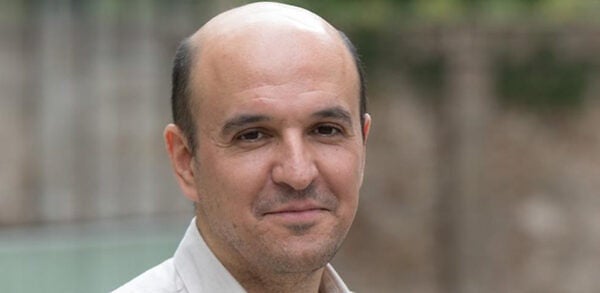
Speaker: Rubén MORENO-BOTE
Center for Brain and Cognition, Department of Engineering, Serra Húnter Fellow Programme, Universitat Pompeu Fabra, Barcelona, Spain
E-mail: ruben.moreno@upf.edu
Abstract: While most theories of behavior assume that animals maximize rewards, much natural behavior, such as curiosity and play, is intrinsically originated, with no reference to extrinsic tasks. In this talk, I will introduce the maximum-occupancy-principle (MOP), an intrinsic motivation signal that adopts as principle the diversity and variability of natural behavior. By maximizing the occupancy (entropy) of action-state paths, agents endowed with this intrinsic motivation can generate all sorts of behaviors that are capable of, in a close-loop, open-ended manner, solely shaped by terminal states and cognitive and body constraints. Behaviors spontaneously and dynamically reorganize into goals and subgoals. Applied to neural networks, MOP promotes the visitation of the full repertoire of activity patterns, avoiding dynamical collapse. All in all, MOP provides the first open-ended generative model of behavior in embodied agents.
Keywords reward, intrinsic motivation, neural network, entropy
References:
- Complex behavior from intrinsic motivation to occupy future action-state path space | Nature Communications
- Empowerment, Free Energy Principle and Maximum Occupancy Principle Compared | OpenReview
- Controlled maximal variability along with reliable performance in recurrent neural networks
Author Biography
Rubén Moreno-Bote is a full professor and head of the Theoretical and Cognitive Neuroscience group in the Dept of Engineering of the Universitat Pompeu Fabra, in Barcelona. His research focuses on understanding natural and artificial intelligence through computational neuroscience and reinforcement learning. His lab has introduced the Maximum Occupancy Principle, a maximum entropy principle for modeling behavior. He has been awarded the Howard Hughes Medical Institute International Fellowship and the ICREA Academia Award, and has delivered the inaugural lecture of the Department of Neuroscience at the University of Chile. He is also the author of the book ¿Cómo tomamos decisiones? Los mecanismos neuronal de la decisión (in Spanish), and stablished his laboratory in 2012 following Ramón y Cajal fellowship.
Subscribe to the OIST Calendar: Right-click to download, then open in your calendar application.