



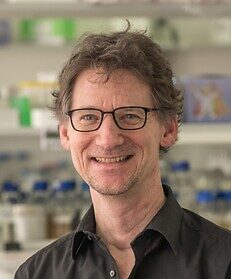
[Seminar] INF2 drives actin reorganization during plasma membrane repair by Prof. Roland Wedlich-Söldner (Professor and Director, Institute of Cell Dynamics and Imaging, University of Münster)
Date
Location
Description
Description
Title: INF2 drives actin reorganization during plasma membrane repair
Speaker: Prof. Roland Wedlich-Söldner
Professor and Director, Institute of Cell Dynamics and Imaging, University of Münster
Website: https://www.uni-muenster.de/Cells-in-Motion/people/all/wedlich-soeldner-r.php
Summary
Plasma membrane (PM) wounds are frequent cellular insults that trigger diverse repair responses across organisms. A common feature of these pathways is the rapid coupling of calcium influx to actin remodeling. Our previous identification of the calcium-mediated actin reset (CaAR) suggested a mechanism linking these two fundamental repair signals, but its molecular basis remained unknown. Here, we identify the formin INF2 as a key mediator of actin modulation during PM repair. Quantitative imaging reveals that injury severity determines distinct repair regimes, with modest wounds eliciting local calcium and actin responses, whereas severe wounds trigger global calcium elevation and cell-wide actin remodeling. INF2 drives both responses through its actin polymerization activity and is recruited to wound sites through a short C-terminal wound-localizing peptide (WOLOP). Structural modelling and mutational analysis indicate that WOLOP mediates interaction with Annexin–S100 complexes at damaged membranes. Loss, hyperactivation, or disease-associated INF2 variants disrupt injury responses, linking altered actin regulation to defective membrane repair. Together, our findings establish INF2 as a molecular bridge between calcium signaling and actin remodeling during membrane repair and provide a mechanistic connection between Annexindependent repair pathways and the actin cytoskeleton.
Key references for this seminar
Bayraktar S, Nehrig J, Menis E, Karli K, Janning A, Struk T, Halbritter J, Michgehl U, Krahn MP, Schuberth CE*, Pavenstädt H*, Wedlich-Söldner R* (2020) A deregulated stress response underlies distinct INF2 associated disease profiles. JASN 31, 1296-1313.
Wales P, Schuberth, CE, Aufschnaiter R, Fels J, García-Aguilar I, Janning A, Dlugos CP, Schäfer-Herte M, Klingner C, Wälte M, Kuhlmann J, Menis E, Hockaday Kang L, Maier KC, Hou W, Russo A, Higgs HN, Pavenstädt H, Vogl T, Roth J, Qualmann B, Kessels MM, Martin DE, Mulder B and Wedlich-Söldner R (2016). Calcium-mediated actin reset (CaAR) mediates acute cell adaptations. Elife 5, e19850.
Klingner C, Cherian AV, Fels J, Diesinger PM, Aufschnaiter R, Maghelli N, Keil T, Beck G, Toliü-Nørrelykke IM, Bathe M and Wedlich-Soldner R (2014). Isotropic acto-myosin dynamics promote organization of the apical cell cortex in epithelial cells. J Cell Biol. 207, 107-21.
Short Bio
Roland Wedlich-Söldner studied Biology in Munich and graduated with Regine Kahmann and Gero Steinberg on microtubule-dependent transport in the plant pathogenic fungus Ustilago maydis. During his postdoc with Rong Li at Harvard Medical school he studied the mechanisms of spontaneous cell polarization. He then headed a research group on “Cellular Dynamics and Cell patterning” at the Max Planck Institute of Biochemistry before joining the University of Münster in 2014 as full professor and director of the Institute of Cell Dynamics and Imaging. His group uses high resolution life cell microscopy to identify fundamental concepts of cellular organization, with a focus on membrane organization and cytoskeletal dynamics.
Attachments

Subscribe to the OIST Calendar: Right-click to download, then open in your calendar application.