



Past Events
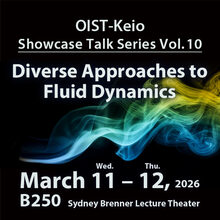
OIST-Keio Showcase Talk Series Vol. 10: Diverse Approaches to Fluid Dynamics
The 10th OIST–Keio Joint Symposium brings together various perspectives on fluid dynamics, highlighting recent advances across theory, computation, and experiment. Through a series of focused talks and poster presentations, the event spans fundamental flow phenomena, complex and multiscale fluids, and engineering‑relevant applications. This 10th showcase continues a series of events bringing Keio and OIST researchers together to foster discussion and enable innovation through interdisciplinary collaboration.
QG Seminar (Zoom): Classical spinning particles for black hole physics, Maor Ben-Shahar, (MIT)
QG Seminar (Zoom)
Speaker: Maor Ben-Shahar, (MIT)
Title: Classical spinning particles for black hole physics
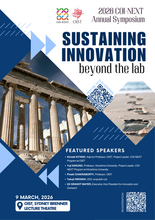
COI-NEXT Annual Symposium: Sustaining Innovation Beyond the lab
OIST COI-NEXT Annual Symposium 2026 Sustaining Innovation Beyond the Lab Date: March 9th, 2026, at 9:30-17:00 Venue: Sydney Brenner Lecture Theater (B250) Target audience: General audience/ open to everyone at OIST and beyond. Registration Deadline: February 26, 2026
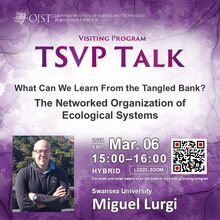
TSVP Talk: "What Can We Learn From the Tangled Bank? The Networked Organization of Ecological Systems" by Miguel Lurgi
TSVP Talk Language: English (no interpretation). Target audience: General audience / everyone at OIST and beyond. Freely accessible to all OIST members and guests without registration (also via Zoom).
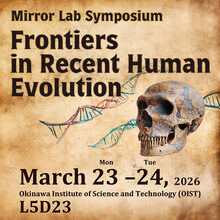
[Call for Registration] Mirror Lab Symposium: Frontiers in Recent Human Evolution
Mirror Lab Symposium: Frontiers in Recent Human Evolution
We will describe and discuss projects that explore genetic variants that emerged in the evolution of modern and archaic humans, and how such archaic variants affects humans today. We will also discuss projects that use ancient DNA to reconstruct the early peopling and history of the Japanese Archipelago. We will explore how we can intensify our collaborations in these areas and brainstorm about future research directions.
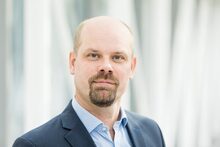
CDQT Guest Seminar:Topological surface superconductivity in PtBi2
Guest seminar hosted by CDQT.
Speaker: Prof. Jeroen van den Brink (Institute for Theoretical Solid State Physics, IFW Dresden)
Title: Topological surface superconductivity in PtBi2
Workshop on Cognitive Neurorobotics
Workshop on Cognitive Neurorobotics
Organized by Jun Tani, Tani Unit, OIST
March 5, 13:30—18:00, Seminar room L5D23, Lab 5
Tentative program
13:30-13:40: Introduction, Jun Tani, OIST
13:40-14:40: Collective Intelligence in LLM agents, Takashi Ikegami, Univ. of Tokyo
14:40-15:40: Deep Active Inference for Real-World Robotic Systems, Shingo Murata, Keio Univ.
15:40-16:00: Coffee break
16:00-17:00: A Consideration of Robot Foundation Models as Embodied Intelligence, Tetsuya Ogata, Waseda Univ.
17:00-18:00: Propagation of Mind Through the Mechanism of Superposition, Hiro Iizuka, Hokkaido Univ.
Seminar"Complex Particle Dynamics in Straight Rectangular Microchannels: Inertial Migration of Cells, Asymmetric Particles, and Soft Materials"Takayuki Suzuki
Language: English
QG Seminar: Hamilton Revisited: The Action Principle for Initial Value Problems (Will Horowitz, University of Cape Town)
QG Seminar Speaker: Will Horowitz (University of Cape Town) Title: Hamilton Revisited: The Action Principle for Initial Value Problems
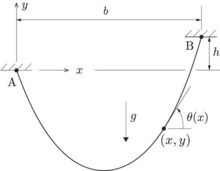
[Seminar] In-plane oscillations of a slack catenary using assumed modes by Prof.Anindya Chatterjee
Title: In-plane oscillations of a slack catenary using assumed modes.
Speaker: Dr. Anindya Chatterjee, Professor, Mechanical Engineering, IIT Kanpur
(collaborators: Bidhayak Goswami and Indrasis Chakraborty)
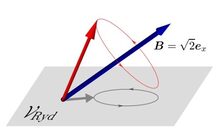
Mr. Keita Omiya "Physics and Mathematics of Quantum Many-Body Scars"
Target audience: Interns, Students, PostDocs, and those who are interested in the same research field. Language: English
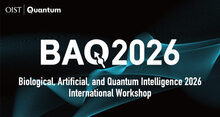
【Workshop】Biological, Artificial, and Quantum Intelligence 2026 International Workshop (BAQ2026)
The Biological, Artificial, and Quantum Intelligence 2026 International Workshop (BAQ2026) will bring together world-leading experts in neural networks, neuroscience, quantum machine learning, and related areas of intelligence and complexity. It aims to provide a platform for discussions on recent developments and future perspectives in these fields. Open to OIST Community!

Emerging Concepts in Cell Division Cycles: From Early Development to Cancer and Aging
OIST Workshop | Website | Main organizer: Tomomi Kiyomitsu (Cell Division Dynamics Unit) | OIST members are welcome to attend all scientific sessions. Meals are closed sessions for registered participants only.
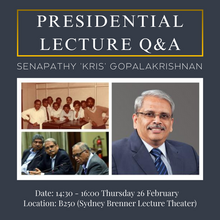
Presidential Lecture Q and A by Kris Gopalakrishnan
Moderated by Lauren Ha, Associate Vice President for Technology Development and Innovation, the conversation will explore Kris’s career, current initiatives, and his perspective on the global tech industry. After a 20‑minute interview, the floor will open for audience questions. The event will be followed by a special OIST Teatime in Center Court.
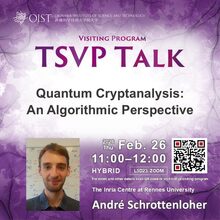
TSVP Talk: "Quantum Cryptanalysis: An Algorithmic Perspective" by André Schrottenloher
TSVP Talk Language: English (no interpretation). Target audience: General audience / everyone at OIST and beyond. Freely accessible to all OIST members and guests without registration (also via Zoom).
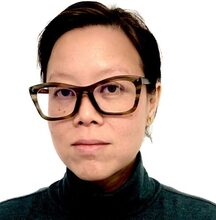
【Seminar】"An odor patch foraging task to study learning and decision making" by Dr. Cindy Poo, the Allen Institute
Speaker: Cindy Poo, a senior scientist with the Allen Institute for Neural Dynamics and an Affiliate Assistant Professor in the Department of Physiology and Biophysics at the University of Washington
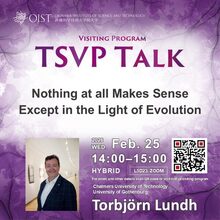
TSVP Talk: "Nothing at all Makes Sense Except in the Light of Evolution" by Torbjörn Lundh
TSVP Talk Language: English (no interpretation). Target audience: General audience / everyone at OIST and beyond. Freely accessible to all OIST members and guests without registration (also via Zoom).
Rocks instead of clocks: Bayesian modelling of the fossil record enlightens the diversification and extinction of Hemiptera in deep time
Title: Rocks instead of clocks: Bayesian modelling of the fossil record enlightens the diversification and extinction of Hemiptera in deep time
Abstract: Untangling the patterns and drivers behind the diversification and extinction of highly diversified lineages remains a challenge in evolutionary biology. While insect diversification has been widely studied through the “ Big Four” insect orders (Coleoptera, Hymenoptera, Lepidoptera, and Diptera), the fifth most diverse order, Hemiptera, has often been overlooked. Hemiptera exhibit a rich fossil record and are highly diverse in present-day ecosystems, with many lineages closely associated with their host plants, making them a crucial group for studying how past ecological shifts—such as mass extinctions and floral turnovers—have influenced insect diversification. This study leverages birth-death models in a Bayesian framework and the fossil record of Hemiptera to estimate their past diversity dynamics. Our results reveal that global changes in flora over time significantly shaped the evolutionary trajectories of Hemiptera. Two major faunal turnovers particularly influenced Hemiptera diversification: (i) the aftermath of the Permo-Triassic mass extinction and (ii) the Angiosperm Terrestrial Revolution. Our analyses suggest that diversification of Hemiptera clades was driven by floristic shifts combined with competitive pressures from overlapping ecological niches. Leveraging the extensive fossil record of Hemiptera allowed us to refine our understanding of diversification patterns across major hemipteran lineages. We also the recently developed Bayesian Brownian Bridge model, which estimates the timing of lineage origin and extinction through fossil-based Bayesian modelling, to provide a temporal framework for the rise and fall of 310 major hemipteran lineages.
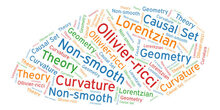
2026 Analysis on Metric Space Seminar "Ollivier-Ricci curvature in non-smooth Lorentzian geometry and causal set theory" by Dr.Samuël Borza, University of Vienna
This talk will explore some aspects of non-smooth Lorentzian geometry, the mathematical framework underlying Einstein’s general relativity, which is currently being developed. Just as metric length spaces provide a synthetic generalisation of smooth Riemannian manifolds, the time-separation function plays the role of a “distance” in Lorentzian geometry. The need for a non-smooth Lorentzian framework appeared early on, most famously with Penrose’s singularity theorems. After introducing the basic concepts and some initial results in this synthetic setting, we will turn to causal set theory, a radical approach to quantum gravity in which spacetime is modelled as a discrete causal graph. I will formulate a new notion of curvature, inspired by Ollivier-Ricci curvature on metric graphs, using optimal transport between causal diamonds. We will see that it does recover Ricci curvature on smooth Lorentzian manifolds, and numerical examples will be presented.
[Seminar] "From electrically conductive MOFs to sustainable batteries" by Prof. Mircea Dincă, Princeton University
Prof. Mircea Dincă , Department of Chemistry, Princeton University
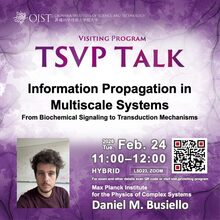
TSVP Talk: "Information Propagation in Multiscale Systems, From Biochemical Signaling to Transduction Mechanisms" by Daniel Busiello
TSVP Talk Language: English (no interpretation). Target audience: General audience / everyone at OIST and beyond. Freely accessible to all OIST members and guests without registration (also via Zoom).
[Atomic physics seminar] Entanglement-assisted readout and cooling of neutral atom qubits in an optical tweezer array
Speaker: Dr Lewis Picard, Caltech, USA
Title: Entanglement-assisted readout and cooling of neutral atom qubits in an optical tweezer array
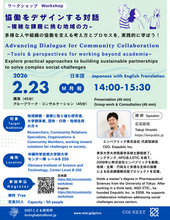
Advancing Dialogue for Community Collaboration: Tools & perspectives for working beyond academia
A workshop on developing collaboration across sectors to work effectively with community to advance research and activities addressing social challenges.
Speaker: Takuji Hiroishi, CEO, Empublic Inc. , Japanese with English translation
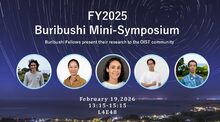
FY25 Buribushi Mini-Symposium
Faculty Affairs Office (FAO) is pleased to announce the first Buribushi Mini-Symposium , to be held on Thursday, February 19, 2026 . All OIST faculty, researchers, students, and staff are warmly invited to attend. Come and join us for a fun research talk !
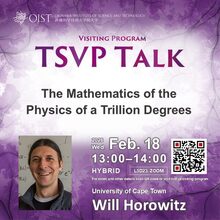
TSVP Talk: "The Mathematics of the Physics of a Trillion Degrees" by Will Horowitz
TSVP Talk Language: English (no interpretation). Target audience: General audience / everyone at OIST and beyond. Freely accessible to all OIST members and guests without registration (also via Zoom).
QG Seminar (Zoom): sw1+infinity asymptotic symmetries: Carrollian & Celestial lessons
QG Seminar (Zoom) Speaker: Nicolas Cresto (Perimeter) Title: sw1+infinity asymptotic symmetries: Carrollian & Celestial lessons
[Atomic physics seminar] Nonclassical light – getting more of it out of a single atom
Speaker: Dr Scott Parkins, Associate Professor, The University of Auckland, NZ
Title: Nonclassical light – getting more of it out of a single atom
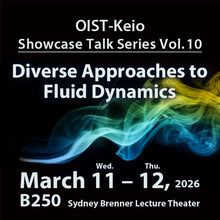
[Call for Registration] OIST-Keio Showcase Talk Series Vol. 10: Diverse Approaches to Fluid Dynamics
The 10th OIST-Keio Joint Symposium brings together various perspectives on fluid dynamics, highlighting recent advances across theory, computation, and experiment. Through a series of focused talks and poster presentations, the event spans fundamental flow phenomena, complex and multiscale fluids, and engineering‑relevant applications. This 10th showcase continues a series of events bringing Keio and OIST researchers together to foster discussion and enable innovation through interdisciplinary collaboration.
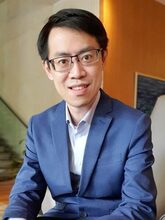
【Seminar】"Activities in Singapore’s National Quantum-Safe Network Testbed"
Dr. Jing Yan Haw, Senior Research Fellow, Centre for Quantum Technologies, National University of Singapore. Language: English, no interpretation. Open to OIST members.

StrucShare meeting: Demo and hands-on experience
StrucShare meeting: Demo and hands-on experience by Prof Matthias Wolf
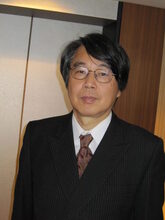
Lecture: "A Survey on Supersingular Abelian Varieties" by Tomoyoshi Ibukiyama
Target audience : Students and researchers in the field
Language : English
Abstract : Supersingular elliptic curves and supersingular Abelian varieties are important mathematical background of modern cryptography.
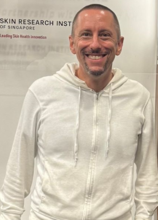
[Seminar] "Molecular functions of the nuclear lamina in cell aging & senescence" by Dr. Oliver Dreesen
Speaker: Dr. Oliver Dreesen, Senior Principal Investigator, Cell Aging Laboratory, A*STAR Skin Research Laboratories (A*SRL)
Talk Title: Molecular functions of the nuclear lamina in cell aging & senescence
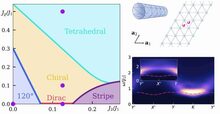
[Seminar] Mr. Markus Drescher "Dynamical signatures of emergent quantum phases in the triangular-lattice Heisenberg antiferromagnet"
Target audience: Interns, Students, PostDocs, and those who are interested in the same research field. Language: English
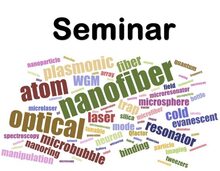
[Atomic physics seminar] Neutral-Atom Based Quantum Computing with 171Yb Nuclear-Spin Qubits
Title: Neutral-Atom Based Quantum Computing with 171Yb Nuclear-Spin Qubits
Speaker: Dr Sebastian Pucher, Quantum Engineer at Atom Computing, Boulder, Colorado, USA
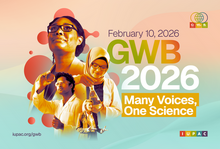
2026 IUPAC Global Women's Breakfast at OIST
QG Seminar (Zoom): Non-supersymmetric strings on AdS3, Hassaan Saleem, (SUNY Albany)
QG Seminar (Zoom) Speaker: Hassaan Saleem, (SUNY Albany) Title: Non-supersymmetric strings on AdS3

School: Introduction to Isogeny-based Cryptography (TSVP-TP25IC)
Title : "Introduction to Isogeny-based Cryptography"
Abstract : Isogeny-based cryptography is a fast-moving field, and recent developments have introduced several new techniques, making the barrier of entry particularly high for young researchers wishing to work in the field. To aid new researchers in the field is the aim of this "summer" school, which introduces all of the many essential tools that are used today. Among the topics to be covered are the correspondences between ideals and isogenies that give rise to both the Deuring correspondence, which is an essential part of protocols such as SQIsign, and the class group action on CM curves and oriented supersingular curves, which gives other cryptographic primitives such as CSIDH and SCALLOP. Further, higher dimensional abelian varieties and isogenies between these have recently become an integral part of isogeny-based cryptography, providing huge improvements to many existing protocols, as well as creating new protocols.
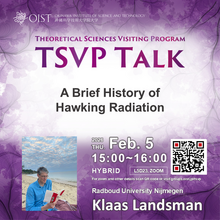
TSVP Talk: "A Brief History of Hawking Radiation" by Klaas Landsman
TSVP Talk Language: English (no interpretation). Target audience: General audience / everyone at OIST and beyond. Freely accessible to all OIST members and guests without registration (also via Zoom).
2026 Analysis on Metric Space Seminar: "P-Dirichlet spaces and the resolution of the resistance and energy image density conjectures" by Prof.Sylvester Eriksson-Bique, University of Jyv¨askyl¨a
Title: P-Dirichlet spaces and the resolution of the resistance and energy image density conjectures
Abstract: I will describe the resolution of two conjectures related to Dirichlet forms. In both cases a conceptually simple solution arises by stepping away from the p=2 regime. This leads to a new definition of a p-Dirichlet space, which unifies three quite different areas: Dirichlet form theory, Analysis on fractals and Analysis on metric spaces. The talk includes joint work with Mathav Murugan
2026 Analysis on Metric Space Seminar: "The Trace Theorem for Sobolev Homeomorphisms" by Dr.Aleksis Koski, Aalto University
Title:The Trace Theorem for Sobolev Homeomorphisms
Abstract: Classical Sobolev trace theory tells us when a boundary map can be extended as a Sobolev function inside a given domain in R^n. For the purposes of minimization problems in Nonlinear Elasticity, it is natural to rephrase this question in the context of extending a given embedding of the boundary as a homeomorphic Sobolev map. In this talk, I will explain what is known about this problem, ending with a full trace theory for Sobolev homeomorphisms in 2D.
[Seminar] Dr. Giovanni Consoli, Imperial College London
Dr. Giovanni Consoli, Postdoctoral Fellow from Imperial College London
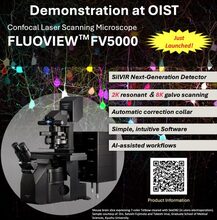
Evident FLUOVIEW FV5000 Seminar and demonstration
Evident FV5000 seminar and demonstration
[Seminar] "Looking at neurodevelopmental disorders through the lens of evolution: a role for the autolysosomal pathway" by Prof. Nael Nadif Kasri, Radboud University
Date: Monday, February 2, 2026 - 11:00 to 12:00 @L5D23, Lab5
Title: "Looking at neurodevelopmental disorders through the lens of evolution: a role for the autolysosomal pathway"
Speaker: Prof. Nael Nadif Kasri, Radboud University
【Registration Now Open】 COI-NEXT Annual Symposium: Sustaining Innovation Beyond the Lab
OIST COI-NEXT Annual Symposium 2026 Sustaining Innovation Beyond the Lab Date: March 9th, 2026, at 9:30-17:00 Venue: Sydney Brenner Lecture Theater (B250) Target audience: General audience/ open to everyone at OIST and beyond. Registration Deadline: February 26, 2026 Please register by the deadline to secure your spot. *The deadline has been extended.
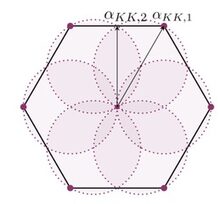
QG Seminar (Zoom): The Boundary of Symmetric Moduli Spaces and the Distance Conjecture, Veronica Collazuol (IFT Madrid)
QG Seminar Speaker: Veronica Collazuol (IFT Madrid) Title: The Boundary of Symmetric Moduli Spaces and the Distance Conjecture
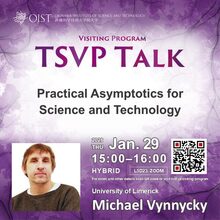
TSVP Talk: "Practical Asymptotics for Science and Technology" by Michael Vynnycky
TSVP Talk Language: English (no interpretation). Target audience: General audience / everyone at OIST and beyond. Freely accessible to all OIST members and guests without registration (also via Zoom).
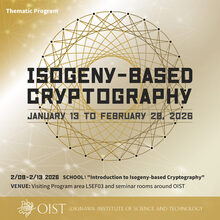
Lightning Talks on Isogenies, Richelot, Cokernel, Tate-pairing, Matrix Algebras, Irreducable Quadratics
A series of short (5-20 minute) talks by Thematic Program " Isogeny-Based Cryptography" participants
[Seminar] "Harnack’s inequality for nonlocal parabolic equations" by Prof. Naian Liao
Title: Harnack’s inequality for nonlocal parabolic equations
Speaker: Prof. Naian Liao (University of Salzburg)
[Seminar] "Phragmén-Lindelöf-type results for functions in homogeneous De Giorgi classes" by Prof. Ugo Gianazza
Title: Phragmén-Lindelöf-type results for functions in homogeneous De Giorgi classes
Speaker: Prof. Ugo Gianazza (University of Pavia)
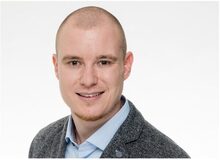
【Seminar】"Quantum photonics with vanadium in 4H-SiC"
Talk by Thomas Astner, Austrian Academy of Sciences (Austria).