



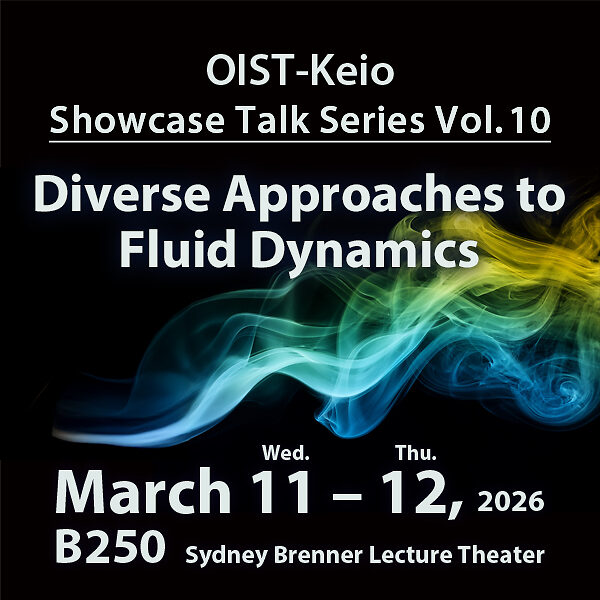
OIST-Keio Showcase Talk Series Vol. 10: Diverse Approaches to Fluid Dynamics
Date
Location
Description
Title
OIST-Keio Showcase Talk Series Vol. 10: Diverse Approaches to Fluid Dynamics
Symposium Abstract
The 10th OIST-Keio Joint Symposium brings together various perspectives on fluid dynamics, highlighting recent advances across theory, computation, and experiment. Through a series of focused talks and poster presentations, the event spans fundamental flow phenomena, complex and multiscale fluids, and engineering‑relevant applications. This 10th showcase continues a series of events bringing Keio and OIST researchers together to foster discussion and enable innovation through interdisciplinary collaboration.
Registration
Registration is closed, but walk-in participation is welcome!
(Please note that lunch bento will be prioritized for those who ordered in advance.)
Program
*Click here to DOWNLOAD. (As of Feb 19)
Keio University Speaker
| Speakers | Affiliation | Talk Title/Abstract | |
|
1 |
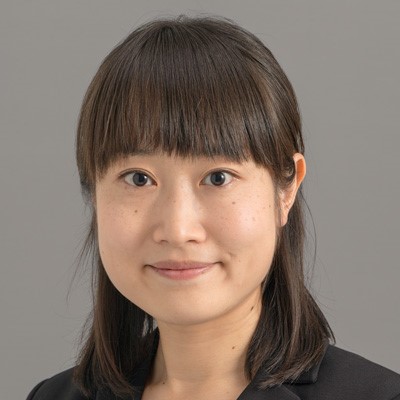
Dr. Satoko Fujioka Associate Professor |
Faculty of Science and Technology, Department of Applied Chemistry Satoko Fujioka received her B.E., M.E., and Ph.D. from the Tokyo Institute of Technology. After completing her post-doctoral studies in Mechanical Engineering at Keio University in 2009, she joined the Department of Applied Chemistry in 2010. Her current research focuses on transport phenomena and process intensification within chemical engineering. She is particularly interested in elucidating multiphase flow phenomena and developing innovative reactors, utilizing both flow visualization experiments and Computational Fluid Dynamics. |
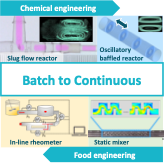
Multiphase flow reactors study for chemical and food engineering This talk introduces various compact continuous reactors for transitioning chemical and food manufacturing from batch to continuous processes. We explore Oscillatory Baffled Reactors that enhance mixing via vortex generation and discuss liquid-liquid slug flow dynamics through experiments and CFD. Regarding food processing, we highlight static mixers achieving emulsification without moving parts, alongside an in-line rheological measurement technique specifically addressing the non-Newtonian behavior of many food fluids. These technologies offer versatile solutions for process intensification in modern continuous manufacturing, aiming for enhanced efficiency and consistent product quality.
|
|
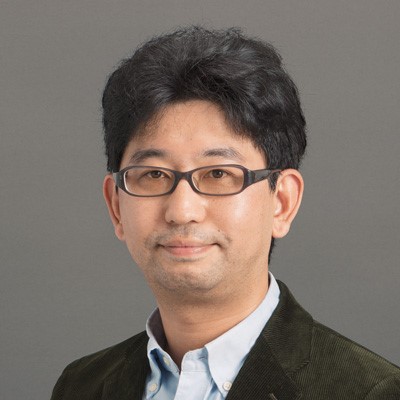
Dr. Koji Fukagata Professor
|
Faculty of Science and Technology, Department of Mechanical Engineering Koji Fukagata received his PhD at KTH (Sweden) as well as The University of Tokyo (Japan) in 2000. Since he moved to Keio University in 2007, he has worked in diverse fields of fluid mechanics including flow control and machine learning. He has served as an editor of Flow, Turbulence and Combustion (Springer-Nature) since 2015, and currently he is a Director of the Japan Society of Fluid Mechanics (JSFM), the Chair of the Fluids Engineering Division of the Japan Society of Mechanical Engineers (JSME-FED), and also serving as the Advisor for JST PRESTO and JST FOREST. |
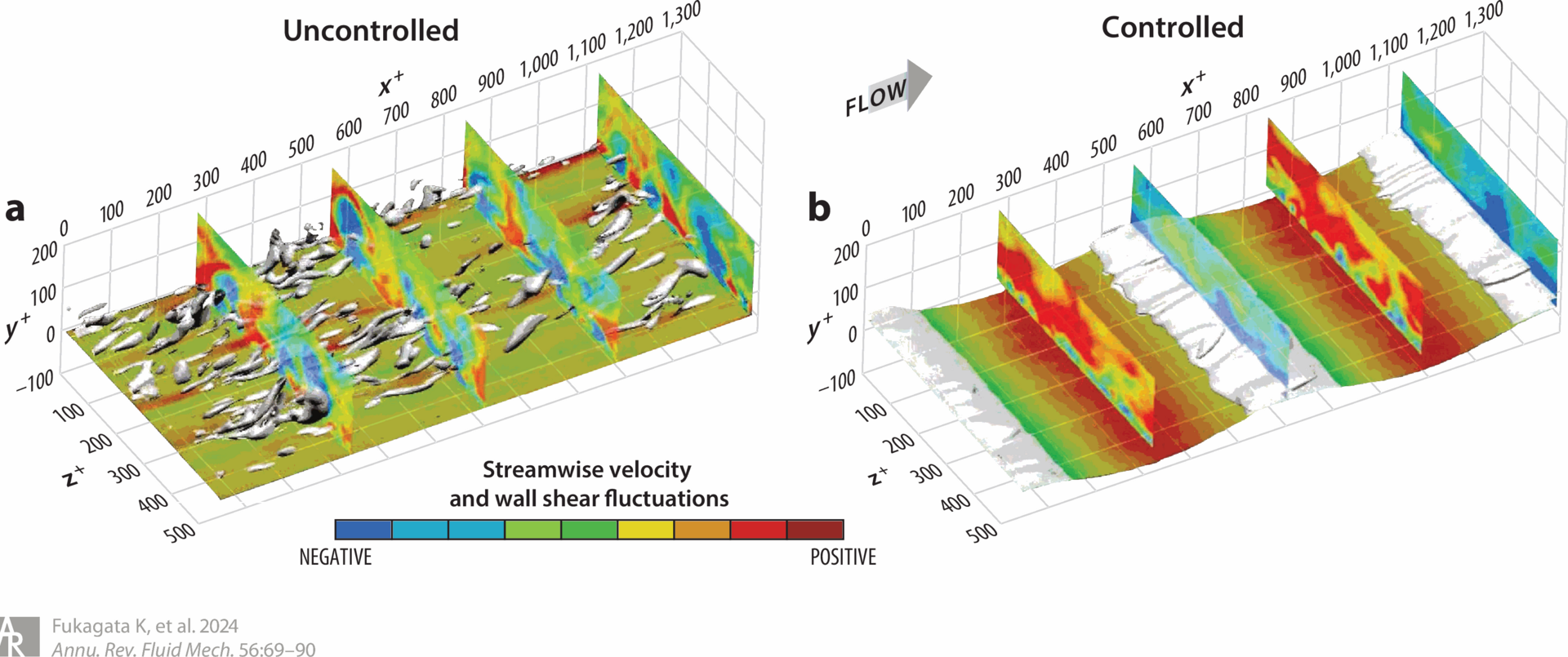
Flow control studies at Keio University Friction drag in turbulent flow is much larger than that of the laminar flow at the same Reynolds number, and its reduction is of crucial importance for improving the energy efficiency of industrial products and mitigating environmental burden. My talk will begin with our early attempts on feedback control for turbulent friction drag reduction, then I present our recent attempts on predetermined control using streamwise traveling waves. I will also briefly introduce our ongoing attempts for flow control design based on machine learning.
|
|
|
2 |
Dr. Yutaka Kazoe Professor
|
Faculty of Science and Technology, Department of System Design Engineering Yutaka Kazoe received his Ph.D. degree from Keio University in 2008. In 2009, he was a Visiting Scholar in Georgia Institute of Technology. He worked in the University of Tokyo from 2010 to 2019 as a Research Fellow, Assistant Professor, Project Lecturer, and Project Associate Professor. From 2019, he worked in Keio University as an Assistant Professor and Associate Professor and was appointed as a Professor in 2025. His current research focuses on micro/nanoscale fluid science and micro/nanofluidics. |
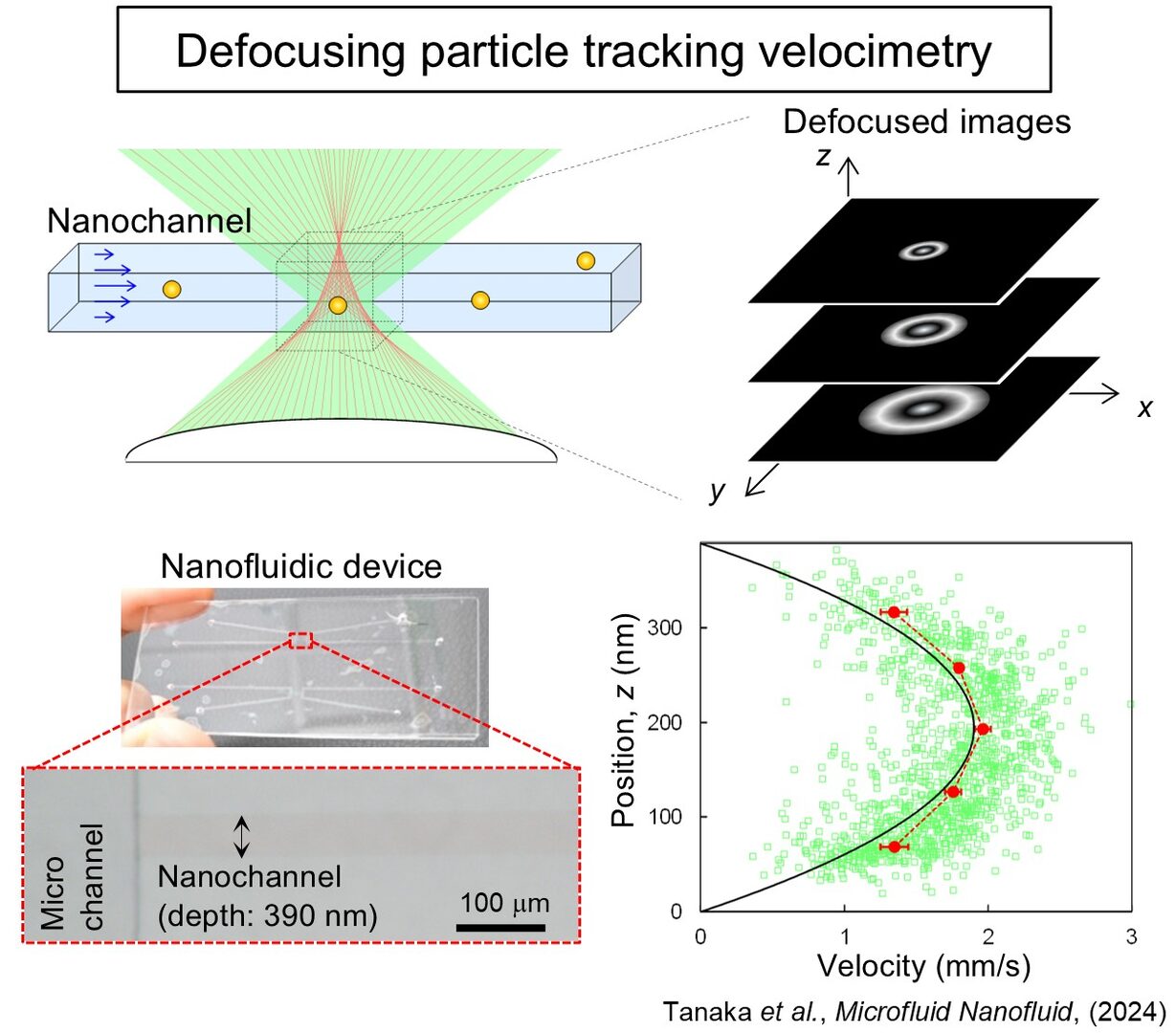
Study on behavior of nanoparticles in micro/nanospaces using super-resolution particle tracking velocimetry The development of micro/nanofluidics has led to a growing emphasis on the study of transport phenomena in 100-1000 nm spaces, where surface effects become dominant. However, fluid flows and mass transport in such small spaces are unknown due to the lack of measurement methods. Recently, we have developed a defocusing nanoparticle tracking velocimetry (nanoPTV) with a 10 nm spatial resolution for study on 100-1000 nm spaces. This talk introduces our recent results on the development of defocusing nanoPTV and its application to study on the behavior of nanoparticles suspended in a liquid flowing in micro/nanochannels.
|
|
4 |
Dr. Norihiko Sugimoto Professor
|
Faculty of Law / Research and Education Center for Natural Sciences Norihiko Sugimoto received BA, MSci, and PhD from the Kyoto University. In 2005, he moved to Nagoya University as a post-doctoral fellow. He joined to Keio University in 2008 as a lecturer and was promoted to associate professor in 2015, and professor in 2020. His current research focuses on the geophysical fluid dynamics and Venus atmosphere and has published >50 papers in this area of research. He is an Associate Editor for Journal of Geophysical Research: Planets of the American Geophysical Union and SOLA (Scientific Online Letters on the Atmosphere) of the Meteorological Society of Japan. |
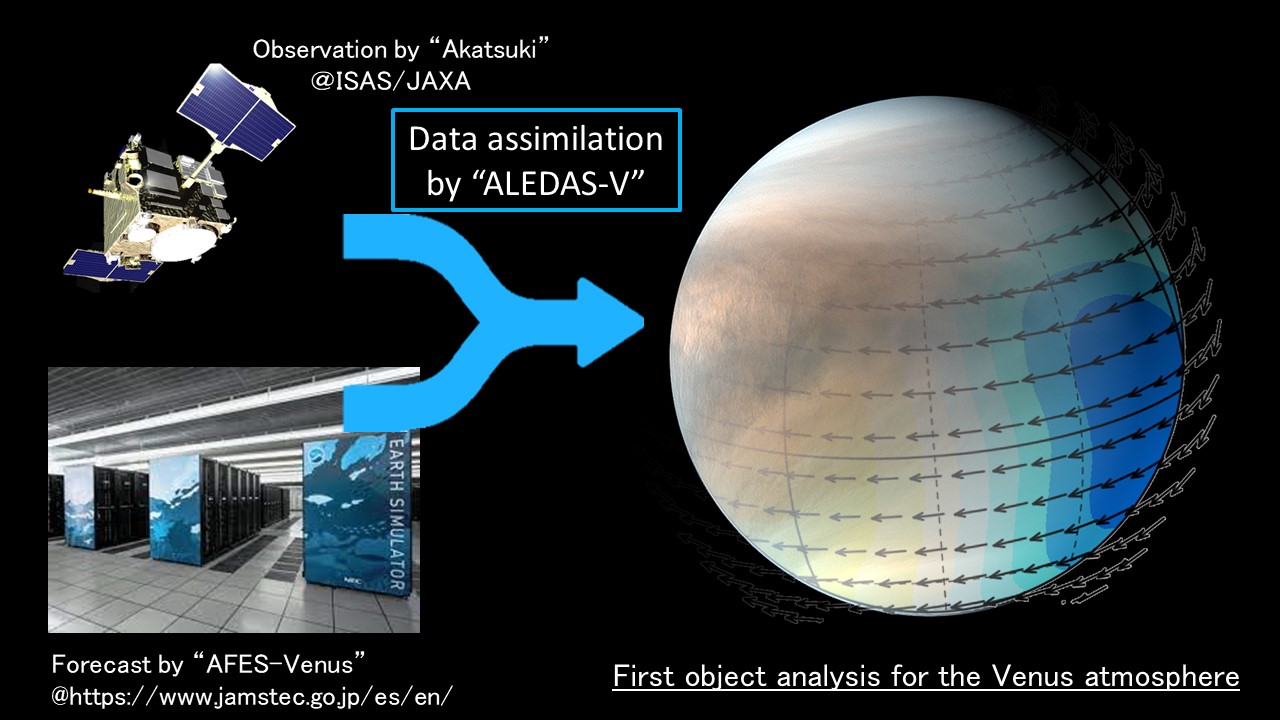
Numerical study of the general circulation of the Venus Atmosphere We have released the first analysis dataset for the Venus atmosphere, in which horizontal winds derived by ultra-violet images observed by the Venus climate orbiter “Akatsuki” were assimilated. In the analysis, super-rotation and cold collar consistent with observations has been reproduced. We will introduce recent results of Venusian general circulation model (AFES-Venus; Atmospheric GCM for the Earth Simulator for Venus) and the data assimilation system for the Venus atmosphere (ALEDAS-V; AFES-LETKF (Local Ensemble Transform Kalman Filter) data assimilation system for Venus).
|
OIST Speaker
| Speakers | Affiliation | Talk Title/Abstract | |
|
1 |
Dr. Pinaki Chakraborty Professor
|
Pinaki Chakraborty is a Professor and the interim Dean of Faculty Affairs at the Okinawa Institute of Science & Technology (OIST). His group at OIST, the Fluid Mechanics Unit, works on theoretical, experimental, and computational studies of turbulent flows, atmospheric flows, and granular flows. Before joining OIST in 2012, Pinaki was at the University of Illinois at Urbana-Champaign, first at the Department of Theoretical and Applied Mechanics, where he received his Ph.D. in 2006, and then at the Department of Geology, where he was a postdoctoral fellow and later a Research Assistant Professor. |
Resolving the puzzling spectral structure in turbulent Taylor-Couette flow From a humble kitchen blender to the vast galactic disks, rotating turbulent flows exhibit remarkable diversity. They are also replete with puzzling features. A notable example is the energy spectrum of a widely studied rotating flow—the turbulent Taylor-Couette (TC) flow. Previous studies have shown that, unlike other canonical turbulent flows, it does not obey Kolmogorov’s universal power law or any other power law. Here, we report measurements of the energy spectra in turbulent TC flow from unique “flying-wire” experiments where a rotating probe sweeps through the flow. In contrast with previous studies, which focused primarily on spectral power laws, we analyze spectral data collapse. Through this broader approach, we show that, contrary to the prevailing understanding, the spectral structure of small scales in turbulent TC flow is in excellent accord with the potent paradigm of Kolmogorov’s small-scale universality. References:
|
| 2 |
Dr. Eliot Fried Professor
|
Eliot Fried received his Ph.D. in Applied Mechanics from the California Institute of Technology in 1991, followed by a National Science Foundation postdoctoral fellowship. He subsequently held tenured faculty positions at the University of Illinois at Urbana–Champaign, Washington University in St. Louis, McGill University — where he was the Tier I Canada Research Chair in Interfacial and Defect Mechanics — and the University of Washington. He is currently leads the Mechanics and Materials Unit at the Okinawa Institute of Science and Technology. In addition to theoretical work in kinematics, mechanics, and thermodynamics, he is a co-inventor on two patents, one concerning contactless magnetic couplings for microfluidic and propulsion devices and another concerning nanocrystalline diamond films for sensing. He is also a co-applicant on pending patent applications concerning laser-written nanochannels and yarn produced from banana pseudostem fiber. |
Mass–momentum velocity disparity in compressible fluid flow Brenner proposed that, in compressible fluids, the velocity entering Newton’s law of viscosity and the no-slip condition should be the volume velocity rather than the mass velocity appearing in the continuity equation. The compatibility of such formulations with angular-momentum balance and the second law requires careful analysis. |
|
3 |
Dr. Marco Edoardo Rosti Associate Professor
|
Marco was born in Italy where he studied Aeronautical Engineering at Politecnico di Milano. He then moved to London (UK) for his doctoral studies and to Stockholm (Sweden) and Tokyo (Japan) for his postgraduate research. His work focuses primarily on fluid dynamics problems, with particular emphasis on the study of multi-scale and multi-physics problems involving complex fluids and complex flows by means of numerical simulations; his main expertise is in multiphase and turbulent flows, Non-Newtonian fluids and fluid-solid interaction, with applications ranging from turbulent flows over complex walls to suspensions of rigid and deformable particles and filaments. |
The multiscale nature of polymeric turbulence Turbulent flows containing modest amounts of long-chained polymers have remained an intriguing area of research since the discovery of turbulent drag reduction. Here, we perform direct numerical simulations of statistically stationary, homogeneous, and isotropic turbulent flows of dilute solutions of polymers at various Reynolds and Deborah numbers. At large Re, we present evidence that there is a range of scales over which the energy spectra and the structure functions show new elastic scaling consistent with recent experimental results, while at small Re, we uncover an hidden intermittent behaviour. |
|
4 |
Dr. Amy Shen Professor
|
Amy Q. Shen is Provost and Professor at OIST, where she leads the Micro/Bio/Nanofluidics Unit. She received her Ph.D. in Theoretical and Applied Mechanics from UIUC and conducted postdoctoral research in Engineering and Applied Sciences at Harvard University. Prior to joining OIST, she was a faculty member in Mechanical Engineering at the University of Washington. Her research focuses on microfluidics, rheology, and lab-on-a-chip technologies at the bio/nano interface. She is a Fellow of the American Physical Society, the Royal Society of Chemistry, and the Society of Rheology. She serves as Associate Editor for Soft Matter and sits on the editorial boards of ACS Biosensors, Biosensors and Bioelectronics, Biomicrofluidics. |
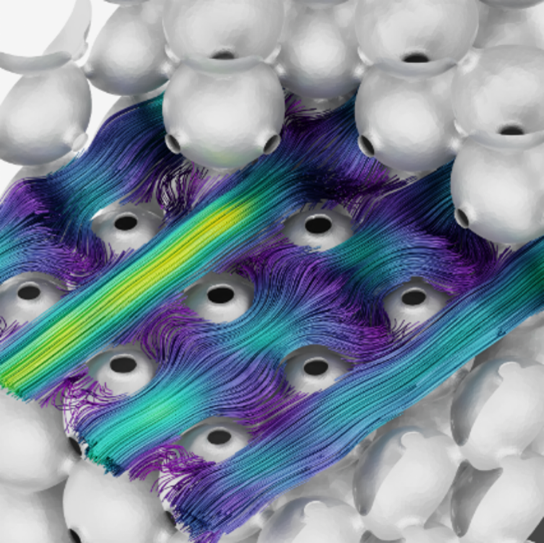
Coupling Rheology and Microfluidics: Viscoelastic flows in microstructured microfluidic environments exhibit a hierarchy of instabilities arising from the coupling of elastic stresses with geometric heterogeneity. In this talk, I will highlight recent work from our unit on nonlinear flow dynamics in cross-slots, micropost arrays, and porous-media analogs (with extensions to canopy-like geometries), identifying routes from steady flow to symmetry breaking, self-sustained oscillations, synchronized collective motion, metachronal-like waves, and ultimately broadband chaotic states characteristic of elastic turbulence. Leveraging selective laser-induced etching (SLE) to fabricate robust 3D glass microfluidic devices capable of sustaining high flow rates and strong elastic stresses, and combining micro-particle image velocimetry (micro-PIV) with flow-induced birefringence (FIB) to resolve velocity and stress fields, we systematically vary confinement, obstacle spacing, and geometric disorder to reveal how structure reshapes instability thresholds and spatiotemporal coherence in viscoelastic microflows.
|

Short Talk Speaker
|
Keio |
Kazoe group Dr. Masafumi Watanabe |
Fukagata group Itsuki Takarabe |
Fujioka group Kohei Hashimoto |
|
OIST |
Shen Unit Dr. Rui Luo |
Rosti Unit Dr. Stefanie Rauchenzauner |
|
Poster Presenter
|
Keio |
Kazoe group Sho Noguchi |
Fukagata group Senri Miura |
Fujioka group Miki Asaba |
Sugimoto group Prof. Norihiko Sugimoto |
|
OIST |
Shen Unit Dr. Ricardo Arturo Lopez de la Cruz |
Rosti Unit Christian Amor |
Fried Unit Dr. Ariel Boiardi |
Co-hosts
Event News
【Flickr】
Contact
Please email academic-partnerships@oist.jp if you have any questions.
※ Please note that this event may be recorded, and the videos may be uploaded by OIST/Keio U. Additionally, photos may be taken during the event for publication online (e.g., the OIST website, social media, etc.). Any non-published information will not be shared. ※
Attachments

Subscribe to the OIST Calendar: Right-click to download, then open in your calendar application.