



Past Events

Seminar "How do plants remember a stressful day? – Interplay of transcription factors and chromatin to regulate heat stress memory"
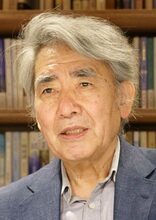
【Seminar】Organelle homeostasis of the ER through crosstalk among proteostasis, redox regulation and calcium homeostasis
A Seminar by Kazuhiro Nagata, Director General, JT Biohistory Research Hall, Takatsuki (Osaka). Hosted by Prof. Yamamoto. Keywords: molecular chaperone, ER-associated degradation (ERAD), ERdj5, LLPS
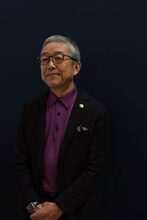
【Seminar】30 Years of Autophagy: From Fundamental Mechanisms to Healthspan Extension
A Seminar by Tamotsu Yoshimori, Professor Emeritus of Osaka University, Professor of The DAICEL Endowed Chair in Beyond Cell Reborn Research. Hosted by Prof. Yamamoto. Keywords: Autophagy, Rubicon, Longevity, Awabancha
QG Seminar (Zoom): Classical spinning particles for black hole physics, Maor Ben-Shahar, (MIT)
QG Seminar (Zoom)
Speaker: Maor Ben-Shahar, (MIT)
Title: Classical spinning particles for black hole physics

CDQT Guest Seminar:Topological surface superconductivity in PtBi2
Guest seminar hosted by CDQT.
Speaker: Prof. Jeroen van den Brink (Institute for Theoretical Solid State Physics, IFW Dresden)
Title: Topological surface superconductivity in PtBi2
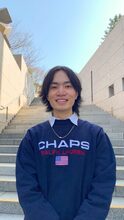
Seminar"Complex Particle Dynamics in Straight Rectangular Microchannels: Inertial Migration of Cells, Asymmetric Particles, and Soft Materials"Takayuki Suzuki
Language: English
QG Seminar: Hamilton Revisited: The Action Principle for Initial Value Problems (Will Horowitz, University of Cape Town)
QG Seminar Speaker: Will Horowitz (University of Cape Town) Title: Hamilton Revisited: The Action Principle for Initial Value Problems
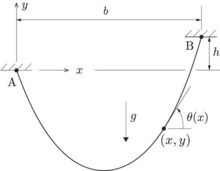
[Seminar] In-plane oscillations of a slack catenary using assumed modes by Prof.Anindya Chatterjee
Title: In-plane oscillations of a slack catenary using assumed modes.
Speaker: Dr. Anindya Chatterjee, Professor, Mechanical Engineering, IIT Kanpur
(collaborators: Bidhayak Goswami and Indrasis Chakraborty)
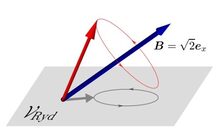
Mr. Keita Omiya "Physics and Mathematics of Quantum Many-Body Scars"
Target audience: Interns, Students, PostDocs, and those who are interested in the same research field. Language: English

【Seminar】"An odor patch foraging task to study learning and decision making" by Dr. Cindy Poo, the Allen Institute
Speaker: Cindy Poo, a senior scientist with the Allen Institute for Neural Dynamics and an Affiliate Assistant Professor in the Department of Physiology and Biophysics at the University of Washington

Rocks instead of clocks: Bayesian modelling of the fossil record enlightens the diversification and extinction of Hemiptera in deep time
Title: Rocks instead of clocks: Bayesian modelling of the fossil record enlightens the diversification and extinction of Hemiptera in deep time
Abstract: Untangling the patterns and drivers behind the diversification and extinction of highly diversified lineages remains a challenge in evolutionary biology. While insect diversification has been widely studied through the “ Big Four” insect orders (Coleoptera, Hymenoptera, Lepidoptera, and Diptera), the fifth most diverse order, Hemiptera, has often been overlooked. Hemiptera exhibit a rich fossil record and are highly diverse in present-day ecosystems, with many lineages closely associated with their host plants, making them a crucial group for studying how past ecological shifts—such as mass extinctions and floral turnovers—have influenced insect diversification. This study leverages birth-death models in a Bayesian framework and the fossil record of Hemiptera to estimate their past diversity dynamics. Our results reveal that global changes in flora over time significantly shaped the evolutionary trajectories of Hemiptera. Two major faunal turnovers particularly influenced Hemiptera diversification: (i) the aftermath of the Permo-Triassic mass extinction and (ii) the Angiosperm Terrestrial Revolution. Our analyses suggest that diversification of Hemiptera clades was driven by floristic shifts combined with competitive pressures from overlapping ecological niches. Leveraging the extensive fossil record of Hemiptera allowed us to refine our understanding of diversification patterns across major hemipteran lineages. We also the recently developed Bayesian Brownian Bridge model, which estimates the timing of lineage origin and extinction through fossil-based Bayesian modelling, to provide a temporal framework for the rise and fall of 310 major hemipteran lineages.
2026 Analysis on Metric Space Seminar "Ollivier-Ricci curvature in non-smooth Lorentzian geometry and causal set theory" by Dr.Samuël Borza, University of Vienna
This talk will explore some aspects of non-smooth Lorentzian geometry, the mathematical framework underlying Einstein’s general relativity, which is currently being developed. Just as metric length spaces provide a synthetic generalisation of smooth Riemannian manifolds, the time-separation function plays the role of a “distance” in Lorentzian geometry. The need for a non-smooth Lorentzian framework appeared early on, most famously with Penrose’s singularity theorems. After introducing the basic concepts and some initial results in this synthetic setting, we will turn to causal set theory, a radical approach to quantum gravity in which spacetime is modelled as a discrete causal graph. I will formulate a new notion of curvature, inspired by Ollivier-Ricci curvature on metric graphs, using optimal transport between causal diamonds. We will see that it does recover Ricci curvature on smooth Lorentzian manifolds, and numerical examples will be presented.
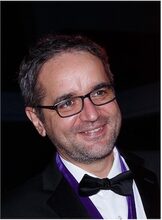
[Seminar] "From electrically conductive MOFs to sustainable batteries" by Prof. Mircea Dincă, Princeton University
Prof. Mircea Dincă , Department of Chemistry, Princeton University
[Atomic physics seminar] Entanglement-assisted readout and cooling of neutral atom qubits in an optical tweezer array
Speaker: Dr Lewis Picard, Caltech, USA
Title: Entanglement-assisted readout and cooling of neutral atom qubits in an optical tweezer array
QG Seminar (Zoom): sw1+infinity asymptotic symmetries: Carrollian & Celestial lessons
QG Seminar (Zoom) Speaker: Nicolas Cresto (Perimeter) Title: sw1+infinity asymptotic symmetries: Carrollian & Celestial lessons
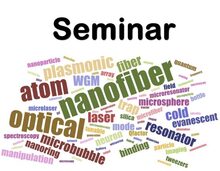
[Atomic physics seminar] Nonclassical light – getting more of it out of a single atom
Speaker: Dr Scott Parkins, Associate Professor, The University of Auckland, NZ
Title: Nonclassical light – getting more of it out of a single atom
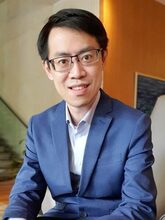
【Seminar】"Activities in Singapore’s National Quantum-Safe Network Testbed"
Dr. Jing Yan Haw, Senior Research Fellow, Centre for Quantum Technologies, National University of Singapore. Language: English, no interpretation. Open to OIST members.
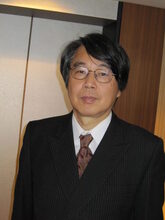
Lecture: "A Survey on Supersingular Abelian Varieties" by Tomoyoshi Ibukiyama
Target audience : Students and researchers in the field
Language : English
Abstract : Supersingular elliptic curves and supersingular Abelian varieties are important mathematical background of modern cryptography.

[Seminar] "Molecular functions of the nuclear lamina in cell aging & senescence" by Dr. Oliver Dreesen
Speaker: Dr. Oliver Dreesen, Senior Principal Investigator, Cell Aging Laboratory, A*STAR Skin Research Laboratories (A*SRL)
Talk Title: Molecular functions of the nuclear lamina in cell aging & senescence
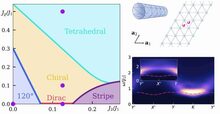
[Seminar] Mr. Markus Drescher "Dynamical signatures of emergent quantum phases in the triangular-lattice Heisenberg antiferromagnet"
Target audience: Interns, Students, PostDocs, and those who are interested in the same research field. Language: English
[Atomic physics seminar] Neutral-Atom Based Quantum Computing with 171Yb Nuclear-Spin Qubits
Title: Neutral-Atom Based Quantum Computing with 171Yb Nuclear-Spin Qubits
Speaker: Dr Sebastian Pucher, Quantum Engineer at Atom Computing, Boulder, Colorado, USA
QG Seminar (Zoom): Non-supersymmetric strings on AdS3, Hassaan Saleem, (SUNY Albany)
QG Seminar (Zoom) Speaker: Hassaan Saleem, (SUNY Albany) Title: Non-supersymmetric strings on AdS3

2026 Analysis on Metric Space Seminar: "P-Dirichlet spaces and the resolution of the resistance and energy image density conjectures" by Prof.Sylvester Eriksson-Bique, University of Jyv¨askyl¨a
Title: P-Dirichlet spaces and the resolution of the resistance and energy image density conjectures
Abstract: I will describe the resolution of two conjectures related to Dirichlet forms. In both cases a conceptually simple solution arises by stepping away from the p=2 regime. This leads to a new definition of a p-Dirichlet space, which unifies three quite different areas: Dirichlet form theory, Analysis on fractals and Analysis on metric spaces. The talk includes joint work with Mathav Murugan
2026 Analysis on Metric Space Seminar: "The Trace Theorem for Sobolev Homeomorphisms" by Dr.Aleksis Koski, Aalto University
Title:The Trace Theorem for Sobolev Homeomorphisms
Abstract: Classical Sobolev trace theory tells us when a boundary map can be extended as a Sobolev function inside a given domain in R^n. For the purposes of minimization problems in Nonlinear Elasticity, it is natural to rephrase this question in the context of extending a given embedding of the boundary as a homeomorphic Sobolev map. In this talk, I will explain what is known about this problem, ending with a full trace theory for Sobolev homeomorphisms in 2D.

[Seminar] Dr. Giovanni Consoli, Imperial College London
Dr. Giovanni Consoli, Postdoctoral Fellow from Imperial College London
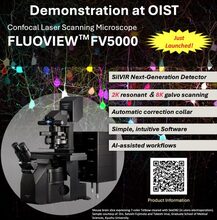
Evident FLUOVIEW FV5000 Seminar and demonstration
Evident FV5000 seminar and demonstration

[Seminar] "Looking at neurodevelopmental disorders through the lens of evolution: a role for the autolysosomal pathway" by Prof. Nael Nadif Kasri, Radboud University
Date: Monday, February 2, 2026 - 11:00 to 12:00 @L5D23, Lab5
Title: "Looking at neurodevelopmental disorders through the lens of evolution: a role for the autolysosomal pathway"
Speaker: Prof. Nael Nadif Kasri, Radboud University
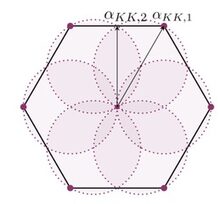
QG Seminar (Zoom): The Boundary of Symmetric Moduli Spaces and the Distance Conjecture, Veronica Collazuol (IFT Madrid)
QG Seminar Speaker: Veronica Collazuol (IFT Madrid) Title: The Boundary of Symmetric Moduli Spaces and the Distance Conjecture
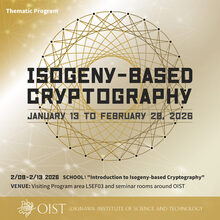
Lightning Talks on Isogenies, Richelot, Cokernel, Tate-pairing, Matrix Algebras, Irreducable Quadratics
A series of short (5-20 minute) talks by Thematic Program " Isogeny-Based Cryptography" participants
[Seminar] "Harnack’s inequality for nonlocal parabolic equations" by Prof. Naian Liao
Title: Harnack’s inequality for nonlocal parabolic equations
Speaker: Prof. Naian Liao (University of Salzburg)
[Seminar] "Phragmén-Lindelöf-type results for functions in homogeneous De Giorgi classes" by Prof. Ugo Gianazza
Title: Phragmén-Lindelöf-type results for functions in homogeneous De Giorgi classes
Speaker: Prof. Ugo Gianazza (University of Pavia)
【Seminar】"Quantum photonics with vanadium in 4H-SiC"
Talk by Thomas Astner, Austrian Academy of Sciences (Austria).
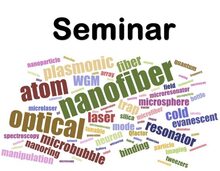
[atomic physics seminar] A single emitter emitting resonance fluorescence into a coherent beam
Title: A single emitter emitting resonance fluorescence into a coherent beam
Speaker: Mr Tomas Lamich, ICFO, Spain
Language: English

"Design of Deployable Structures Based on Geometry and Biomimetics" by Prof. Chisaki Kitajima from Kyushu Univ.
Guest Seminar by Bourguignon Unit. Guest: Dr. Chisaki Kitajima, Assistant Professor, Faculty of Design, Kyushu University
Title: Design of Deployable Structures Based on Geometry and Biomimetics
Abstract This research investigates deployable structures that can be compactly folded for transportation and storage and expanded to form spatial configurations. To address challenges such as material interference due to thickness, fabrication complexity, and construction safety, three fundamental operations—folding, cutting, and weaving—are identified and systematically applied as design strategies. Drawing on biomimetic principles inspired by insect hindwings and fungal net-like structures, the study develops geometry-based design models for each operation. By integrating geometry, biomimetics, and deployable design, this research demonstrates new possibilities for architectural deployable structures.
進化ゲノミクスユニット:ゲストセミナー ゲスト: 北島千朔氏, 九州大学大学院芸術工学研究院人間生活デザイン部門助教
発表タイトル: 幾何学および生物模倣に基づく展開構造物の設計
要旨: 本研究は、運搬・収納時に小さく折りたたみ、展開によって空間を構成する展開構造物を対象とする。部材厚みによる干渉や施工の複雑性といった課題に対し、「折る」「切る」「編む」という三つの形態操作を整理し、それぞれに対応した設計手法を提案した。さらに、ハサミムシ後翅やキヌガサタケ菌網などの生物構造を模倣し、幾何学的条件に基づく設計モデルを構築した。これにより、展開構造物の新たな設計可能性を示す。
Seminar "Rheology of dense suspensions: from mud to statistical mechanics" by Prof. Jeff Morris
[Speaker] Prof. Jeff Morris, Professor, CUNY City College of New York, Director, Levich Institute and Department of Chemical Engineering

[Seminar for the OIST Community] Prof. Naoko Ohtani & Prof. Akiko Takahashi on Senescence and Cancer
Join us for a special seminar at OIST, part of the A3 Foresight Meeting, presented by Prof. Ohtani and Prof. Takahashi.
Prof. Naoko Ohtani, Osaka Metropolitan University
Prof. Akiko Takahashi, Japanese Foundation for Cancer Research
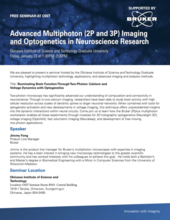
Seminar: Advanced Multiphoton (2P and 3P) Imaging and Optogenetics in Neuroscience Research by Bruker
Bruker seminar for Multiphoton imaging
Jan. 23rd (Fri) 13:00-14:00
Open to OIST community
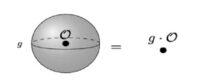
QG Seminar (Zoom): Non-invertible Symmetries of 2d Non-Linear Sigma Models
QG Seminar Speaker: Max Velasquez Cotini Hutt (Imperial College London)
Title: Non-invertible Symmetries of 2d Non-Linear Sigma Models
Lunchtime Seminar: AI in Drug Discovery
Talk Title: AI in Drug Discovery A whirlwind tour of how machine learning and genomics are changing how we are performing drug discovery at Relation Therapeutics.
OIST Representation Theory Seminar

Seminar: DFG Funding Portfolio and the Research Landscape in Germany (German Research Foundation)
Seminar: DFG Funding Portfolio and the Research Landscape in Germany (German Research Foundation)
Germany offers a diverse and dynamic research environment supported by a wide range of funding schemes, including those for international collaboration. In this seminar, we will introduce the structure of the German research landscape and present DFG’s major funding opportunities for postdoctoral researchers, early‑career scholars, and those aiming for professorship positions.
The Deutsche Forschungsgemeinschaft (DFG, German Research Foundation) is the largest self-governing funding organization for basic research in Germany. The DFG promotes the advancement of science and the humanities by funding research projects and facilitating cooperation among researchers
From nonlocality transitivity to entanglement transitivity and more
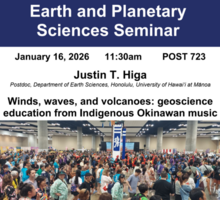
[Zoom Seminar] Winds, waves, and volcanoes: geoscience education from indigenous Okinawan Music
University of Hawai‘i at Mānoa Earth and Planetary Sciences Seminar Title: Winds, waves, and volcanoes: geoscience education from indigenous Okinawan Music Speaker: Justin T. Higa, Postdoc, Department of Earth Sciences, Honolulu, University of Hawai‘i at Mānoa
2026 Analysis on Metric Space Seminar: "Dynamic inverse problems regularized with Wasserstein-1 transport" by Dr.Julius Lohmann, Institute of Science Tokyo
Abstract: The (classical, balanced) Wasserstein-p distance can be used as a measure of how close a source and sink mass distribution (with equal mass) are. In recent years, the Wasserstein-2 distance has been employed in the temporal regularization of dynamic inverse problems. The so-called Benamou–Brenier formula states that it can be written as the square root of the performed physical work through the transport from the source to the sink. In my talk, I will instead focus on dynamic inverse problems regularized with Wasserstein-1 transport. The Wasserstein-1 distance can be interpreted as the optimal transport cost with respect to the Euclidean distance: it equals infπ R |x−y|dπ(x, y), where measure element dπ(x, y) indicates the (infinitesimal) amount of mass moving from location x to y. I will explain a novel dynamic inverse problem on time-parameterized curves in the induced Wasserstein-1 (metric) space. It is a natural extension of static sparse optimization problems such as lasso or TV regularization. One essential difference to classical regularization with Wasserstein-2 transport is that it allows for discontinuous decision variables (realized as BV curves). Despite this weak regularity requirement and the non-differentiability of the cost function (x, y) 7→ |x − y|, it is possible to prove the existence of a sparse solution and its characterization. I will present this result. Further, I will detail an adaption of the fully-corrective generalized conditional gradient method to the problem and highlight a natural discretization approach. Finally, I will show some numerical examples. Joint work with: Marcello Carioni
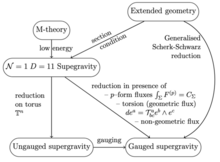
QG Seminar: Review of Extended Geometry, (Prof. Martin Cederwall; Chalmers U)
QG Seminar Speaker: Martin Cederwall (Chalmers University of Technology, Sweden)
Title: Review of Extended Geometry
[Seminar] "Normalized solutions and limit profiles of the Gross-Pitaevskii-Poisson equation" by Prof. Vitaly Moroz
Title: Normalized solutions and limit profiles of the Gross-Pitaevskii-Poisson equation
Speaker: Prof. Vitaly Moroz (Swansea University)

[Seminar] Toward the design of programmable sequence-specific RNA-binding proteins by Dr. Iori Morita, Institute of Science and Technology Austria
Dr. Iori Morita, SNSF Postdoctoral Fellow, Institute of Science and Technology Austria
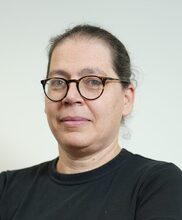
[Seminar] An AI-based holistic view of the protein universe by Prof. Rachel Kolodny, University of Haifa, Israel
Prof. Rachel Kolodny, Professor of Computer Science, University of Haifa, Israel

[Seminar] Diffuse Light to Structured Information with Hybrid Photovoltaics - Prof. Marina Freitag, Newcastle University
Prof. Marina Freitag , Professor of Energy/Royal Society University Research Fellow (URF), School of Natural and Environmental Sciences, Newcastle University

[Seminar] Animal behavior analysis enabled by unsupervised deep learning by Dr. France Rose
Speaker: France Rose(University of Bonn)
Title: Animal behavior analysis enabled by unsupervised deep learning