



[Seminar] "Context-dependent design principles of spindle poles" by Dr. Jeffrey B. Woodruff, UT Southwestern Medical Center
Date
Friday, May 29, 2026 - 14:00 to 15:00
Location
Center building C210
Description
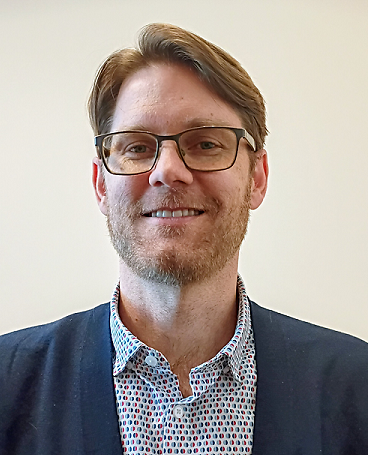
[Speaker] Dr. Jeffrey B. Woodruff, Associate Professor, UT Southwestern Medical Center
[Talk title] Context-dependent design principles of spindle poles
[Abstract]
Spindle poles are micron-scale structures that organize and anchor microtubules needed for chromosome segregation and cell division. Using C. elegans, we revealed that the spindle pole is dramatically remodeled in a context-dependent manner, going from a viscoelastic, solid-like state in mitosis to a more dynamic, liquid-like state in meiosis. Spindle pole remodeling occurs through compositional changes in its underlying protein scaffold. This change allows the spindle poles to serve two specialized functions beyond organizing microtubule arrays: 1) resisting large microtubule-dependent pulling forces during mitotic embryo divisions and 2) enveloping and glueing together meiotic chromosomes during highly asymmetric oocyte divisions.
[Short Bio]
My lab’s mission is to determine the molecular and material design principles and functions of biomolecular condensates that regulate the microtubule cytoskeleton during oocyte and embryo development. My work has focused largely on centrosomes, which are micron-scale, non-membrane-bound condensates that nucleate thousands of microtubules needed for mitotic spindle assembly in embryos. We seek to understand how molecular-level interactions within centrosomes contribute to mechanical strength, thus allowing them to resist microtubule-mediated pulling forces. Lately, my lab has discovered condensates that direct translation of microtubule-related proteins in dormant oocytes and condensates that package meiotic chromosomes into polar bodies.
All-OIST Category:
Subscribe to the OIST Calendar: Right-click to download, then open in your calendar application.